
Siddhivinayak Temple Mumbai
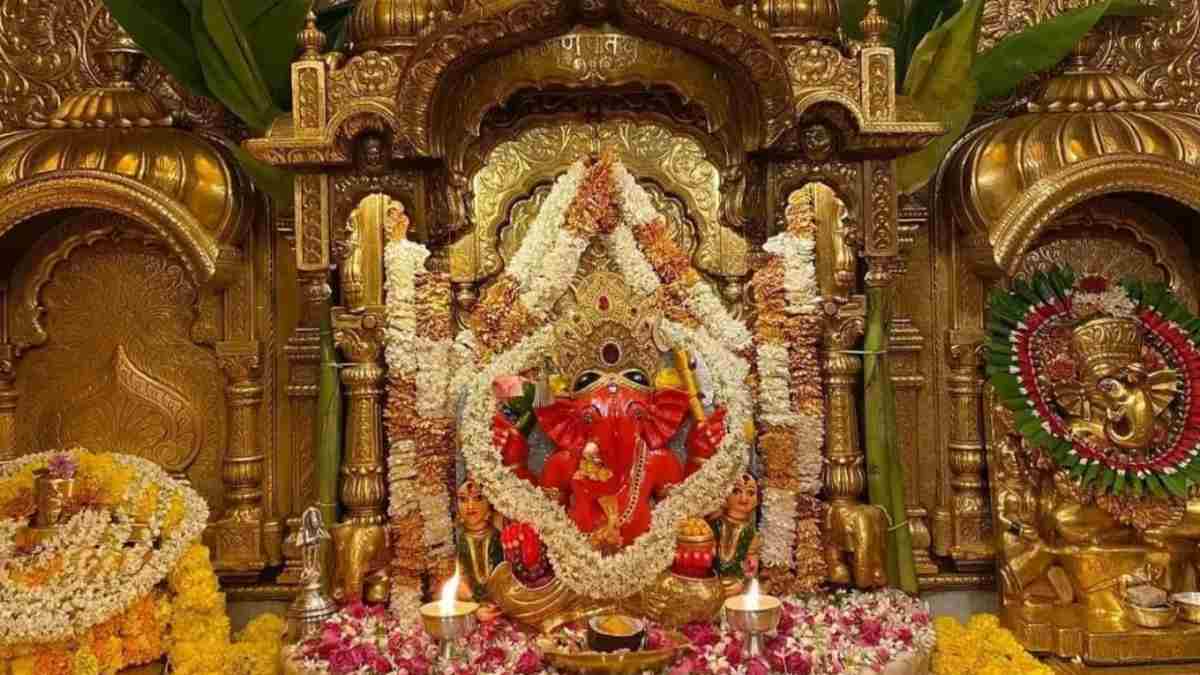
Siddhivinayak Temple is a prominent Hindu temple dedicated to Lord Ganesha, located in the Prabhadevi neighborhood of Mumbai. It serves as one of the most significant places of worship in India, attracting millions of devotees annually, ranging from local residents to international tourists and high-profile celebrities. While it is not classified as a Jyotirlinga or a Shakti Peetha, its cultural and religious importance in Maharashtra is immense, often making it the first stop for people starting new ventures or seeking blessings for success.
The temple is managed by the Shree Siddhivinayak Ganapati Temple Trust and is known for its high level of organization despite the massive daily footfall. Visitors should be prepared for significant crowds, particularly on Tuesdays and during major festivals. Planning a visit during the early morning hours on weekdays is generally recommended to avoid the longest waiting times.
Quick Facts
| Field | Details |
|---|---|
| Deity | Lord Ganesha (Siddhivinayak) |
| Location | Prabhadevi, Mumbai |
| State | Maharashtra |
| Temple Type | Major Ganesha Temple |
| Nearest Metro/Station | Dadar Station (1.5 km) / Prabhadevi Metro Station |
| Nearest Airport | Chhatrapati Shivaji Maharaj International Airport (14 km) |
| Entry Fee | Free (Paid options for specific rituals/priority) |
| Timings | 5:00 AM - 10:00 PM |
| Best Months | November to February |
| Avoid | Monsoon season (June to August) and Tuesdays if you dislike crowds |
History and Background
The Siddhivinayak Temple has a history dating back to the early 19th century. It was officially consecrated on November 19, 1801. The construction was funded by Deubai Patil, a wealthy woman from the Agri community. Deubai Patil was childless, and she built the temple with the specific intention that Lord Ganesha should grant children to other women who were unable to conceive. The execution of the project was managed by Laxman Vithu Patil, a professional contractor.
At its inception, the temple was a very modest structure. The original building was a small 3.6 meter by 3.6 meter square brick structure with a dome-shaped shikhara. As the city of Mumbai grew and the reputation of the temple as a "Navasacha Ganapati" (a Ganesha who fulfills vows) spread, the number of visitors increased. For over a century, the temple remained a local shrine, but its popularity surged in the latter half of the 20th century.
The most significant transformation occurred in 1990-91. The temple trust decided to reconstruct the aging structure to accommodate the tens of thousands of daily visitors. Architect Sharad Athale designed the new six-story building that stands today. This renovation cost approximately ₹3 crore at the time and transformed the temple into a modern complex while preserving the original idol. The new design incorporated a gold-plated dome and expanded the floor space significantly.
Historically, the temple has also been a site of social and political significance. It has survived the rapid urbanization of Mumbai and has become a symbol of the city's resilience. Today, it is recognized as one of the wealthiest temple trusts in India, with annual donations often exceeding ₹100 crore. These funds are frequently used for charitable activities, including medical assistance for the poor and educational grants, maintaining the temple's role as a pillar of the local community.
The Deity and Significance
The central deity of the temple is Lord Ganesha in the form of Siddhivinayak. The name "Siddhivinayak" translates to "Ganesha who grants success and fulfillment of desires." The idol is carved from a single piece of black stone and is approximately 2.5 feet tall.
A distinctive feature of this idol is the position of the trunk. In most Ganesha idols, the trunk turns to the left. At this temple, the trunk turns to the right. This specific form is known as "Siddha Vinayaka." In Hindu tradition, a right-turning trunk is associated with the sun's energy (Surya Nadi). It is considered more powerful and demanding, requiring stricter adherence to rituals and purity. Devotees believe that worshipping a right-sided trunk Ganesha brings faster results but also requires a higher level of discipline.
The idol has four arms. In the upper right hand, Ganesha holds a lotus; in the upper left, an axe. The lower right hand holds a set of prayer beads (japamala), and the lower left hand holds a bowl of modaks (his favorite sweet). A snake is depicted as a belt around his belly, and a third eye is etched on his forehead, similar to Lord Shiva. On either side of the main idol are Riddhi and Siddhi, the goddesses representing wealth and prosperity. Pilgrims come here seeking help with career obstacles, health issues, and family matters, believing that the deity here is particularly responsive to sincere prayers.
What You'll See
The architecture of the Siddhivinayak Temple is unique compared to traditional North or South Indian temple styles. The current structure is a multi-angular, six-story building topped with a main gold-plated dome. There are also several smaller crowns (shikharas) surrounding the main one, all plated in gold.
The main sanctum (Garbhagriha) is located on the ground floor. The ceiling of the sanctum is gold-plated, and the wooden doors leading into it are intricately carved with the eight forms of Ganesha, known as the Ashtavinayak. The interior is designed for high-volume movement, with marble flooring and stainless steel railings to guide the queues.
On the upper floors, the temple houses administrative offices, a library, and a kitchen for preparing prasad. The temple complex also includes a small Hanuman shrine. One of the most notable sights is the "Kalash" or the pinnacle of the temple, which is a massive gold-plated structure weighing about 1500 kg.
Outside the main building, you will see two large silver idols of mice (Mooshika), which are the traditional vehicles of Lord Ganesha. It is a common practice for devotees to whisper their wishes into the ears of these silver mice, believing they will carry the message to the Lord. The surrounding area is filled with stalls selling "Phool-Prasad" (flowers and sweets), specifically the orange marigolds and modaks that are synonymous with Ganesha worship in Mumbai.
Darshan — How It Works
The darshan process at Siddhivinayak is highly systematic to manage the 25,000 to 100,000 people who visit daily. There are two main types of darshan: "Mukh Darshan," where you see the deity from a distance, and "Charan Darshan," where you can go closer to the sanctum.
- Entry Points: There are separate gates for general visitors and those who have booked online or have special passes. The main entrance is from the side of the temple facing the flower market.
- Queue Times: On a standard weekday (Monday, Wednesday, Thursday, Friday), the wait time is usually between 45 minutes and 2 hours. On Saturdays and Sundays, this increases to 2-3 hours. On Tuesdays, which are dedicated to Ganesha, the queue can take 4 to 6 hours, sometimes even longer if it coincides with a festival.
- Online Booking: To save time, you can use the official Siddhivinayak Temple website or mobile app to book a darshan slot. This provides a QR code that allows entry through a faster moving queue.
- Special Assistance: There are dedicated queues for senior citizens (usually 65+), pregnant women, and individuals with physical disabilities. These queues are much shorter and provide more direct access to the sanctum.
- Aarti Timings: The temple follows a strict schedule. The Kakad Aarti (morning prayer) happens at 5:00 AM. The temple is closed for darshan during specific aarti times for about 20-30 minutes. On Tuesdays, the schedule is different, with the temple opening as early as 3:15 AM.
- Security: All visitors must pass through metal detectors. Large bags and luggage are generally not allowed inside the main prayer hall; there are locker facilities available nearby, but it is better to leave heavy items at your hotel.
Festival and Crowd Calendar
| Month | Crowd Level | Main Event / Reason |
|---|---|---|
| January | High | New Year's Day and Maghi Ganesh Jayanti |
| February | Moderate | Regular pilgrims; pleasant weather |
| March | Moderate | Holi and spring visitors |
| April | Moderate | Ram Navami and local holidays |
| May | High | Summer school vacations; heavy family crowds |
| June | Moderate | Start of Monsoons; slightly fewer tourists |
| July | High | Ashadi Ekadashi period and heavy rain delays |
| August | Very High | Preparation for Ganesh Chaturthi |
| September | Peak | Ganesh Chaturthi (10-day festival) |
| October | High | Navratri and Diwali holidays |
| November | High | Post-Diwali crowds and Kartiki Ekadashi |
| December | High | Year-end tourists and winter break |
Most Crowded Events:
- Ganesh Chaturthi (August/September): This is the biggest event. The temple is packed for 10 days straight. Wait times can exceed 10-12 hours.
- Angarki Sankashti Chaturthi: This occurs when a Sankashti Chaturthi falls on a Tuesday. It happens only a few times a year. It is considered extremely auspicious, and the temple stays open for nearly 24 hours to accommodate hundreds of thousands of people.
- Maghi Ganesh Jayanti (January/February): This marks the birthday of Ganesha according to the lunar calendar and sees massive local participation.
Best Times for Short Queues:
- Wednesday and Thursday mornings between 7:00 AM and 9:00 AM.
- Late evenings on Mondays (after 8:30 PM).
- Non-holiday weekdays in the months of February and March.
Getting There
By Train
Mumbai’s local train network is the most efficient way to reach the temple. The nearest major hub is Dadar Station, which serves both the Western and Central lines.
| From | Train Name | Duration | Notes |
|---|---|---|---|
| New Delhi | 12952 Mumbai Rajdhani | 15h 35m | Arrives at Mumbai Central; take a taxi or local train to Dadar |
| Bangalore | 11302 Udyan Express | 23h 50m | Arrives at Dadar Station directly |
| Chennai | 12164 Chennai-Mumbai SF | 21h 15m | Arrives at Dadar Station directly |
| Kolkata | 12262 Howrah Duronto | 26h 00m | Arrives at CSMT; take a local train to Dadar |
| Ahmedabad | 12010 Ahmedabad Shatabdi | 6h 20m | Arrives at Mumbai Central; short taxi ride to Prabhadevi |
| Hyderabad | 12702 Hussain Sagar Exp | 14h 45m | Arrives at Dadar Station directly |
Note: You can book long-distance tickets at irctc.co.in. For local travel, use the UTS mobile app to avoid ticket counter lines.
By Road
The temple is located in Prabhadevi, which is well-connected by road.
- From Pune: Approximately 150 km via the Mumbai-Pune Expressway. The drive takes about 3 to 4 hours depending on traffic.
- From Nashik: Approximately 170 km via NH160. The drive takes about 4 hours.
- Local Transport: Taxis and auto-rickshaws (only up to Mahim/Sion) are available. Ride-sharing apps like Uber and Ola work extensively in Mumbai and are a reliable way to reach the temple.
By Air
The nearest airport is Chhatrapati Shivaji Maharaj International Airport (CSMIA), located about 14 km away. From the airport, you can take a prepaid taxi or an app-based cab. The journey takes 45 minutes to 1.5 hours depending on the notorious Mumbai traffic, especially near the Western Express Highway.
Where to Stay
Mumbai is an expensive city for accommodation, but there are options for various budgets near the temple.
- Budget (₹1,500 - ₹3,000): Look for guesthouses and small hotels in the Dadar West or Parel areas. These are within 2 km of the temple.
- Mid-Range (₹4,000 - ₹8,000): There are several business hotels in the Worli and Lower Parel districts. These offer better amenities and are a 10-15 minute drive from the temple.
- Best Overall / Luxury (₹10,000+): The Worli seafront area has high-end hotels like the Four Seasons or St. Regis. These provide excellent views and service but are further away.
Staying in Dadar is the most practical option for pilgrims who want to attend the early morning aarti, as it allows for a quick commute.
What You Can't Miss Nearby
- Worli Sea Face (2 km): A popular promenade offering views of the Arabian Sea and the Bandra-Worli Sea Link. It is a great place for a walk after the temple visit.
- Shivaji Park (1.5 km): One of the largest and most historic public parks in Mumbai. It is a hub for cricket and local political gatherings.
- Mahalakshmi Temple (6 km): Another major religious site in Mumbai dedicated to the Goddess of Wealth. It is located by the sea and is often visited along with Siddhivinayak.
- Haji Ali Dargah (6 km): A mosque and tomb located on an islet off the coast of Worli. It is accessible only during low tide via a narrow causeway.
- Nehru Planetarium and Science Centre (4 km): Located in Worli, this is an excellent educational stop for families with children.
- Bandra-Worli Sea Link: While you can't "visit" it on foot, taking a taxi across this bridge provides a great view of the Mumbai skyline.
Practical Information
| Item | Details |
|---|---|
| Darshan Cost | Free (General) |
| Paid Darshan | ₹100 - ₹200 for specific fast-track options (check current rates at counter) |
| Dress Code | Modest clothing. Avoid shorts and sleeveless tops. |
| Photography | Strictly prohibited inside the temple and sanctum. |
| Lockers | Available for small bags and footwear near the entrance. |
| Food | Temple trust provides prasad; many vegetarian restaurants nearby. |
| Wheelchair Access | Available; ask temple staff for assistance at the gate. |
| What to Bring | Identity proof (if using online booking), water bottle, and socks (for walking on hot stone). |
Frequently Asked Questions
Is there an entry fee for Siddhivinayak Temple?
No, the general darshan is free for all devotees. There are paid options for those who wish to use a faster queue or perform specific pujas, but these are optional.
What are the temple timings?
The temple is open daily from 5:00 AM to 10:00 PM. On Tuesdays, the temple opens much earlier, usually around 3:15 AM, to accommodate the large number of devotees.
Is there a specific dress code for visitors?
Yes, visitors are expected to dress modestly. Men should wear trousers or dhotis with shirts or kurtas. Women should wear sarees, salwar kameez, or modest Western outfits. Shorts, mini-skirts, and sleeveless tops are discouraged and may result in being denied entry.
Can I take photos inside the temple?
Photography and video recording are strictly prohibited inside the temple premises, especially in the main sanctum. Security personnel monitor this closely, and your phone may be confiscated if you are caught taking photos.
When is the best time to visit to avoid crowds?
The best time to visit is on Wednesday or Thursday mornings before 8:00 AM. Avoid Tuesdays, public holidays, and the 10 days of Ganesh Chaturthi if you want a quick visit.
How do I get to the temple from Mumbai airport?
The most convenient way is to take a prepaid taxi or an Uber/Ola from the airport. The distance is about 14 km and takes roughly an hour depending on traffic.
Can non-Hindus visit the Siddhivinayak Temple?
Yes, the temple is open to people of all faiths and nationalities. Everyone is expected to follow the same rules regarding dress code and decorum.
Is there a VIP or fast-track darshan?
The temple offers an online booking system that acts as a fast-track option. There is also a "Paid Darshan" counter where you can buy a ticket for a shorter queue, usually costing around ₹100-₹200.
How long is the wait on a typical Tuesday?
On a typical Tuesday, you should expect to wait anywhere from 3 to 6 hours. During auspicious days like Angarki Chaturthi, the wait can extend to 10 hours or more.
Are there lockers available for luggage?
The temple has small lockers for footwear and small handbags. However, they do not have facilities for large suitcases or heavy luggage. It is recommended to leave your bags at your hotel or in your vehicle.
Is the temple accessible for the elderly?
Yes, the temple is wheelchair accessible, and there are separate, shorter queues for senior citizens. Staff members are usually available to help guide elderly visitors to the priority lines.
What is the significance of the right-sided trunk?
The right-sided trunk (Siddha Vinayaka) represents a more powerful and "active" form of Ganesha. It is believed to be linked to the Pingala Nadi (sun energy) and is sought after by those looking for immediate success and the removal of difficult obstacles.
Quick Reference
- Main Deity: Lord Ganesha with a rare right-turning trunk.
- Location: Prabhadevi, Mumbai (1.5 km from Dadar Station).
- Best Time: Weekdays (Wed/Thu) early morning.
- Busiest Day: Tuesday (Mangalvar).
- Dress Code: Modest (no shorts/sleeveless).
- Entry: Free, with online booking available for faster access.
- Photography: Not allowed inside.
- Significance: Known as the "fulfiller of wishes" and highly popular with celebrities and locals alike.