
Trimbakeshwar Temple
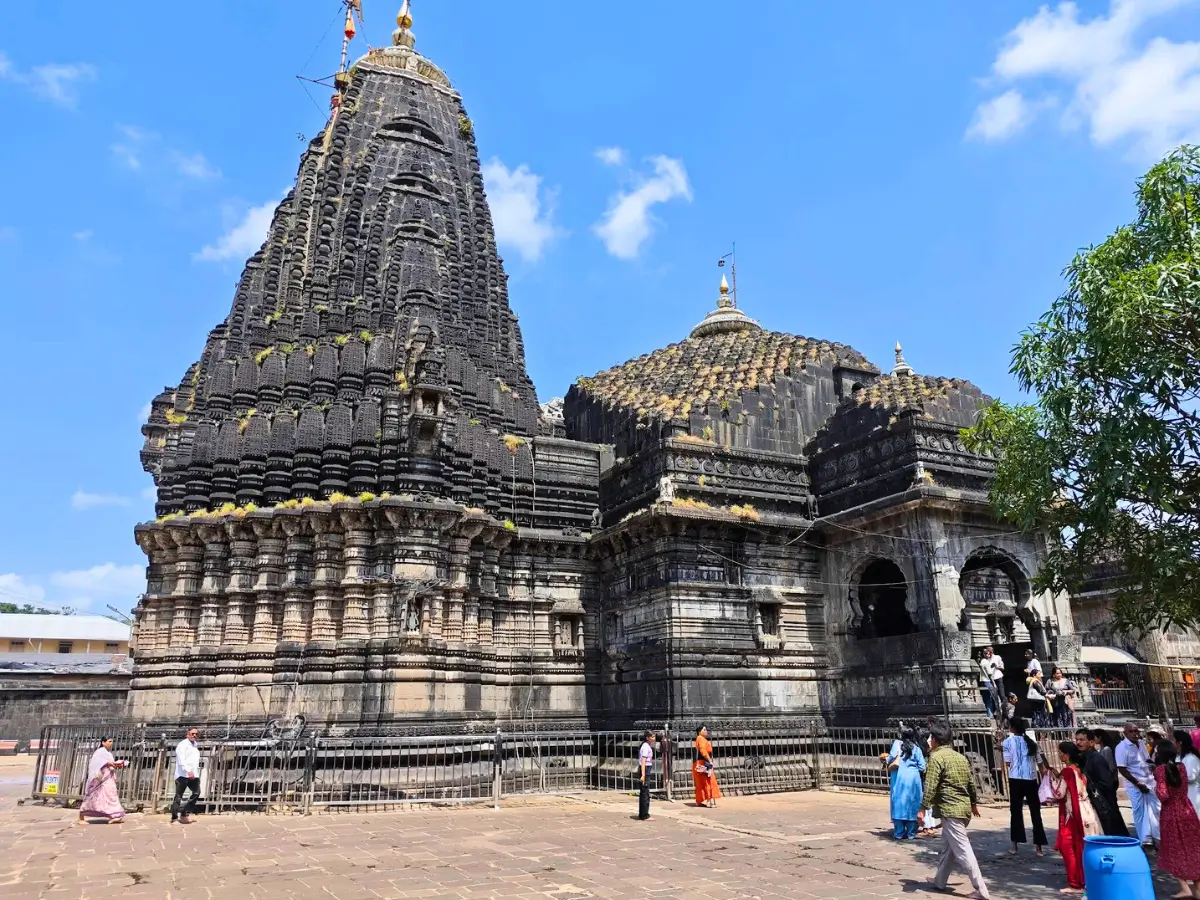
Trimbakeshwar Temple is an ancient Hindu shrine located in the town of Trimbak in the Nashik district of Maharashtra. It is dedicated to Lord Shiva and is recognized as the ninth of the twelve Jyotirlingas, which are considered the most powerful Shiva shrines in India. The temple is situated at the foot of the Brahmagiri Hill, which serves as the source of the Godavari River, the longest river in peninsular India.
The site is a major center for Vedic rituals and pilgrimage. It is unique among Jyotirlingas because the linga here has three faces representing the Hindu Trinity: Brahma the Creator, Vishnu the Preserver, and Shiva the Destroyer. Visitors should note that the temple follows strict traditional protocols, including a specific dress code for those entering the inner sanctum and a total ban on photography within the premises.
Quick Facts
| Detail | Info |
|---|---|
| Main Deity | Lord Shiva (Trimbakeshwar - Three-faced Linga) |
| Location | Trimbak, Nashik District, Maharashtra |
| State | Maharashtra |
| Temple Type | Jyotirlinga (9th of 12) |
| Nearest Station | Nashik Road Station (28 km) |
| Nearest Airport | Ozar Airport, Nashik (50 km) |
| Entry Fee | Free (VIP/Paid Darshan: ₹200) |
| Timings | 5:30 AM to 9:00 PM |
| Best Months | October to March |
| Avoid | Monsoon (for trekking) and Shravan Mondays (extreme crowds) |
History and Background
The history of Trimbakeshwar Temple is rooted in both ancient Puranic texts and Maratha historical records. According to the Shiva Purana, the sage Gautama lived on Brahmagiri Hill with his wife, Ahilya. During a period of severe drought, Gautama Rishi performed penance to Lord Varuna, who granted him a perennial supply of water. However, other sages became jealous and sent a cow to destroy his crops. When Gautama tried to shoo the cow away with a blade of grass, the cow died. To purify himself from the sin of killing a cow, Gautama prayed to Lord Shiva to bring the River Ganga to earth. Shiva agreed, and the river emerged as the Gautami River, now known as the Godavari. Shiva then stayed here at the request of the river and the gods in the form of a Jyotirlinga.
The current structure of the temple was built in the 18th century by Peshwa Balaji Baji Rao, also known as Nanasaheb. The construction began in 1755 and was completed in 1786, taking 31 years to finish. The Peshwa spent approximately 16 lakh rupees at that time to build the temple using black basalt stone. The site was chosen because of its long-standing spiritual importance and its association with the Maratha Empire's patronage of Hindu religious sites.
Before the Peshwa's reconstruction, the site had various smaller shrines that were documented in medieval texts. The temple has survived several regional conflicts and remains a focal point of the Kumbh Mela, which is held here every 12 years. The Maratha rulers provided significant land grants and funds for the daily upkeep of the temple, ensuring its status as a premier center for Vedic learning and ritual performance. It is also a primary site for performing Narayan Nagbali and Kalsarpa Shanti pujas, which attract thousands of people seeking to resolve specific astrological or ancestral issues.
The Deity and Significance
The main deity at Trimbakeshwar is Lord Shiva, but the representation is distinct from any other Jyotirlinga. Instead of a standard upright stone linga, the Trimbakeshwar linga is a small thumb-sized protrusion set in a depression on the floor of the sanctum. This depression is divided into three parts, each containing a small linga representing Brahma, Vishnu, and Mahesh (Shiva). This "Trimurti" configuration signifies the unity of the three primary forces of the universe.
The linga is constantly washed by a natural underground spring that originates from the Brahmagiri Hill. Pilgrims believe that this water is the holy Godavari River itself. Because the linga is set in a depression, it is often covered by a silver mask. On special occasions and every Monday between 4:00 PM and 5:00 PM, a golden mask studded with diamonds and emeralds is placed over the linga. This mask is said to date back to the era of the Pandavas, though the current one is a historical Maratha artifact.
The spiritual significance of Trimbakeshwar extends to the liberation of souls. It is considered one of the most effective places to perform "Shraddha" (ancestral rites). The presence of the three deities in one linga makes it a site where devotees seek balance in their lives, addressing creation, preservation, and the removal of obstacles. The temple is also the starting point for the Godavari, which is referred to as the "Ganga of the South," making the entire town a "Teertha" or holy water site.
What You'll See
The temple is built in the Nagara style of architecture, characterized by its massive stone walls and a high spire (shikhara). The entire structure is made of black basalt, which gives it a dark, solid appearance. The exterior walls are decorated with carvings of various deities, floral patterns, and animals. The temple complex is surrounded by a high stone wall known as the prakara, which creates a large courtyard for pilgrims.
As you enter, you will pass through a large gateway (Mahadwar) that leads to the main assembly hall (Sabhamandapa). This hall has four entrances and is supported by pillars with intricate carvings. The roof of the mandapa is a dome-shaped structure. Beyond the assembly hall is the inner sanctum (Garbhagriha). The sanctum is relatively small and dimly lit, focusing all attention on the water-filled depression where the three lingas reside.
Outside the main temple, within the same complex, you will see several smaller shrines dedicated to other deities. The Kushavarta Kund is a significant water tank located about 500 meters from the main temple. It is a large, stone-lined pond where the Godavari River, which disappears after its source at the hilltop, is said to reappear. The architecture of the Kund includes stone steps leading down to the water and small pavilions at the corners. Looking up from the temple, you will see the Brahmagiri Hill, which rises steeply behind the town. The hill has several caves and the original source point of the river, which can be reached by a stone stairway of 1,500 steps.
Darshan — How It Works
The darshan process at Trimbakeshwar can be time-consuming due to the high volume of pilgrims. There are generally two types of queues: the general queue and the paid/VIP queue.
General Queue: This is free of charge. On a standard weekday, the wait time is usually between 2 to 4 hours. On weekends, this can extend to 5 or 6 hours. During the month of Shravan or on Maha Shivaratri, the wait can exceed 10 hours. The queue moves through covered walkways with basic seating and fans.
Paid Darshan: There is a "Special Darshan" or "VIP" ticket available for approximately ₹200. This queue is shorter and usually takes 45 minutes to 1.5 hours on regular days. Tickets can be purchased at the counter near the main entrance.
The Sanctum Experience: You do not get much time inside the inner sanctum. Security and priests move the crowd along quickly. You will get about 5 to 10 seconds to view the linga from a short distance. If you wish to touch the linga or perform a personal abhishekam, you must arrive very early (around 5:30 AM) and follow specific ritual protocols.
Dress Code for Inner Sanctum: If you are only viewing the deity from the threshold (darshan), standard modest clothing is fine. However, if you have booked a specific puja that requires you to enter the inner sanctum or touch the linga, men must wear a dhoti and remain bare-chested. Women must wear a saree or a traditional Punjabi suit with a dupatta.
Elderly and Disabled: There is a separate gate for senior citizens and physically challenged individuals, which significantly reduces the walking distance and wait time. It is advisable to carry a valid ID card to use this facility.
Festival and Crowd Calendar
| Month | Crowd Level | Main Event / Reason |
|---|---|---|
| January | Moderate | Makar Sankranti; pleasant weather attracts weekenders. |
| February | Very High | Maha Shivaratri; the biggest festival of the year. |
| March | Moderate | Holi and end of the cool season. |
| April | High | Ram Navami and summer vacations begin. |
| May | High | Summer holidays; very hot but crowded. |
| June | Moderate | Start of monsoon; fewer pilgrims due to rain. |
| July | Extreme | Shravan month; Mondays are exceptionally crowded. |
| August | Extreme | Shravan month continues; Nag Panchami. |
| September | Moderate | Pitru Paksha; many come for ancestral rites. |
| October | High | Navratri and Diwali holidays. |
| November | High | Kartiki Purnima and Tripurari Purnima. |
| December | High | Year-end holidays and cool weather. |
Most Crowded Events:
- Maha Shivaratri (Feb/March): Expect wait times of 12-15 hours. The entire town is packed, and accommodation must be booked months in advance.
- Shravan Mondays (July/August): Devotees perform a "Pheri" (circumambulation) of Brahmagiri Hill. Crowds are massive, and the temple stays open for extended hours.
- Kumbh Mela (Every 12 years): The next Simhastha Kumbh Mela is scheduled for 2027. Millions of people visit during this time.
Best Times for Short Queues:
- Mid-week (Tuesday to Thursday) during the months of September or January (excluding holidays).
- Arriving for the first darshan at 5:30 AM on a non-festival weekday usually results in a wait of less than an hour.
Getting There
By Train
Nashik Road (NK) is the nearest major railway station. It is well-connected to all parts of India. From the station, you can take a taxi, an auto-rickshaw, or a state transport (MSRTC) bus to Trimbak, which is 28 km away.
| From | Train Name | Duration | Notes |
|---|---|---|---|
| Mumbai | 12109 Panchavati Express | 3h 15m | Daily morning train from CSMT. |
| Pune | 11025 Pune Nashik Express | 6h 00m | Connects Western Maharashtra. |
| Delhi | 12618 Mangala Lakshadweep | 18h 30m | Reliable daily service. |
| Bangalore | 16530 Kondaveedu Exp | 24h 45m | Runs via Guntakal. |
| Kolkata | 12102 Jnaneswari Delx | 26h 00m | High-speed link from Howrah. |
| Chennai | 22601 Chennai Shirdi Exp | 22h 15m | Get off at Nashik Road. |
Note: It is recommended to book tickets via irctc.co.in at least 60 days in advance.
By Road
Trimbakeshwar is located on the Nashik-Trimbak Road.
- From Nashik: 28 km. Frequent city buses and shared taxis are available from the CBS (Central Bus Stand) in Nashik.
- From Mumbai: 170 km via the NH160 (Mumbai-Nashik Highway). The drive takes about 4 hours. The road is generally in good condition but can be foggy in the Kasara Ghat section during monsoons.
- From Pune: 220 km via the NH60. The drive takes about 5-6 hours.
By Air
The nearest airport is Ozar Airport in Nashik, located about 50 km from the temple. It has limited connectivity to cities like Delhi, Hyderabad, and Bangalore. Most international travelers fly into Mumbai (BOM) and then take a train or taxi to Nashik/Trimbak.
Where to Stay
Budget (₹800 - ₹1,500):
There are numerous dharamshalas and "Bhakta Niwas" run by the temple trust and various private organizations. These offer basic rooms with clean beds and attached bathrooms. Shri Gajanan Maharaj Sansthan is a popular and very clean budget option.
Mid-Range (₹2,000 - ₹4,000):
Trimbak town has several private hotels like Hotel Dhruv Palace or Sun n Sand. These provide air conditioning, room service, and better amenities.
Best Overall Option:
Staying in Nashik city (28 km away) is often better for those who want more variety. Nashik has luxury hotels and better dining options. You can stay in Nashik and take a day trip to Trimbakeshwar.
What You Can't Miss Nearby
1. Brahmagiri Hill Trek
Distance: Starts immediately behind the temple.
This is a 5 km trek involving 1,500 stone steps. It takes 2-3 hours to reach the top. This is the official source of the Godavari River. The views of the Nashik valley from the top are expansive.
2. Kushavarta Kund
Distance: 500 meters from the temple.
This is the sacred pond where the Godavari reappears. Most pilgrims take a holy dip here before entering the main temple. The stone carvings around the pond are worth observing.
3. Anjaneri Hill
Distance: 7 km from Trimbak.
Believed to be the birthplace of Lord Hanuman. It is a popular trekking spot. The trek is moderately difficult and takes about 2 hours. There are ancient Jain temples and carvings located halfway up the hill.
4. Panchavati (Nashik)
Distance: 30 km from Trimbak.
A major site related to the Ramayana. You can visit the Kalaram Temple, Sita Gufa (the cave where Sita stayed), and the Ram Kund, where Lord Rama is said to have bathed.
5. Coin Museum (Shanti Vana)
Distance: 12 km from Trimbak.
Located on the Nashik-Trimbak road, this museum has a vast collection of Indian coinage from ancient times to the present. It is situated in a quiet, green campus.
6. Harihar Fort
Distance: 22 km from Trimbak.
Known for its near-vertical stone steps, this fort is a favorite for adventure seekers. It offers a clear view of the Sahyadri mountain range.
Practical Information
Costs Table
| Item | Approximate Cost |
|---|---|
| Special Darshan Ticket | ₹200 per person |
| Narayan Nagbali Puja | ₹7,000 - ₹15,000 (varies by priest) |
| Kalsarpa Shanti Puja | ₹2,500 - ₹5,000 |
| Standard Meal (Thali) | ₹150 - ₹250 |
| Parking Fee | ₹50 - ₹100 |
Dress Code:
- General Darshan: Modest clothing. No shorts or sleeveless tops for men or women.
- Abhishekam/Inner Sanctum: Men must wear a dhoti and be bare-chested. Women must wear a saree or traditional suit.
Photography:
Strictly prohibited inside the temple complex and the sanctum. Mobile phones must be kept in bags or deposited at the locker counter.
On-site Facilities:
- Lockers: Available near the main entrance for a small fee.
- Food: Several small eateries outside the temple serve vegetarian Maharashtrian food.
- Toilets: Public toilets are available but can be crowded; cleanliness is basic.
- Wheelchair Access: Available, but the stone flooring can be uneven.
What to Bring:
- A small bag for shoes (though shoe stands are available).
- Water bottle for the queue.
- Umbrella or hat if visiting during summer or monsoon.
- Valid ID proof if you have booked special pujas or VIP darshan.
Frequently Asked Questions
Is there an entry fee for Trimbakeshwar Temple?
General entry is free for all devotees. However, if you want to skip the long general queue, you can purchase a Special Darshan ticket for ₹200 at the designated counter.
What are the temple timings?
The temple opens at 5:30 AM and closes at 9:00 PM. The best time to visit is early morning for the Kakad Aarti or late evening to avoid the midday heat.
Can non-Hindus visit Trimbakeshwar Temple?
Yes, non-Hindus are allowed to enter the temple complex and have darshan of the deity. However, they must follow the dress code and temple etiquette like all other visitors.
Is photography allowed inside?
No, photography and videography are strictly prohibited inside the temple premises. Security guards monitor the area, and phones may be confiscated if used for photos.
What is the best time of year to visit?
The best months are October to March when the weather is cool and pleasant. The monsoon (June to September) is beautiful but makes trekking Brahmagiri Hill slippery and dangerous.
How do I reach the temple from Nashik Road Station?
You can take an MSRTC bus from the station or a shared taxi. Private taxis are also available and charge between ₹800 and ₹1,200 for a one-way trip.
Is this one of the 12 Jyotirlingas?
Yes, Trimbakeshwar is the 9th of the 12 Jyotirlingas. It is the only one that represents the Trimurti (Brahma, Vishnu, and Shiva) in a single linga.
What is the significance of the Narayan Nagbali puja?
This is a special three-day ritual performed only at Trimbakeshwar. It is intended to appease the souls of ancestors who may have died unnaturally and to remove "Pitru Dosha" or "Nag Dosha" from one's life.
How many steps are there to the top of Brahmagiri Hill?
There are approximately 1,500 stone steps. The climb is steep in parts and takes about 2 to 3 hours for an average person to complete.
Is there a specific dress code for women?
Women should wear traditional Indian attire like a saree or a salwar kameez with a dupatta. Western clothing like shorts, miniskirts, or sleeveless tops is not permitted.
Can I book pujas online?
While the temple trust has an official website, most specific rituals like Narayan Nagbali are booked directly through authorized local priests (Pandits) who reside in Trimbak town.
Where can I keep my shoes and luggage?
There are dedicated shoe stands and locker facilities near the temple entrance. It is safer to leave heavy luggage at your hotel or in your vehicle.
Quick Reference
- Main Attraction: Unique three-faced Jyotirlinga representing Brahma, Vishnu, and Shiva.
- Sacred Water: Source of the Godavari River at Brahmagiri Hill.
- Key Rituals: Narayan Nagbali, Kalsarpa Shanti, and Tripurari Purnima.
- Dress Code: Strict; traditional attire required for inner sanctum access.
- Wait Times: 2-4 hours on average; much longer on Mondays and festivals.
- Prohibitions: No photography; no leather items inside the sanctum.
- Nearby Hub: Nashik city (28 km) is the best base for transport and stay.
- Physical Effort: 1,500 steps for those wishing to see the river source on the hill.