
Somnath Temple
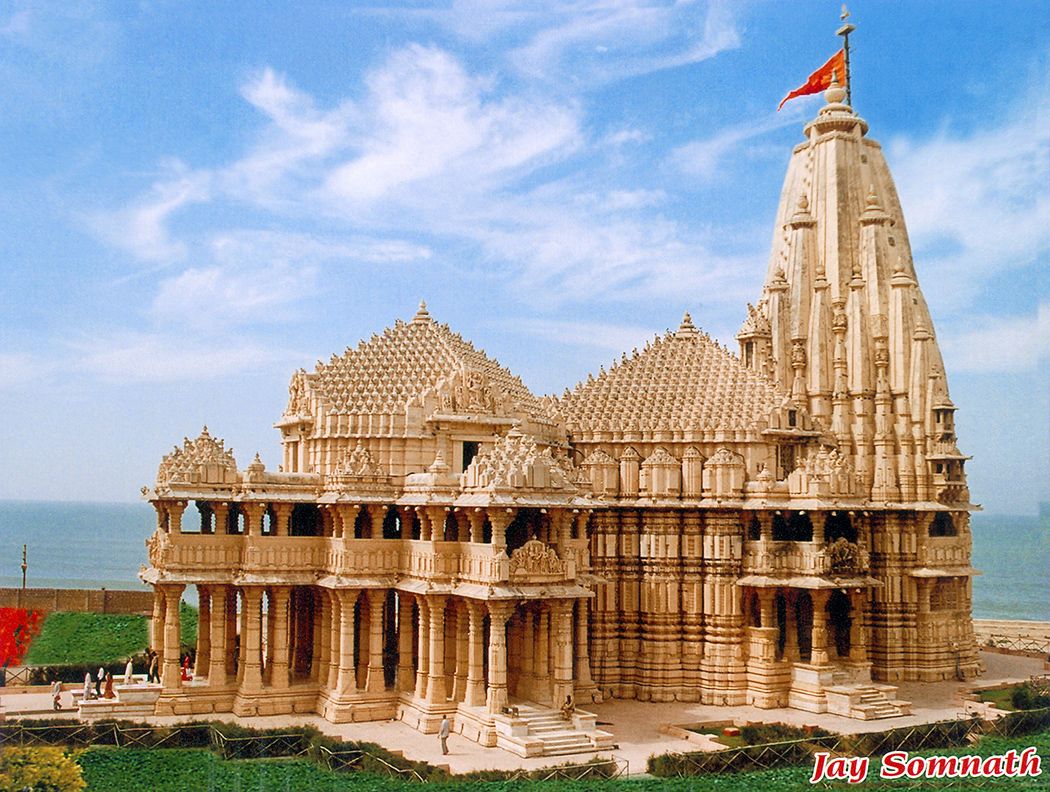
Somnath Temple is the first and most significant of the twelve Jyotirlingas dedicated to Lord Shiva. It is located at Prabhas Patan in the Gir Somnath district of Gujarat, right on the edge of the Arabian Sea. The temple is a symbol of resilience, having been destroyed and rebuilt at least 17 times throughout its history. It is a major pilgrimage site for Hindus and forms an essential part of the spiritual landscape of western India.
The current temple was built after India gained independence and was inaugurated in 1951. It is managed by the Shree Somnath Trust. When visiting, you should be prepared for strict security measures, as no electronic items or leather goods are allowed inside the main complex. The temple remains a focal point for devotees who come to witness the meeting of the Hiran, Kapila, and Saraswati rivers at the Triveni Sangam nearby.
Quick Facts
| Field | Details |
|---|---|
| Main Deity | Lord Shiva (Somnath) |
| Location | Prabhas Patan, Veraval, Gujarat |
| State | Gujarat |
| Temple Type | Jyotirlinga (1st of 12) |
| Nearest Station | Veraval Junction (6 km) / Somnath Station (2 km) |
| Nearest Airport | Diu Airport (65 km) / Rajkot Airport (195 km) |
| Entry Fee | Free |
| Timings | 6:00 AM to 9:30 PM |
| Best Months | October to March |
| Avoid | Peak Monsoon (July-August) and extreme Summer (May-June) |
History and Background
The history of the Somnath Temple is a record of repeated destruction and reconstruction. Ancient Hindu texts, including the Rigveda and the Shiva Purana, mention the sanctity of this site. The first temple is said to have existed thousands of years ago, though the first historically recorded structure was built around the 7th century by the Maitraka kings of Vallabhi. This second temple was destroyed by the Arab governor of Sindh, Al-Junayd, in 725 CE.
Nagabhata II, a Gurjara-Pratihara king, rebuilt the temple in 815 CE using red sandstone. The most famous and devastating attack occurred in 1025 CE when Mahmud of Ghazni raided the temple. He looted its immense wealth and destroyed the Jyotirlinga. Following this, King Bhoja of Paramara and King Bhimdev I of the Solanki dynasty worked together to rebuild the structure. In 1299, the temple was again attacked by the army of Alauddin Khilji, led by Ulugh Khan. Each time the temple was razed, local Hindu rulers and devotees rebuilt it, demonstrating the site's importance to the community.
The temple faced further attacks from Zafar Khan in 1395, Mahmud Begada in 1451, and the Portuguese in 1546. The final major destruction was ordered by the Mughal Emperor Aurangzeb in 1665 and again in 1706. For many years after that, the site remained in ruins, with a small mosque built nearby.
The modern history of Somnath began in November 1947. Following the integration of Junagadh into India, Sardar Vallabhbhai Patel visited the ruins and vowed to rebuild the temple. The project was led by K.M. Munshi and the Somnath Trust. While Jawaharlal Nehru expressed concerns about government involvement in a religious project, the reconstruction proceeded with public funds. The "Kailash Mahameru Prasad" style temple was completed, and the Pran-Pratistha (consecration) was performed by Dr. Rajendra Prasad, the first President of India, on May 11, 1951.
The Deity and Significance
The main deity at this temple is Lord Shiva, worshipped as Somnath, which means "Lord of the Moon" or "Lord of Soma." According to the Shiva Purana, the Moon God (Soma) was married to the 27 daughters of Daksha Prajapati. However, Soma favored only one wife, Rohini, and neglected the others. Enraged by this, Daksha cursed Soma to lose his luster and fade away.
To regain his light, Soma came to Prabhas Patan and performed intense penance for Lord Shiva. Pleased with his devotion, Shiva partially lifted the curse, allowing the moon to wax and wane in cycles. Shiva then manifested as a Jyotirlinga at this spot to stay forever. This is why Somnath is considered the first of the twelve Jyotirlingas.
Pilgrims visit Somnath to seek relief from sins and to pray for health and longevity. The site is also significant because it is located at the Triveni Sangam, where three holy rivers meet the sea. This geographical feature makes it a "Tirtha" or a crossing point between the physical and spiritual worlds. The presence of the Jyotirlinga here is believed to be particularly powerful due to its proximity to the ocean, representing the infinite nature of the deity.
What You'll See
The current Somnath Temple is built in the Chalukya style, also known as the Solanki style of temple architecture. It is constructed primarily of sandstone. The main tower, or Shikhara, rises to a height of 150 feet. At the very top of the Shikhara is a flag pole that carries a flag with the symbols of the sun and the moon.
The temple complex is divided into several sections:
- Garbhagriha (Sanctum Sanctorum): This houses the Jyotirlinga, which is decorated with flowers and ornaments during aarti.
- Sabha Mandap (Assembly Hall): A large hall where devotees gather for prayers. It features intricate carvings on the pillars and ceiling.
- Nritya Mandap (Dance Hall): Historically used for cultural performances, this area showcases the artistic heritage of the region.
One of the most unique features of the temple is the Baan Stambha (Arrow Pillar) located on the sea wall. This pillar has an inscription stating that if you travel in a straight line from that point toward the South Pole, you will encounter no landmass. This ancient observation is geographically accurate.
The temple exterior is covered in detailed carvings of various deities, musicians, and animals. The entire complex is surrounded by a massive fortified wall. In the evening, the temple is illuminated with lights, and the Sound and Light show takes place in the open area behind the temple, with the Arabian Sea providing a natural backdrop.
Darshan — How It Works
The darshan process at Somnath is well-organized but involves strict security. You cannot take mobile phones, cameras, smartwatches, or any electronic devices inside. There are free locker facilities available near the main entrance where you must deposit these items. Leather belts and wallets are also generally discouraged or prohibited inside the main sanctum area.
Entry Points and Queues:
There is a single main entry gate for devotees. On a regular weekday, the queue moves quickly, and you can complete darshan in 30 to 45 minutes. On Mondays, which are sacred to Lord Shiva, the wait time can increase to 1.5 or 2 hours. During festivals like Maha Shivratri, the wait can exceed 5 to 6 hours.
The Darshan Experience:
Once you pass security, you walk through the courtyard to the Sabha Mandap. You move in a single file line toward the Garbhagriha. You will get about 10 to 20 seconds directly in front of the Jyotirlinga before the security staff asks you to move forward. You are not allowed to touch the Linga.
Special Puja and Aarti:
Aarti takes place three times a day: 7:00 AM, 12:00 PM, and 7:00 PM. The evening aarti is the most crowded. You can book various pujas like the 'Someshwar Mahapuja' or 'Bilva Puja' at the trust office located within the complex. Costs for these range from ₹100 to several thousand rupees depending on the complexity of the ritual.
Priority Access:
There are separate lines or assistance available for the elderly and physically challenged. Wheelchairs are available at the entrance, and the temple path is mostly ramp-accessible.
Festival and Crowd Calendar
| Month | Crowd Level | Main Event / Reason |
|---|---|---|
| January | Moderate | Winter tourists and New Year pilgrims |
| February | Very High | Maha Shivratri (Major festival) |
| March | Moderate | Holi and end of winter season |
| April | High | Chaitra Navratri and summer vacations start |
| May | High | School holidays and peak summer travel |
| June | Moderate | Start of monsoon; humidity is high |
| July | High | Shravan Month (Very auspicious for Shiva) |
| August | High | Shravan Month and Raksha Bandhan |
| September | Moderate | Bhadrapada month rituals |
| October | High | Sharad Navratri and Diwali holidays |
| November | Very High | Kartik Purnima and Somnath Mahadev Fair |
| December | High | Winter break and year-end travel |
Most Crowded Events:
- Maha Shivratri (Feb/March): This is the biggest event. Expect 24-hour queues and massive crowds. Wait times can be 6-8 hours.
- Shravan Month (July/August): Every Monday in this month is extremely busy. Devotees from across Gujarat and India visit during this time.
- Kartik Purnima (November): A large five-day fair (mela) is held here, attracting thousands of rural pilgrims.
Best Times for Short Queues:
The shortest queues are usually found on mid-week days (Tuesday to Thursday) in the months of September and early October, just before the Diwali rush begins. Arriving for the early morning darshan at 6:00 AM also helps avoid the midday heat and crowds.
Getting There
By Train
Veraval Junction is the primary railway station serving Somnath. It is well-connected to major cities in Gujarat and other parts of India.
| From | Train Name | Duration | Notes |
|---|---|---|---|
| Ahmedabad | 19119 Somnath Intercity | 7h 30m | Daily service; very convenient |
| Mumbai | 19217 Saurashtra Janta Exp | 16h 15m | Daily from Bandra Terminus |
| Delhi | 12462 Shri Shakti Exp (to JAT) | N/A | No direct; change at Ahmedabad/Rajkot |
| Pune | 11088 Pune Veraval Exp | 20h 30m | Weekly service (Thursdays) |
| Jabalpur | 11464 Somnath Express | 26h 45m | Runs via Itarsi and Bhopal |
| Rajkot | 19251 Somnath Express | 4h 15m | Daily overnight/early morning |
Note: You can book tickets at irctc.co.in. From Veraval station, auto-rickshaws are available for ₹100-₹150 to reach the temple.
By Road
Somnath is well-connected by the Gujarat State Highway network.
- From Rajkot: 195 km via NH151. The road is generally in good condition.
- From Ahmedabad: 410 km via NH47 and NH151. It takes about 7-8 hours by car or bus.
- From Dwarka: 230 km via the coastal highway. This is a popular route for those doing the "Dwarka-Somnath" circuit.
State transport (GSRTC) buses and private luxury buses run frequently from Ahmedabad, Rajkot, and Jamnagar.
By Air
- Diu Airport (DIU): Located 65 km away. This is the closest airport. Flights are limited, mostly from Mumbai. You can take a taxi from Diu to Somnath (approx. 1.5 to 2 hours).
- Rajkot Airport (RAJ): Located 195 km away. It has better connectivity with major Indian cities. From Rajkot, you can hire a taxi or take a train/bus to Somnath.
Where to Stay
The Shree Somnath Trust operates several guest houses which are the best options for pilgrims.
- Sagar Darshan Guest House: This is a premium option located right on the seafront. Rooms range from ₹2,000 to ₹3,500. It offers excellent views of the temple and the sea.
- Lilavati Guest House: A mid-range option with clean rooms. Prices are around ₹800 to ₹1,500. It is very close to the temple entrance.
- Maheshwari Guest House: A budget-friendly option with basic amenities, usually costing under ₹800.
There are also several private hotels in the town of Veraval (6 km away) and along the bypass road. Staying in Somnath town itself is better if you want to attend the early morning or late evening aarti.
What You Can't Miss Nearby
- Bhalka Tirtha (5 km): This is the spot where Lord Krishna was mistakenly hit by an arrow while resting under a Peepal tree. It marks the site of his departure from the mortal world. There is a beautiful temple here with a reclining idol of Krishna.
- Triveni Sangam (1.5 km): The confluence of the Hiran, Kapila, and Saraswati rivers. It is a holy spot for taking a dip and performing ancestral rites (Shradh).
- Gita Mandir (1.5 km): Located near the Triveni Sangam, this temple has the entire Bhagavad Gita carved onto its marble pillars.
- Paanch Pandav Gufa (2 km): An ancient cave temple dedicated to the five Pandava brothers. It is located on a small hill and requires climbing a few steps.
- Prabhas Patan Museum: Located near the temple, it houses remnants and sculptures from the previous versions of the Somnath temple that were destroyed by invaders.
- Junagadh (95 km): A historic city at the foot of Girnar Hill. You can visit the Uparkot Fort, Mahabat Maqbara, and the Ashokan Edicts here. It is a perfect day-trip from Somnath.
Practical Information
| Category | Details |
|---|---|
| Estimated Cost | ₹1,500 - ₹3,000 per day (including stay and food) |
| Dress Code | Modest clothing. Avoid shorts, skirts, or sleeveless tops. |
| Photography | Strictly prohibited inside the temple complex. |
| Lockers | Available for free near the entrance for phones and bags. |
| Food | The Trust runs a 'Prasadam' dining hall (Bhojanalaya) providing hygienic meals at low cost. |
| Wheelchair Access | Available; the temple is mostly accessible for the disabled. |
| Toilets | Clean public toilets are available within the complex and near the parking. |
Frequently Asked Questions
Is there an entry fee for Somnath Temple?
No, entry to the Somnath Temple is free for all devotees. There are no charges for general darshan. However, if you wish to perform specific pujas or rituals, you will need to pay the prescribed fees at the Trust office.
What are the temple timings?
The temple is open from 6:00 AM to 9:30 PM every day. Darshan is available throughout the day, except during short intervals when the deity is being decorated or offered food.
What is the dress code for Somnath Temple?
While there is no rigid uniform, visitors are expected to dress modestly. Men should ideally wear dhotis or trousers, and women should wear sarees or salwar kameez. Avoid wearing short skirts, shorts, or revealing clothing, as you may be denied entry.
Can I take my mobile phone inside the temple?
No, mobile phones, cameras, and all other electronic items are strictly prohibited inside the temple premises. You must deposit them at the free locker counter located outside the main gate.
When is the best time to visit Somnath?
The best time to visit is from October to March when the weather is cool and pleasant. The summer months (April to June) can be very hot, and the monsoon season (July to September) can be very humid with heavy rainfall.
How do I reach Somnath from Ahmedabad?
You can reach Somnath from Ahmedabad by train (Somnath Intercity), by state transport or private bus, or by hiring a taxi. The journey takes approximately 7 to 8 hours by road.
Is Somnath one of the 12 Jyotirlingas?
Yes, Somnath is the first of the twelve Jyotirlingas. It is considered the most sacred among them because of its historical and mythological significance.
Can non-Hindus visit the Somnath Temple?
Yes, people of all faiths are allowed to visit the temple. However, non-Hindus and foreigners may sometimes be asked to sign a register or provide identification at the security office before entering.
Is there a Sound and Light show at Somnath?
Yes, there is a Sound and Light show called "Jay Somnath" held every evening from 8:00 PM to 9:00 PM. It narrates the history of the temple. The show is held in the open air behind the temple.
How far is the railway station from the temple?
Somnath Railway Station is about 2 km away, but it has limited train connectivity. Veraval Junction, which is 6 km away, is the main station with frequent trains to major cities.
Are there good places to eat near the temple?
Yes, the Somnath Trust runs a Bhojanalaya that serves simple and hygienic vegetarian meals. There are also many private restaurants nearby serving Gujarati thalis and North Indian food.
Quick Reference
- Significance: First of the 12 Jyotirlingas.
- Location: Prabhas Patan, Gujarat, on the Arabian Sea coast.
- Main Rituals: Aarti at 7 AM, 12 PM, and 7 PM.
- Security: No electronics, cameras, or leather items allowed inside.
- Must-See: The Baan Stambha (Arrow Pillar) and the evening Sound and Light show.
- Nearby Holy Site: Bhalka Tirtha, where Lord Krishna left his mortal body.
- Transport: Veraval (6 km) is the main rail head; Diu (65 km) is the nearest airport.
- Booking: Use the official Somnath Trust website for guest house bookings to ensure availability.