
Kamakhya Temple
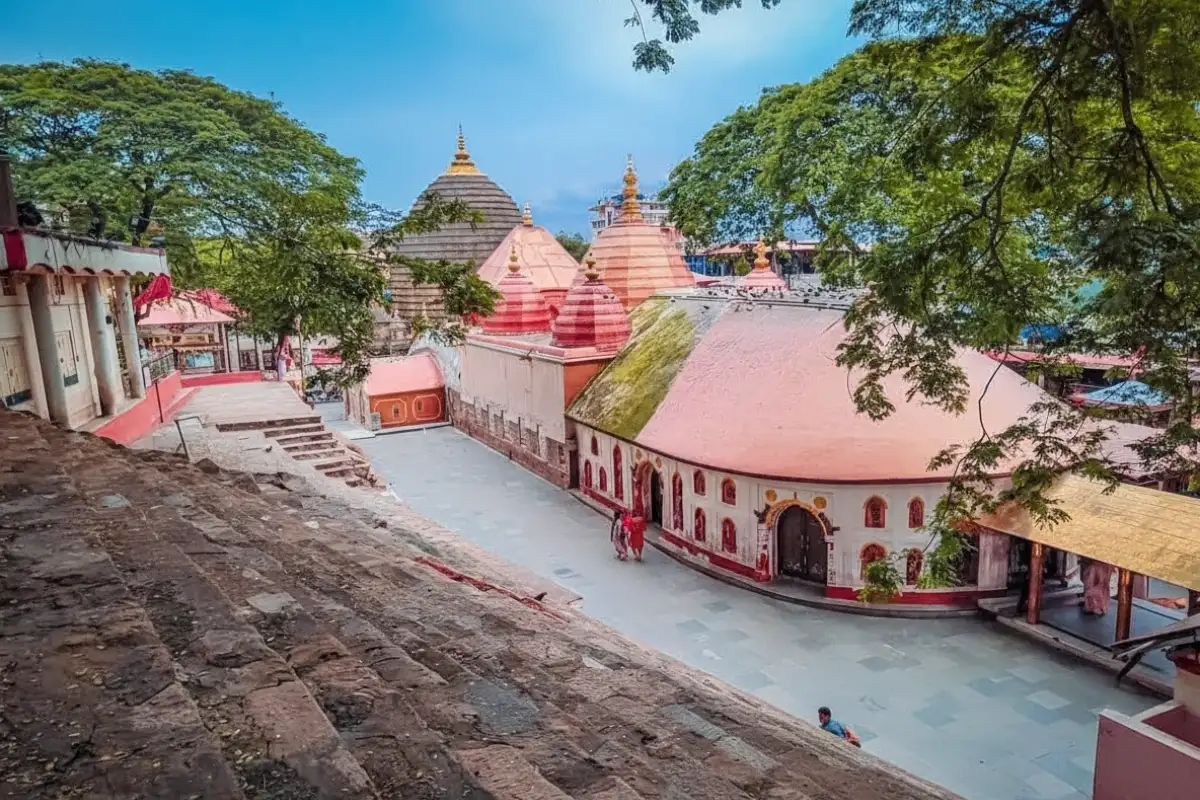
Kamakhya Temple is a major Hindu temple dedicated to the goddess Kamakhya. It is located on Nilachal Hill in the western part of Guwahati, Assam. This site is the most significant of the 51 Shakti Peethas in India, representing the spot where the yoni (womb) of Goddess Sati fell. It serves as a primary center for Tantric practices and draws thousands of devotees, especially during the annual Ambubachi Mela.
The temple does not house a traditional idol of the goddess. Instead, pilgrims worship a natural stone fissure that stays moist from an underground spring. Visitors should prepare for long wait times and a physical climb up the hill. The temple is the most visited site in Northeast India and is central to the spiritual life of the region.
Quick Facts
| Field | Details |
|---|---|
| Deity | Goddess Kamakhya (Shakti) |
| Location | Nilachal Hill, Guwahati |
| State | Assam |
| Temple Type | Shakti Peetha (Tantric Center) |
| Nearest Metro/Station | Guwahati Railway Station (8 km) |
| Nearest Airport | Lokpriya Gopinath Bordoloi International Airport (20 km) |
| Entry Fee | Free (General); ₹501 (Special Darshan); ₹101 (Defense/Police) |
| Timings | 08:00 AM to 01:00 PM; 02:30 PM to 05:30 PM |
| Best Months | October to March |
| Avoid | June (during Ambubachi Mela if you dislike extreme crowds) |
History and Background
The history of Kamakhya Temple is a mix of ancient mythology and documented historical reconstructions. The site is mentioned in the Kalika Purana and the Yogini Tantra, texts that date back several centuries. These texts identify the location as the center of the earth and the primary seat of Tantric worship. According to the Puranas, when Lord Shiva performed the Tandava with the corpse of Sati, Lord Vishnu used his Sudarshana Chakra to dismember the body. The yoni of Sati fell on Nilachal Hill, turning the hill blue, which gives it the name "Nilachal" (Blue Hill).
Archaeological evidence suggests that a temple structure existed at this site as early as the 8th or 9th century during the Mlechchha dynasty. However, the original structure was destroyed in the 16th century. Historical records attribute this destruction to Kalapahar, a general of the Sultan of Bengal, who invaded the region in 1553. He demolished many Hindu temples across Assam and Odisha.
The temple remained in ruins until the Koch dynasty took control of the region. King Nara Narayana and his brother, General Chilarai, rebuilt the temple in 1565. They used the ruins of the older temple to construct the new one, which is why the base of the temple shows older stone carvings while the upper sections are made of brick. Later, in the 17th and 18th centuries, the Ahom kings of Assam took over the patronage of the temple. King Gadadhar Singha and later King Pramatta Singha added structures like the Natamandira (dancing hall) and the stone stairs leading up the hill.
The temple has survived several earthquakes, including the major 1897 Assam earthquake, which caused damage to the main dome. Subsequent repairs have maintained the structure that visitors see today. Throughout its history, Kamakhya has remained the focal point of the Shakta tradition, where the goddess is worshipped as the source of all creation and desire.
The Deity and Significance
The main deity of the temple is Goddess Kamakhya, an incarnation of Shakti. The name "Kamakhya" comes from the word "Kama," meaning desire. She is worshipped as the "Goddess of Desire" and the "Yielder of All Desires." Unlike most Hindu temples, there is no statue or image of the goddess in the inner sanctum. Instead, the focus of worship is a natural rock cleft in the shape of a yoni. This rock is continuously fed by a natural underground spring, keeping it wet.
The significance of Kamakhya lies in its role as the most powerful of the 51 Shakti Peethas. It is considered the "Maha Peetha" because it represents the reproductive organ of the goddess. This makes the temple a symbol of birth, fertility, and the creative power of nature. Pilgrims come here seeking blessings for children, marriage, and the fulfillment of personal goals.
The temple is also the global center for the Vamachara (left-hand path) of Tantra. For Tantric practitioners, Kamakhya is the ultimate site for "Sadhana" or spiritual practice. The rituals performed here are distinct from mainstream Vedic traditions. They emphasize the power of the feminine and the cycle of nature. The belief that the goddess menstruates annually is a unique aspect of this temple, highlighting the biological reality of womanhood as a sacred force.
What You'll See
The architecture of Kamakhya Temple is known as the "Nilachal Style." This style is a combination of traditional Nagara architecture and local Assamese influences. The most striking feature is the main dome, which is shaped like a beehive. This dome is constructed of brick and features vertical ridges. Small sculptures of various deities and figures are carved into the exterior walls of the main temple.
The temple complex consists of four distinct chambers:
- Garbhagriha (Sanctum Sanctorum): This is the innermost chamber. It is located below ground level and is reached by a narrow, steep flight of stone steps. The chamber is dark and small. Inside, you will see the rock cleft covered with a silver sheet and draped in silk cloths and flowers.
- Calanta: This is a square chamber where a small movable idol of the goddess is kept for daily rituals. The walls here are decorated with carvings of various goddesses.
- Pancaratna: This is a large hall with five small spires on its roof. It is used for various rituals and offerings.
- Natamandira: This is the outermost hall, added by the Ahom kings. It has a long, vaulted roof and is used for traditional dances and large gatherings during festivals.
Outside the main temple, you will see the sacrificial area. Animal sacrifice is still practiced here, particularly during major festivals. You will also see several smaller temples dedicated to the ten Mahavidyas (the ten forms of Shakti), including Tara, Bagalamukhi, and Chinnamasta. The view from the hill offers a wide perspective of the Brahmaputra River and the city of Guwahati.
Darshan — How It Works
Getting darshan at Kamakhya Temple requires patience and planning. The temple opens early, but queues start forming long before sunrise.
Entry Points and Tickets:
- General Queue: This is free. On a normal weekday, the wait time is usually 3 to 5 hours. On weekends or auspicious days, it can extend to 8 or 10 hours.
- Special Darshan (VIP): Tickets cost ₹501 per person. This queue is shorter but still involves a wait of 1 to 2 hours. These tickets are sold at a counter near the main entrance.
- Defense/Police Queue: Personnel with valid ID cards can get a ticket for ₹101.
- Direct Entry: There are provisions for elderly citizens and the physically challenged, though they still have to navigate some steps.
The Process:
Once you enter the queue complex, you move through covered walkways. There are benches and fans in some sections. When you reach the main temple, you enter the Calanta and then descend into the Garbhagriha. The space inside the sanctum is very tight. You will only get a few seconds to touch the water of the spring and offer your prayers before the guards move you along.
Puja Options:
You can perform various pujas through the temple priests (Pandas). A simple offering of flowers and sweets is common. More elaborate rituals like Kumara Puja (worshipping young girls) or specific Tantric rituals can be arranged. Prices for these vary based on the complexity and the materials used. Always agree on a price with the priest beforehand.
Timings:
The temple is open from 8:00 AM to 1:00 PM. It then closes for bhog (offerings to the deity) and reopens from 2:30 PM to 5:30 PM. During the Ambubachi Mela, the temple remains closed for three days and only reopens on the fourth day.
Festival and Crowd Calendar
| Month | Crowd Level | Main Event / Reason |
|---|---|---|
| January | Moderate | Pous Mela and winter pilgrims |
| February | Moderate | Magh Bihu and pleasant weather |
| March | High | Holi (Doul Utsav) and Shivaratri |
| April | High | Bohag Bihu (Assamese New Year) |
| May | Moderate | Regular summer crowds |
| June | Extreme | Ambubachi Mela (Temple closed for 3 days) |
| July | Moderate | Monsoon season; fewer local travelers |
| August | High | Manasa Puja (Deodhani Dance festival) |
| September | Moderate | Pre-festival preparations |
| October | Extreme | Durga Puja and Navratri |
| November | Moderate | Post-monsoon pilgrimage season |
| December | High | Year-end tourists and winter holidays |
Most Crowded Events:
- Ambubachi Mela (June): This is the busiest time. Over 500,000 people visit during these few days. The temple is closed for the first three days, and the queue on the reopening day can take 24 hours or more.
- Durga Puja (October): As a Shakti Peetha, Navratri is celebrated with great intensity. Expect wait times of 10-12 hours.
- Manasa Puja (August): This features the unique Deodhani dance, where dancers go into a trance. It attracts many locals and photographers.
Best Times for Short Queues:
- Mid-week (Tuesday to Thursday): Avoid Mondays, Fridays, and weekends.
- Late January and February: The weather is cold but clear, and the festival rush is low.
- Early September: Just before the Durga Puja rush begins.
Getting There
By Train
Guwahati is the gateway to Northeast India and is well-connected by rail. The nearest station is Guwahati Railway Station (GHY), located 8 km from the temple. Another nearby station is Kamakhya Junction (KYQ), which is even closer (about 4 km) but fewer long-distance trains stop there.
| From | Train Name | Duration | Notes |
|---|---|---|---|
| New Delhi | 12424 DBRT Rajdhani | 28 hours | Fastest option from Delhi |
| Kolkata | 12345 Saraighat Exp | 17 hours | Very reliable daily service |
| Mumbai | 12519 LTT KYQ AC Exp | 44 hours | Ends at Kamakhya Junction |
| Bangalore | 12509 Bangalore Cantt Exp | 52 hours | Long journey; crosses many states |
| Chennai | 12842 Coromandel Exp | 42 hours | Change at Howrah or take direct MAS-GHY |
| Hyderabad | 12774 SC SHM AC Exp | 45 hours | Connects via Shalimar/Kolkata |
Note: Book your tickets in advance at irctc.co.in.
By Road
Guwahati is connected to the rest of India via NH27. The roads within the city are generally good, but traffic can be heavy.
- From Shillong: 100 km (approx. 3 hours). The road is a beautiful four-lane highway (NH6).
- From Tezpur: 185 km (approx. 4-5 hours) via NH27.
- Local Transport: You can take an auto-rickshaw, taxi, or app-based cabs (Uber/Ola) from any part of Guwahati. There are also regular ASTC (Assam State Transport Corporation) buses that drop passengers at the base of Nilachal Hill. From the base, shared taxis are available to take you to the temple entrance.
By Air
The nearest airport is Lokpriya Gopinath Bordoloi International Airport (GAU), located about 20 km from the temple. It has direct flights from major cities like Delhi, Mumbai, Kolkata, Bangalore, and Chennai. From the airport, you can hire a pre-paid taxi or use Uber/Ola to reach the temple. The drive takes about 45 to 60 minutes depending on traffic.
Where to Stay
Budget (₹500 - ₹1,500):
There are several dharamshalas and guest houses on Nilachal Hill itself. These are basic but convenient if you want to join the morning queue early. Alternatively, look for budget hotels near the Guwahati Railway Station in the Paltan Bazaar area.
Mid-Range (₹2,000 - ₹4,500):
Paltan Bazaar and GS Road have many reliable hotels. Staying in the city center is often better as it gives you more food options and easier access to other attractions. Look for brands like Ginger or local boutique hotels.
Best Overall (₹5,000+):
For a comfortable stay, choose hotels on GS Road or near the Brahmaputra riverfront. Vivanta Guwahati and Radisson Blu are the top choices. Radisson Blu is located on the way to the airport, which is convenient for travelers, while Vivanta is in the heart of the city's shopping district.
What You Can't Miss Nearby
1. Umananda Temple (6 km):
Located on the Peacock Island in the middle of the Brahmaputra River. It is dedicated to Lord Shiva. You have to take a ferry or a motorboat from Umananda Ghat to reach it. It is known as the smallest inhabited river island in the world.
2. Navagraha Temple (10 km):
Situated on Chitrachal Hill, this temple is dedicated to the nine celestial bodies (planets) of Hindu astronomy. It was an ancient center for study in astronomy and astrology.
3. Assam State Museum (8 km):
Located in the heart of the city near Dighalipukhuri. It houses a large collection of local artifacts, tribal crafts, and medieval stone sculptures. It provides excellent context for the history of the region.
4. Brahmaputra River Cruise (7 km):
Several operators offer sunset cruises on the Brahmaputra. It is a relaxing way to see the city skyline and the hills surrounding Guwahati. Dinner cruises are also available.
5. Srimanta Sankaradeva Kalakshetra (15 km):
A cultural institution that showcases the diverse culture of Assam and the Northeast. It includes a museum, a library, and an open-air theater. It is named after the medieval seer-saint Sankaradeva.
6. Basistha Ashram (18 km):
A quiet ashram located on the outskirts of the city, believed to be the home of the sage Basistha. It features a small temple and a waterfall, offering a peaceful environment away from the city noise.
Practical Information
Costs Table:
| Item | Approximate Cost |
|---|---|
| Special Darshan Ticket | ₹501 |
| Defense/Police Ticket | ₹101 |
| Shared Taxi (Base to Top) | ₹20 per person |
| Private Taxi (City to Temple) | ₹300 - ₹500 |
| Simple Meal (Thali) | ₹120 - ₹250 |
| Shoe Keeping | Free (Tips common) |
Dress Code:
- Men: Dhoti or formal trousers. Avoid shorts and sleeveless shirts.
- Women: Saree, Salwar Kameez, or long skirts. Shoulders and legs must be covered.
- Note: You must remove your shoes before entering the main temple complex.
Photography:
- Photography is strictly prohibited inside the inner sanctum (Garbhagriha).
- You can take photos of the temple exterior and the surrounding complex.
- Professional videography requires prior permission from the temple board.
On-site Facilities:
- Lockers: Available near the entrance for bags and electronics.
- Food: Several small shops sell snacks, tea, and water. The temple also serves bhog (prasad) in the afternoon.
- Toilets: Basic public toilets are available but may not be very clean during peak hours.
- Wheelchair Access: Very limited. The terrain is hilly and there are many steps.
What to Bring:
- A bottle of water (queues are long).
- An umbrella or hat (for sun or rain).
- Small change for offerings and tips.
- Valid ID proof if you are opting for the Defense/Police queue.
Frequently Asked Questions
Is there an entry fee for Kamakhya Temple?
General entry is free for everyone. However, if you want to skip the long general queue, you can purchase a Special Darshan ticket for ₹501 or a Defense/Police ticket for ₹101.
What are the temple timings?
The temple is open from 8:00 AM to 1:00 PM and 2:30 PM to 5:30 PM. The gates usually close for a break in the afternoon for rituals and cleaning.
What is the dress code for visitors?
Visitors should wear modest Indian clothing. Men should wear trousers or dhotis, and women should wear sarees or suits. Shorts, miniskirts, and sleeveless tops are not allowed inside the temple.
Can non-Hindus visit Kamakhya Temple?
Yes, people of all faiths can visit the temple complex and see the architecture. However, entry into the innermost sanctum (Garbhagriha) is generally reserved for practicing Hindus.
How long does darshan take?
On a normal day, expect to spend 3 to 5 hours in the general queue. With a special ticket, it takes about 1 to 2 hours. During festivals like Ambubachi Mela, the wait can exceed 10 hours.
Is photography allowed?
Photography is allowed in the outer courtyard and the temple complex. It is strictly forbidden inside the inner sanctum where the deity is located.
What is the best time of year to visit?
The best time is from October to March when the weather in Guwahati is pleasant. June is the time for the Ambubachi Mela, which is culturally significant but extremely crowded.
How do I reach the temple from the airport?
The airport is 20 km away. You can take a pre-paid taxi, an Ola/Uber, or a bus to the city and then a shared taxi up Nilachal Hill. The drive takes about an hour.
Is animal sacrifice still practiced here?
Yes, animal sacrifice (mostly goats) is a traditional part of the rituals at Kamakhya, especially during Navratri and other major festivals. It takes place in a specific area in the outer courtyard.
What is the significance of the red cloth (Angodak)?
During the Ambubachi Mela, the goddess is believed to menstruate. Small pieces of red cloth, supposedly stained by the goddess, are distributed to devotees as "Angodak." It is considered highly auspicious.
Are there many steps to climb?
Yes, there are about 100-150 stone steps from the vehicle drop-off point to the main temple. If you walk from the base of the hill, it is a much longer climb. Shared taxis can take you most of the way up.
Is this one of the 12 Jyotirlingas?
No, Kamakhya is not a Jyotirlinga. It is a Shakti Peetha, specifically the most important of the 51 Shakti Peethas dedicated to the feminine divine.
Quick Reference
- Main Deity: Goddess Kamakhya (Yoni-Mudra).
- Location: Nilachal Hill, Guwahati, Assam.
- Significance: Most important of the 51 Shakti Peethas; center of Tantra.
- Unique Feature: No idol; worship of a natural spring-fed rock cleft.
- Major Festival: Ambubachi Mela in June (Goddess's menstruation period).
- Architecture: 16th-century Nilachal style with a beehive-shaped dome.
- Darshan Time: 3-5 hours (General); 1-2 hours (Special).
- Nearest Transport: Guwahati Railway Station (8 km) and Guwahati Airport (20 km).
- Dress Code: Conservative Indian attire required.