
Grishneshwar Temple
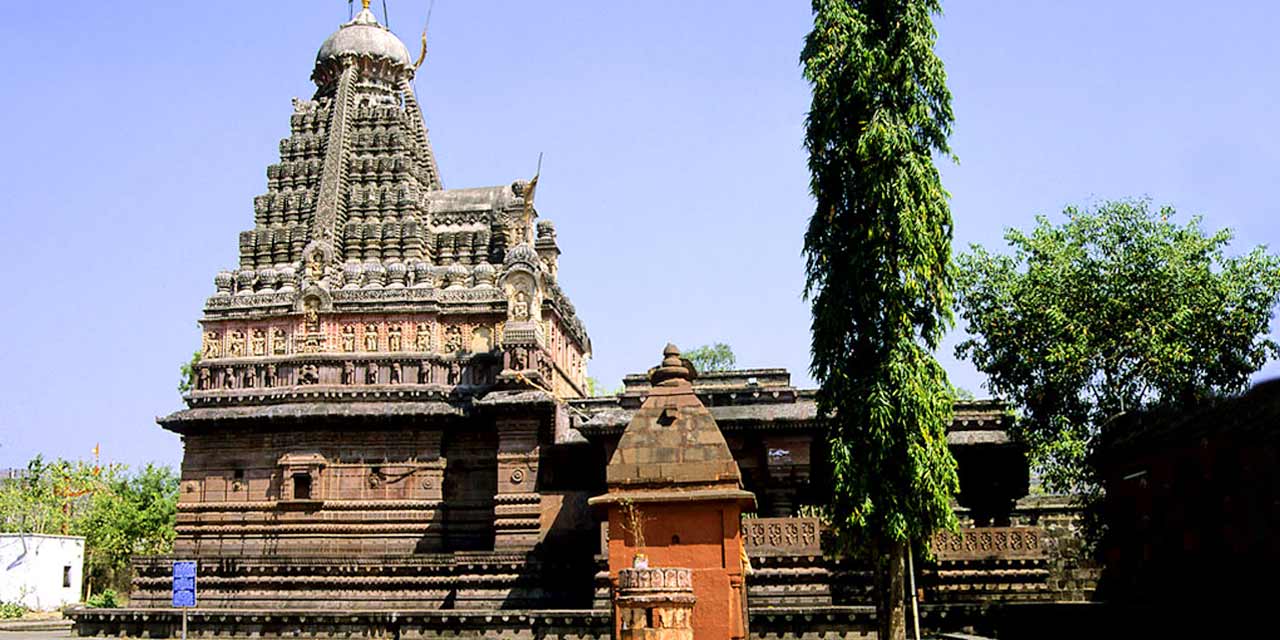
Grishneshwar Temple is a major Hindu pilgrimage site located in Verul, Maharashtra. It is the twelfth and final Jyotirlinga of Lord Shiva, making it the concluding destination for devotees completing the 12-Jyotirlinga circuit. The temple is situated less than a kilometer from the Ellora Caves, a UNESCO World Heritage site, and attracts thousands of visitors daily who combine their spiritual visit with a tour of the ancient rock-cut caves.
The current structure was rebuilt in the 18th century by the Maratha queen Ahilya Bai Holkar of Indore. It is known for its red stone architecture and strict traditional customs, including a specific dress code for men entering the inner sanctum. Visitors should plan for a half-day visit to the temple, though the surrounding area requires more time if exploring the nearby historical monuments and caves.
Quick Facts
| Field | Details |
|---|---|
| Deity | Lord Shiva (Grishneshwar / Ghushmeshwar) |
| Location | Verul Village, Aurangabad District |
| State | Maharashtra |
| Temple Type | Jyotirlinga (12th and final) |
| Nearest Metro/Station | Aurangabad (Chhatrapati Sambhajinagar) Junction (29 km) |
| Nearest Airport | Aurangabad Airport (IXU) (30 km) |
| Entry Fee | Free (Paid VIP Darshan available) |
| Timings | 5:30 AM to 9:30 PM (Extended during festivals) |
| Best Months | October to March |
| Avoid | Peak Monsoon (July-August) and Maha Shivaratri (extreme crowds) |
History and Background
The history of Grishneshwar Temple is a record of destruction and reconstruction over several centuries. While the site is ancient and mentioned in the Shiva Purana, the original structure suffered significant damage during the 13th and 14th centuries during the Delhi Sultanate's invasions of the Deccan region. Historical records indicate that the temple was a focal point of devotion for the local Yadava rulers before these conflicts.
In the late 16th century, Maloji Bhosale, the grandfather of Chhatrapati Shivaji Maharaj, discovered a treasure in an ant hill and used the wealth to restore the temple and build a large water tank (Shivalaya) nearby. This restoration helped revive the site as a major pilgrimage center. However, the temple faced further damage in subsequent years due to regional instability and conflict between the Marathas and the Mughals.
The temple seen today was constructed in the 18th century by Rani Ahilya Bai Holkar of Indore. She was a prominent Maratha queen known for her extensive temple-building projects across India, including the reconstruction of the Kashi Vishwanath Temple in Varanasi. Ahilya Bai Holkar used red basalt stone to build the current structure, ensuring it followed the traditional Bhumija architectural style. Her contribution is commemorated by the local community, as her work preserved the 12th Jyotirlinga for future generations. The temple remains under the management of a local trust and is protected as a monument of historical and religious importance.
The Deity and Significance
The primary deity of the temple is Lord Shiva, worshipped here as Grishneshwar or Ghushmeshwar. The name is derived from the legend of a woman named Ghushma. According to the Shiva Purana, Ghushma was a devout follower of Shiva who lived in the nearby hills. Her sister, Sudeha, became jealous of Ghushma’s devotion and the birth of her son. Sudeha killed the boy and threw him into the lake where Ghushma performed her daily rituals.
Despite the loss, Ghushma continued her prayers and rituals without anger. Shiva was moved by her patience and devotion, appearing before her and restoring her son to life. When Ghushma asked Shiva to remain at the site to protect and bless all devotees, he manifested as the Grishneshwar Jyotirlinga. Pilgrims come here seeking peace, mental clarity, and the resolution of family conflicts. As the 12th Jyotirlinga, this site represents the completion of the Jyotirlinga pilgrimage. It is believed that visiting this temple after the other eleven completes the cycle of spiritual merit associated with these specific Shiva shrines.
What You'll See
The temple is built in the Bhumija style of architecture, which is a variation of the North Indian Nagara style common in the Deccan. The most prominent feature is the 240-foot-tall shikhara (tower), which is constructed from red basalt stone. The tower is decorated with intricate carvings of various Hindu deities and mythological scenes. The red stone gives the temple a distinct appearance compared to the dark basalt used in the nearby Ellora Caves.
Inside the temple complex, you will find a large Nandi (the bull) statue facing the main sanctum. The main hall, or mandapa, is supported by 24 carved stone pillars that depict stories from the Puranas and the ten avatars of Lord Vishnu (Dashavatara). The inner sanctum (garbhagriha) houses the Jyotirlinga. Unlike many other temples where the linga is elevated, the Grishneshwar linga is located at floor level, allowing devotees to touch it during certain hours. The walls of the temple also feature carvings of the Maratha style, reflecting the era of Ahilya Bai Holkar’s reconstruction. The Shivalaya lake, located a short distance from the main entrance, is another key feature where pilgrims often perform ritual ablutions.
Darshan — How It Works
The darshan process at Grishneshwar is straightforward but follows strict traditional rules. There are two main lines: a general queue and a VIP/Paid queue. On a typical weekday, the wait time in the general queue is between 30 to 60 minutes. On Mondays and weekends, this can increase to 2 or 3 hours. During the month of Shravan or on Maha Shivaratri, wait times can exceed 10 hours.
A unique rule at this temple is that men must remove their shirts and vests before entering the inner sanctum (garbhagriha) for darshan. They are required to be bare-chested from the waist up. Women must wear traditional Indian attire, such as a saree or a salwar kameez with a dupatta. If you are not dressed appropriately, you may be stopped at the entrance of the inner chamber.
The temple opens at 5:30 AM for the morning Aarti. The best time for a quick darshan is usually between 6:00 AM and 8:00 AM on a Tuesday or Wednesday. Senior citizens and physically challenged visitors can often find assistance from the temple staff for a shorter path to the sanctum, though there is no separate official "fast track" elevator or ramp system like in some modern temples. You can book special pujas like Abhishek or Rudrabhishek at the temple office. The costs for these rituals vary from ₹500 to ₹5,000 depending on the complexity and the number of priests involved.
Festival and Crowd Calendar
| Month | Crowd Level | Main Event / Reason |
|---|---|---|
| January | Moderate | New Year visitors and winter tourists |
| February | Very High | Maha Shivaratri (The biggest annual event) |
| March | Moderate | Holi and end of peak tourist season |
| April | Low | Rising temperatures reduce pilgrim numbers |
| May | Low | Peak summer heat; fewer visitors |
| June | Moderate | Start of monsoon; local pilgrims visit |
| July | High | Shravan month begins; Mondays are very crowded |
| August | High | Shravan month continues; heavy rain possible |
| September | Moderate | Ganesh Chaturthi period; regional travelers |
| October | High | Navratri and start of pleasant weather |
| November | High | Diwali holidays and peak tourism |
| December | High | Year-end holidays and school vacations |
The most crowded event is Maha Shivaratri, which usually falls in late February or early March. Expect wait times of 12-15 hours. The Mondays of Shravan month (July/August) are also extremely busy, with queues lasting 5-7 hours. For the shortest queues, visit on a Wednesday or Thursday in the months of May or June, though the weather will be very hot.
Getting There
By Train
The nearest major railway station is Aurangabad (now officially Chhatrapati Sambhajinagar) Junction. It is well-connected to major Indian cities.
| From | Train Name | Duration | Notes |
|---|---|---|---|
| Mumbai | 12071 Janshatabdi Express | 6h 30m | Fastest daily connection |
| Delhi | 12716 Sachkhand Express | 19h 15m | Daily service from New Delhi |
| Hyderabad | 17649 Aurangabad Express | 12h 45m | Overnight journey |
| Pune | 11046 Dikshabhumi Express | 9h 00m | Weekly/Bi-weekly options |
| Bangalore | 16594 SBC NED Exp | 22h 10m | Change at Parbhani or Manmad |
| Chennai | 16003 MAS NSL Express | 24h 00m | Weekly service to Nagarsol |
Note: You can book tickets through the official portal at irctc.co.in. From Aurangabad station, you can hire a taxi or take a state transport (MSRTC) bus to Verul.
By Road
Grishneshwar is located on the Aurangabad-Chalisgaon road.
- From Aurangabad: 30 km (approx. 45-60 minutes). The road is generally in good condition.
- From Shirdi: 105 km (approx. 2.5 to 3 hours). Many pilgrims combine Shirdi and Grishneshwar in one trip.
- From Pune: 255 km (approx. 5.5 to 6 hours) via the Ahmednagar-Aurangabad highway.
Road conditions are mostly good, but the stretch near the Ellora ghats can be slow during heavy monsoon rains due to fog and slippery surfaces.
By Air
The nearest airport is Aurangabad Airport (IXU), located about 30 km from the temple. It has direct flights from Mumbai, Delhi, and Hyderabad. From the airport, pre-paid taxis are available directly to the temple or your hotel. The drive takes about an hour.
Where to Stay
Most visitors choose to stay in Aurangabad (Chhatrapati Sambhajinagar) because it offers a wider range of facilities, better restaurants, and proximity to the airport and railway station.
- Budget: There are several Dharamshalas and small guesthouses in Verul village near the temple. Prices range from ₹500 to ₹1,200 per night. Facilities are basic.
- Mid-range: Hotels in the outskirts of Aurangabad or near the Ellora Caves offer rooms between ₹2,500 and ₹4,500. Options include Hotel Kailas (right next to the caves) and various business hotels in the city.
- Best Overall: Staying in a 4-star or 5-star hotel in Aurangabad city (like Vivanta or Welcomhotel) is recommended for comfort. Prices range from ₹6,000 to ₹10,000.
Staying in the city is better if you plan to visit other sites like Bibi Ka Maqbara or Daulatabad Fort. Stay in Verul only if you want to attend the early morning 5:30 AM Aarti.
What You Can't Miss Nearby
- Ellora Caves (1 km): A UNESCO World Heritage site featuring 34 monasteries and temples cut into basalt cliffs. Cave 16, the Kailasa Temple, is the world's largest monolithic rock-cut structure and is a must-visit.
- Daulatabad Fort (15 km): A massive 14th-century hill fortress known for its complex defense systems, including a dark zigzag passage (Bhulbhulaiya) and a 600-foot vertical cliff face.
- Bibi Ka Maqbara (28 km): Often called the "Taj of the Deccan," this is the tomb of Rabia-ud-Daurani, the wife of Mughal Emperor Aurangzeb. It resembles the Taj Mahal in Agra.
- Panchakki (29 km): An 18th-century water mill designed to generate energy to grind grain for pilgrims. It features an impressive underground water channel system.
- Siddharth Garden and Zoo (30 km): A large garden and zoo in the heart of Aurangabad, popular for families and evening walks.
- Aurangabad Caves (32 km): Twelve Buddhist caves dating back to the 6th and 7th centuries, located on a hill behind Bibi Ka Maqbara, offering a great view of the city.
Practical Information
Costs Table
| Item | Approximate Cost |
|---|---|
| VIP Darshan Pass | ₹100 - ₹200 per person |
| Abhishek Puja | ₹500 onwards |
| Parking Fee | ₹50 - ₹100 |
| Simple Meal (Thali) | ₹150 - ₹300 |
| Taxi from Aurangabad (Full day) | ₹2,500 - ₹3,500 |
Rules and Facilities
- Dress Code: Men must be bare-chested to enter the inner sanctum. Women must wear sarees or suits with dupattas.
- Photography: Strictly prohibited inside the temple and the sanctum. You can take photos in the outer courtyard.
- Lockers: Available near the entrance to store shoes, bags, and mobile phones.
- Food: Several small eateries serve vegetarian Indian food and snacks outside the temple.
- Toilets: Basic public toilets are available near the parking area.
- Wheelchair Access: Limited. The temple has steps and uneven stone flooring which makes wheelchair navigation difficult without assistance.
Frequently Asked Questions
Is there an entry fee for Grishneshwar Temple?
No, general entry is free for all devotees. However, if you wish to skip the long general queue, you can purchase a VIP Darshan ticket at the temple counter for a nominal fee, usually around ₹100 to ₹200.
What are the darshan timings?
The temple is open daily from 5:30 AM to 9:30 PM. During the holy month of Shravan (August/September), the timings are often extended to accommodate the large number of pilgrims.
What is the dress code for men and women?
Men must remove their shirts and vests to enter the inner sanctum. They can wear trousers or a dhoti. Women are expected to wear traditional Indian clothing like a saree or a salwar kameez. Western casuals like shorts or sleeveless tops are not permitted inside the main prayer area.
Can I take photos inside the temple?
Photography and videography are strictly prohibited inside the temple building and the garbhagriha. You may take photos of the temple exterior and the shikhara from the courtyard or the street.
When is the best time to visit Grishneshwar?
The best time is during the winter months from October to March when the weather is cool and pleasant for walking. Avoid the summer months of April to June as temperatures can exceed 40°C.
How do I reach the temple from Aurangabad?
You can take a state transport bus from the Aurangabad Central Bus Stand, which runs frequently to Ellora/Verul. Alternatively, you can hire a private taxi or an auto-rickshaw for the 30 km journey.
Is this one of the 12 Jyotirlingas?
Yes, Grishneshwar is officially recognized as the 12th and final Jyotirlinga in the series of 12 special Shiva shrines located across India.
Can non-Hindus visit the temple?
Yes, people of all faiths are allowed to visit the temple and view the architecture. However, everyone must follow the dress code and temple etiquette, including removing shoes and maintaining silence.
How much time is needed for the visit?
If the queue is short, you can complete the darshan in 45 minutes. If you also plan to visit the Ellora Caves next door, you should dedicate at least 4 to 6 hours for the entire trip.
Are there any good places to eat near the temple?
There are several small local restaurants (dhabas) near the temple entrance that serve hot Maharashtrian meals, Poha, and tea. For more formal dining, the restaurants near the Ellora Caves entrance offer a wider menu.
Is it safe to travel to the temple at night?
While the area is generally safe, the road between Aurangabad and Verul passes through some hilly sections that are not well-lit. It is recommended to complete your travel before 10:00 PM.
Quick Reference
- Significance: 12th and final Jyotirlinga of Lord Shiva.
- Location: Verul, Maharashtra (near Ellora Caves).
- Builder: Rebuilt by Ahilya Bai Holkar in the 18th century.
- Architecture: Red basalt stone, Bhumija style, 240-foot shikhara.
- Mandatory Rule: Men must be bare-chested to enter the inner sanctum.
- Best Time: October to March; avoid Maha Shivaratri for crowds.
- Nearest Hub: Aurangabad (Chhatrapati Sambhajinagar), 30 km away.
- Pro Tip: Visit the temple early at 5:30 AM and then head to Ellora Caves as soon as they open at 6:00 AM to avoid the heat and crowds.