
Golden Temple Amritsar (Harmandir Sahib)
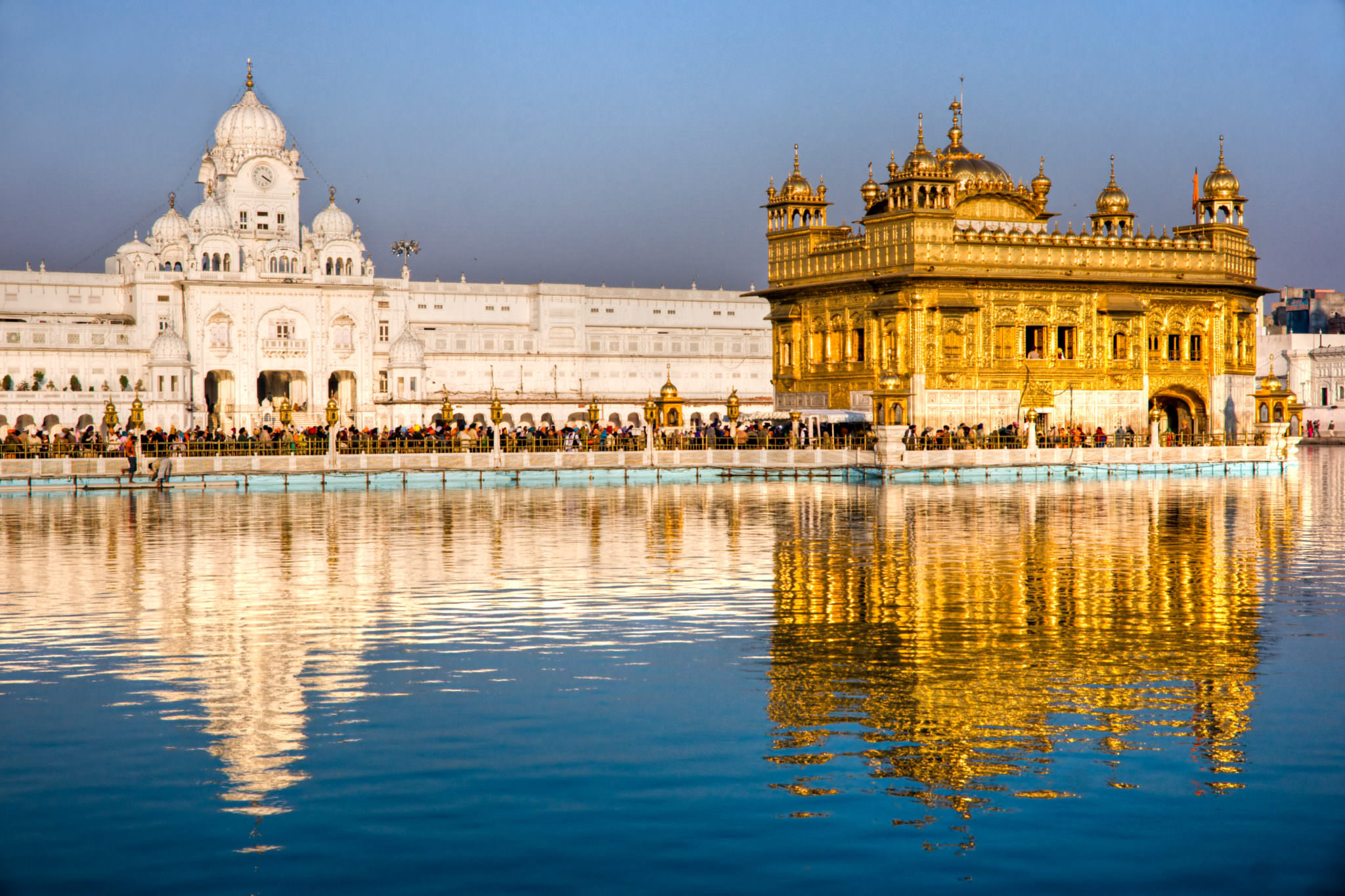
The Golden Temple, also known as Harmandir Sahib, is the most important religious site in Sikhism. Located in the city of Amritsar in Punjab, it serves as a symbol of human brotherhood and equality. The temple is built around a large man-made pool and features a central building covered in gold leaf. It is not a Jyotirlinga or Shakti Peetha, but it holds a unique status as the spiritual heart of the Sikh faith and is open to people of all religions and backgrounds.
Visitors come to the temple for prayer, meditation, and to participate in community service. The site is famous for its massive free kitchen and its peaceful atmosphere. You can visit the temple at any time of the day or night, as it never closes. When visiting, you must follow specific rules regarding dress and behavior, including covering your head and removing your shoes before entering the complex.
Quick Facts
| Field | Details |
|---|---|
| Deity | Guru Granth Sahib (The Eternal Sikh Scripture) |
| Location | Amritsar, Punjab |
| State | Punjab |
| Temple Type | Holiest Sikh Shrine (Gurdwara) |
| Nearest Metro/Station | Amritsar Junction (2 km) |
| Nearest Airport | Sri Guru Ram Dass Jee International Airport (11 km) |
| Entry Fee | Free |
| Timings | Open 24 Hours |
| Best Months | October to March |
| Avoid | Summer months (May-June) due to extreme heat |
History and Background
The history of the Golden Temple began in 1577 when Guru Ram Das Ji, the fourth Sikh Guru, started the excavation of the holy tank called the Amrit Sarovar. The land for the temple was gifted by the Mughal Emperor Akbar, showing the early tradition of inter-faith cooperation. The fifth Guru, Guru Arjan Dev Ji, designed the temple to be built in the center of this tank. He invited a Muslim Sufi saint, Sai Mian Mir, to lay the foundation stone in 1589. This act emphasized that the temple was open to all, regardless of their religious beliefs.
The construction was completed in 1604. In the same year, Guru Arjan Dev Ji installed the Adi Granth, the first compilation of Sikh scripture, inside the temple. He appointed Baba Buddha Ji as the first high priest. Over the next two centuries, the temple faced several attacks. It was destroyed multiple times by invading Afghan armies, specifically during the raids of Ahmad Shah Abdali in the mid-18th century. Each time it was destroyed, the Sikh community rebuilt it, seeing the temple as a symbol of their resilience and survival.
The current appearance of the temple dates back to the early 19th century. Maharaja Ranjit Singh, the founder of the Sikh Empire, took a deep interest in the shrine. In 1830, he sponsored the marble work and the gold plating of the upper floors. He donated 750 kg of pure gold to cover the copper sheets of the structure. This gave the temple its famous name, the Golden Temple. Throughout the 20th century, the temple remained the center of Sikh politics and religion. It underwent further renovations and expansions to accommodate the increasing number of pilgrims from around the world.
The Deity and Significance
The main deity of the Golden Temple is not an idol or a statue, but the Guru Granth Sahib. This is the holy scripture of the Sikhs and is treated as a living Guru. It contains the hymns and teachings of the Sikh Gurus as well as writings from Hindu and Muslim saints like Kabir, Namdev, and Sheikh Farid. This inclusion highlights the universal message of the temple.
Pilgrims visit the Golden Temple to seek spiritual peace and to perform "Sewa" or selfless service. The temple represents the Sikh core value of "Vand Chakko," which means sharing what you have with others. The most significant aspect of the temple's daily life is the Langar. This free community kitchen serves between 50,000 and 100,000 people every day. Everyone sits on the floor together to eat, which removes distinctions of social status, wealth, or religion. The Amrit Sarovar, the water surrounding the temple, is also highly significant. The name "Amritsar" translates to "Pool of Nectar." Pilgrims believe that bathing in these waters cleanses the mind and soul.
What You'll See
The architecture of the Golden Temple is a blend of Hindu and Islamic styles, now recognized as the distinct Sikh architectural style. The main structure is a two-story building made of marble and gold. It sits in the middle of the square Amrit Sarovar. The temple has four entrances, one on each side, which signifies that people from all four corners of the world are welcome.
The lower level of the temple features white marble with floral designs made of inlaid precious stones, similar to the work seen in the Taj Mahal. The upper level is covered in gilded copper plates. Inside the main hall, the Guru Granth Sahib is placed under a jewel-encrusted canopy. You will see "Granthis" (scripture readers) and musicians performing Kirtan (devotional music) throughout the day.
Outside the main temple, you will see the Akal Takht, which stands directly opposite the main causeway. This is the seat of earthly authority in Sikhism, where political and military decisions were historically made. You will also see the "Darshani Deori," the gateway that leads to the causeway. The causeway itself is 202 feet long and is lined with gold-plated lamps. Around the perimeter of the pool is a wide marble walkway called the Parikrama. Along this walkway, there are several smaller shrines, memorial plaques, and three ancient "Ber" (jujube) trees that are associated with the temple's history.
Darshan — How It Works
The process of visiting the Golden Temple is straightforward but requires patience during busy times. There are several entry points into the complex. Before entering, you must leave your shoes at the free shoe storage counters (Joda Ghar) located at every entrance. You must also cover your head. If you do not have a scarf, free orange or yellow head coverings are available in large bins near the entrances. You then wash your feet in a shallow pool of water at the entrance.
Once inside the complex, most visitors walk around the Parikrama in a clockwise direction. To enter the main temple (Harmandir Sahib), you must join a queue that forms on the causeway. On a typical weekday, the wait time to enter the inner sanctum is between 45 minutes and 1.5 hours. On weekends, holidays, or during festivals like Baisakhi, the queue can take 3 to 5 hours.
Inside the main hall, the movement is continuous. You get a few minutes to stand in front of the Guru Granth Sahib, offer a prayer, and move forward. There is no specific fee for Darshan. You can offer a donation if you wish, but it is not mandatory. After exiting the main temple, you receive "Karah Parshad," a holy halwa made of flour, ghee, and sugar.
For the elderly or disabled, there are separate arrangements. Wheelchairs are available at the entrances, and there is a lift facility for those who cannot use the stairs. Volunteers are present everywhere to guide people who need assistance.
Festival and Crowd Calendar
| Month | Crowd Level | Main Event / Reason |
|---|---|---|
| January | High | Maghi Mela and Republic Day holidays |
| February | Moderate | Pleasant weather attracts tourists |
| March | High | Hola Mohalla (celebrated a day after Holi) |
| April | Very High | Baisakhi (Sikh New Year and Khalsa formation) |
| May | Moderate | Summer heat begins; school holidays start |
| June | High | Anniversary of Operation Blue Star (early June) |
| July | Moderate | Monsoon season; humidity is high |
| August | Moderate | Independence Day weekend |
| September | Moderate | Anniversary of the first installation of Guru Granth Sahib |
| October | High | Dussehra and start of peak tourist season |
| November | Very High | Guru Nanak Gurpurab and Bandi Chhor Divas (Diwali) |
| December | High | Winter holidays and martyrdom days of the Sahibzadas |
Most Crowded Events:
- Baisakhi (April 13 or 14): This is the busiest day of the year. Expect wait times of over 6 hours for the main temple. The entire city is crowded.
- Guru Nanak Gurpurab (November): The birth anniversary of the first Guru. The temple is decorated with lights, and the crowds are massive.
- Bandi Chhor Divas (October/November): Celebrated on the same day as Diwali. The fireworks display and lighting attract hundreds of thousands of people.
Best Times for Shortest Queues:
- Mid-week (Tuesday to Thursday): Generally less crowded than weekends.
- Early Morning (2:00 AM to 4:00 AM): This is when the Palki Sahib ceremony happens. While many people attend the ceremony, the general queue for the inner sanctum is often shorter immediately after.
- Monsoon Weekdays: Late July and August weekdays see slightly fewer pilgrims due to the rain.
Getting There
By Train
Amritsar Junction (ASR) is a major railway hub. It is well-connected to all parts of India. The temple is about 2 km from the station. You can take a cycle rickshaw, auto-rickshaw, or the free bus service provided by the temple.
| From | Train Name | Duration | Notes |
|---|---|---|---|
| New Delhi | 12013 Amritsar Shatabdi | 6h 15m | Fastest and most comfortable |
| Mumbai | 12903 Golden Temple Mail | 32h 10m | Daily service from Mumbai Central |
| Kolkata | 12317 Akal Takht Express | 35h 20m | Connects Sealdah to Amritsar |
| Jaipur | 19771 Jaipur Amritsar Exp | 17h 30m | Runs via Alwar and Rewari |
| Lucknow | 12237 Begampura Express | 15h 45m | Daily service to Jammu/Amritsar |
| Chandigarh | 12241 Chandigarh Amritsar SF | 4h 00m | Fast daily intercity |
Note: You should book your tickets in advance at irctc.co.in.
By Road
Amritsar is located on National Highway 44 (the Grand Trunk Road). The roads are generally in excellent condition.
- From Chandigarh: 230 km (approx. 4 hours) via NH 344A.
- From Delhi: 450 km (approx. 8-9 hours) via NH 44.
- From Ludhiana: 140 km (approx. 2.5 hours).
There are frequent state-run (PEPSU and Punjab Roadways) and private Volvo buses from Delhi and Chandigarh. The main bus stand is about 3 km from the temple.
By Air
Sri Guru Ram Dass Jee International Airport (ATQ) is 11 km from the Golden Temple. It handles domestic flights from Delhi, Mumbai, Bangalore, and Srinagar, as well as international flights from London, Birmingham, Dubai, and Singapore. You can hire a pre-paid taxi or use app-based cabs (Uber/Ola) to reach the temple. The drive takes about 20-30 minutes.
Where to Stay
Budget Options:
The temple administration runs several "Sarais" (rest houses) like Sri Guru Ram Das Niwas. These offer basic rooms or dormitory beds for very low costs (often ₹200-₹500) or even for free for short stays. They are located right next to the temple. These cannot be booked online and are available on a first-come, first-served basis.
Mid-Range Options:
There are many hotels in the "Heritage Walk" area and near the Town Hall. Prices range from ₹2,000 to ₹4,500 per night. Staying here allows you to walk to the temple easily.
Best Overall Option:
For a comfortable stay with modern amenities, look for hotels near the Mall Road or Ranjit Avenue. These are 3-5 km from the temple but offer a quieter environment. Prices range from ₹5,000 to ₹10,000.
It is generally better to stay within 1-2 km of the temple if your primary goal is to attend the early morning or late night ceremonies.
What You Can't Miss Nearby
Jallianwala Bagh (400 meters)
A public garden that serves as a memorial to the hundreds of civilians killed by British troops in 1919. You can still see bullet marks on the walls and the well into which people jumped to escape the gunfire. It is a 5-minute walk from the Golden Temple.
Wagah Border (30 km)
The border crossing between India and Pakistan. Every evening, a "Beating Retreat" ceremony takes place with soldiers from both sides performing a synchronized drill. It is a highly energetic event. You should leave Amritsar by 2:30 PM to get a good seat.
Durgiana Temple (1.5 km)
A Hindu temple dedicated to Goddess Durga. Its architecture is very similar to the Golden Temple, as it is also built in the middle of a water tank. It is an important site for Hindu pilgrims visiting Amritsar.
Partition Museum (600 meters)
Located in the Town Hall building, this museum documents the history of the 1947 partition of India and Pakistan. It contains personal artifacts, letters, and oral histories. It is a very moving experience.
Gobindgarh Fort (2 km)
A historic military fort recently opened to the public. It features museums, light and sound shows, and cultural performances. It provides a good overview of the history of Punjab and Maharaja Ranjit Singh.
Ram Tirath (12 km)
An ancient Hindu pilgrimage site believed to be the ashram of Sage Valmiki. According to tradition, this is where Mata Sita stayed during her exile and where Luv and Kush were born. There is a large holy tank and several temples here.
Practical Information
| Item | Details |
|---|---|
| Entry Cost | ₹0 (Free) |
| Langar Cost | ₹0 (Free) |
| Shoe Storage | ₹0 (Free) |
| Head Coverings | Free bins at entrance |
| Photography | Allowed in the outer Parikrama; strictly prohibited inside the main temple |
| Lockers | Available at the entrance for small bags |
| Washrooms | Clean facilities available at multiple points around the complex |
| Wheelchairs | Available at the main entrances for free |
Dress Code:
- Everyone must cover their head at all times inside the complex.
- Shoulders and legs should be covered. Avoid wearing shorts or sleeveless tops.
- You must be barefoot. Socks are not allowed inside the complex.
What to Bring:
- A clean handkerchief or scarf (if you don't want to use the public ones).
- A small bag to carry your electronics, as you must keep your hands free for the queue.
- A water bottle (though filtered water is available everywhere for free).
Frequently Asked Questions
Is there an entry fee for the Golden Temple?
No, entry to the Golden Temple is completely free for everyone. There are no tickets or hidden charges for Darshan or visiting any part of the complex.
What are the timings of the Golden Temple?
The temple is open 24 hours a day, 7 days a week, and 365 days a year. It never closes, even on public holidays.
Is there a specific dress code for visitors?
Yes. You must cover your head with a scarf or handkerchief. You must also remove your shoes and socks. It is recommended to wear modest clothing that covers your shoulders and knees.
Can non-Hindus or non-Sikhs visit the temple?
Yes, the Golden Temple is open to people of all faiths, nationalities, and backgrounds. The four doors of the temple symbolize this openness to everyone.
Is photography allowed inside the Golden Temple?
You can take photos in the Parikrama (the walkway around the water). However, photography and videography are strictly prohibited inside the main sanctum where the Guru Granth Sahib is kept.
How do I get to the Golden Temple from the airport?
The airport is 11 km away. You can take a pre-paid taxi, an Ola/Uber, or a private hotel shuttle. The journey takes about 30 minutes depending on traffic.
What is the best time of day to visit?
The best time is early morning (between 3:00 AM and 5:00 AM) to see the Palki Sahib ceremony, or late at night when the crowds are thinner and the temple is beautifully lit.
How long does it take for Darshan?
On a normal day, it takes about 1 to 2 hours. On weekends or festivals, it can take anywhere from 3 to 6 hours.
Is the food at Langar safe to eat?
Yes, the food is prepared with high standards of hygiene by volunteers. It is simple, nutritious vegetarian food (usually dal, roti, a vegetable dish, and kheer).
Can I stay inside the temple complex?
Yes, there are several Sarais (inns) managed by the temple committee that provide basic accommodation for pilgrims. These are available on a first-come, first-served basis.
What is the significance of the water in the tank?
The water is called the Amrit Sarovar (Pool of Nectar). Pilgrims believe it has spiritual healing properties. Many people take a dip in the water or sprinkle it on themselves.
Is there a place to keep my luggage?
Yes, there are dedicated cloakrooms (Gathri Ghar) near the entrances where you can safely leave your bags and belongings for free.
Quick Reference
- Location: Amritsar, Punjab (2 km from the railway station).
- Core Deity: Guru Granth Sahib (The holy book).
- Key Rule: Cover your head and remove shoes/socks before entering.
- Langar: Free meals served to everyone 24/7; don't miss this experience.
- Best Time: October to March for weather; 3 AM to 5 AM for ceremonies.
- Cost: Entirely free, including food and shoe storage.
- Accessibility: Wheelchairs and lifts are available for the elderly and disabled.
- Nearby: Jallianwala Bagh and the Partition Museum are within walking distance.