Brihadeeswarar Temple Thanjavur
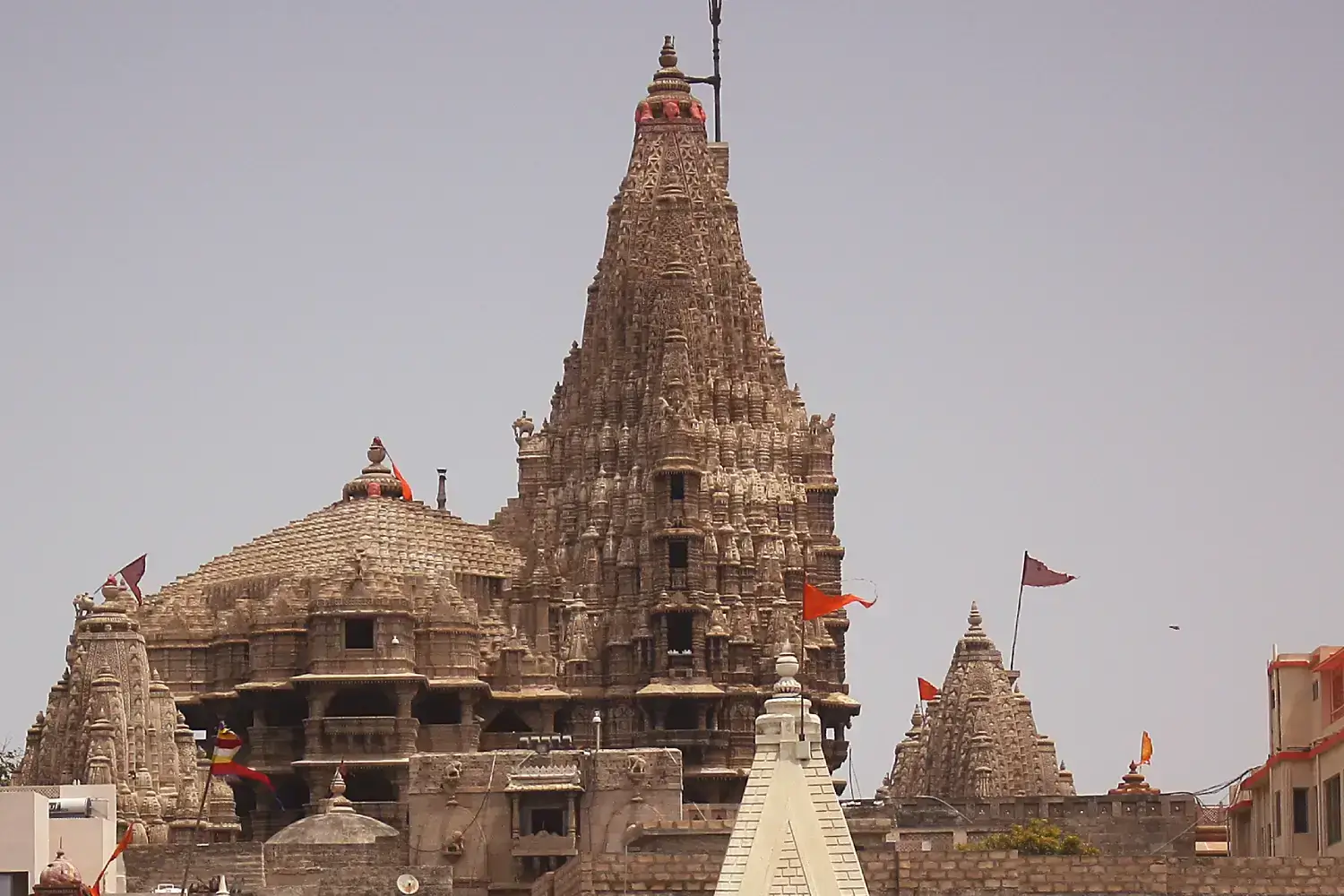
Brihadeeswarar Temple, also known as Rajarajeswaram or the Big Temple, is a Hindu temple dedicated to Lord Shiva located in Thanjavur, Tamil Nadu. It is one of the largest temples in India and serves as a primary example of fully realized Dravidian architecture. Built by the Chola emperor Raja Raja Chola I between 1003 and 1010 CE, the temple is part of the UNESCO World Heritage Site known as the "Great Living Chola Temples." Unlike many historical monuments that serve only as museums, this temple remains an active center of worship where daily rituals have continued for over a thousand years.
The temple is a significant site for Shaivite pilgrims and travelers interested in engineering and history. It is not classified as a Jyotirlinga or a Shakti Peetha, but its spiritual importance in South India is comparable to those sites. Visitors should prepare for a lot of walking on stone floors that can get hot during the day. Wearing socks is a practical way to protect your feet while following the rule of removing shoes before entering the temple complex.
Quick Facts
| Detail | Info |
|---|---|
| Main Deity | Lord Shiva (Brihadeeswara / Rajarajeswara) |
| Location | Thanjavur (Tanjore), Tamil Nadu |
| State | Tamil Nadu |
| Temple Type | UNESCO World Heritage Site; Great Living Chola Temple |
| Nearest Metro/Station | Thanjavur Junction (2 km) |
| Nearest Airport | Tiruchirapalli International Airport (TRZ) — 59 km |
| Entry Fee | Free (Government-managed) |
| Timings | 6:00 AM - 12:30 PM and 4:00 PM - 9:00 PM |
| Best Months | October to March |
| Avoid | April to June (Extreme heat) |
History and Background
The Brihadeeswarar Temple was commissioned by Raja Raja Chola I to celebrate his military victories and to demonstrate the power of the Chola Empire. Construction began in 1003 CE and was completed in 1010 CE, a remarkably short period of 25 years for a structure of this scale. The temple was named Rajarajeswaram after the king himself. It was intended to be a symbol of the king's devotion to Lord Shiva and his status as a "Chakravartin" or universal ruler.
The Chola dynasty was at its peak during this time, controlling much of South India, Sri Lanka, and parts of Southeast Asia. The wealth acquired from these conquests funded the temple's construction. The inscriptions on the temple walls provide a detailed record of the administration of the time. They list the names of the architects, dancers, singers, barbers, and even the people who provided the oil for the lamps. The chief architect was Kunjara Mallan Raja Raja Perunthachan, whose name is recorded in the stone.
The temple survived the decline of the Chola Empire and the subsequent rule of the Pandyas, the Vijayanagara Empire, the Thanjavur Nayaks, and the Marathas. Each of these dynasties added to the temple complex without destroying the original Chola structure. For example, the massive Nandi statue at the entrance was added during the Nayak period in the 16th century. The temple also served as a fortified armory during the British colonial period, though it eventually returned to its primary religious function. In 2010, the state government and the people of Tamil Nadu celebrated the 1000th anniversary of the temple's completion, highlighting its enduring role in Indian culture.
The Deity and Significance
The presiding deity of the temple is Lord Shiva, worshipped here as Brihadeeswara (the Great Lord) or Peruvudaiyar in Tamil. The main sanctum houses a massive Shiva Linga, which stands 3.7 metres (12 feet) tall. This Linga is one of the largest in India and occupies two storeys of the sanctum. Pilgrims visit this temple to seek blessings for health, success, and spiritual liberation. The deity is seen as the supreme protector and the source of all cosmic energy.
The temple holds immense significance because it represents the transition of Hindu temple architecture from small brick structures to massive stone monuments. It is a "Living Temple," meaning the traditions, music, and dance forms established here a millennium ago are still practiced. The temple was a hub for the development of Bharatanatyam, the classical dance of Tamil Nadu. Inscriptions mention that Raja Raja Chola I appointed 400 dancers to the temple, and their names and addresses are still visible on the walls. For devotees, the temple is more than a building; it is a physical manifestation of the Chola vision of the universe, with Shiva at the center.
What You'll See
The architecture of Brihadeeswarar Temple is defined by its massive scale and precision. The entire structure is built using over 130,000 tons of granite. Since there are no granite quarries within 60 kilometres of Thanjavur, historians believe the stone was transported using a massive fleet of elephants and river barges. The granite blocks are fitted together using interlocking joints without the use of mortar or cement.
The most striking feature is the Vimana (the tower over the sanctum), which rises to a height of 66 metres (216 feet). At the time of its construction, it was one of the tallest structures in the world. At the very top of the Vimana sits the Kumbam, a bulbous stone structure carved from a single block of granite weighing approximately 80 tons. Local tradition suggests that a 6-kilometre-long earthen ramp was built to haul this stone to the top. A unique architectural feature is that the tower is designed so that its shadow falls only within the temple compound at midday, leading to the popular claim that the temple casts no shadow at noon.
In front of the main sanctum is the Nandi Mandapam, which houses a giant statue of Nandi, the bull and vehicle of Shiva. This Nandi is 6 metres long and 4 metres high, carved from a single rock. The temple walls are covered in intricate carvings of various forms of Shiva, including Dakshinamurthy and Nataraja. You will also see the earliest examples of Tanjore paintings—frescoes on the inner walls of the sanctum that depict scenes from Hindu mythology and the life of Raja Raja Chola I.
Darshan — How It Works
Entering the temple for Darshan is a straightforward process, but it requires patience during peak hours. There are three main gateways (Gopurams) to pass through: the Maratha Gate, the Keralantakan Gate, and the Rajarajan Gate. Once inside the massive courtyard, you will walk toward the main sanctum.
On a standard weekday, the queue for Darshan usually takes between 30 to 45 minutes. On weekends, this can increase to 2 hours. During major festivals like Maha Shivaratri or the annual Brahmotsavam, wait times can exceed 4 to 5 hours. There is a general queue which is free of charge. Occasionally, for special events, a "Special Darshan" line may be organized for a small fee (usually around ₹50 to ₹100), but this is not a permanent feature.
The actual time you spend in front of the main Linga is brief—usually about 30 seconds to a minute—as the priests move the crowd along. You can offer flowers or coconuts, which can be bought from stalls outside the temple gates. For elderly visitors or those with disabilities, the temple has a relatively flat layout, though there are some steps to enter the main mandapa. Wheelchairs are sometimes available near the entrance, but it is better to bring a foldable one if possible. There are no battery-operated cars inside the complex.
Festival and Crowd Calendar
| Month | Crowd Level | Main Event / Reason |
|---|---|---|
| January | High | Pongal and Mattu Pongal (Special Nandi Puja) |
| February | Very High | Maha Shivaratri (All-night rituals and dance) |
| March | Moderate | Monthly Pradosham |
| April | Peak | Chithirai Brahmotsavam (18-day festival) |
| May | Moderate | Regular summer tourist crowds |
| June | Low | High heat keeps crowds smaller |
| July | Moderate | Aadi Pooram celebrations |
| August | High | Aavani Moolam and Pradosham |
| September | Moderate | Ganesh Chaturthi (at the Ganesha shrine) |
| October | High | Raja Raja Chola's Birthday (Sathaya Vizha) |
| November | Moderate | Karthigai Deepam (Temple lit with lamps) |
| December | High | Margazhi month rituals and Arudra Darisanam |
Most Crowded Events:
- Maha Shivaratri (Feb/March): The temple is open all night. Expect tens of thousands of people and wait times of over 6 hours.
- Chithirai Brahmotsavam (April/May): This 18-day event features chariot processions. The main car festival day is extremely crowded.
- Sathaya Vizha (October): This is the birth anniversary of King Raja Raja Chola I. It is a major local event with cultural programs and heavy crowds.
Best Times for Short Queues:
The shortest queues are typically on Tuesdays and Wednesdays during the months of June or September. Arriving exactly at 6:00 AM when the doors open usually allows for a very quick Darshan with minimal waiting.
Getting There
By Train
Thanjavur Junction (TJ) is the nearest railway station, located about 2 km from the temple. It is well-connected to major cities in South India.
| From | Train Name | Duration | Notes |
|---|---|---|---|
| Chennai | 16101 Boat Mail (Rameswaram Exp) | 7-8 hours | Daily service from Egmore |
| Bangalore | 16232 Mysore-Mayiladuthurai Exp | 9-10 hours | Overnight journey |
| Madurai | 16192 Madurai-Tambaram Exp | 3-4 hours | Frequent daily trains |
| Coimbatore | 16616 Chemmozhi Express | 6-7 hours | Direct overnight train |
| Tiruchirapalli | 06874 Trichy-Thanjavur Passenger | 1 hour | Multiple trains daily |
| Delhi | 12642 Thirukkural Express | 42 hours | Weekly; change at Trichy for more options |
Note: You should book your tickets in advance at irctc.co.in.
By Road
Thanjavur is well-connected by National Highways.
- From Tiruchirapalli (56 km): About 1.5 hours via NH83. The road is a smooth four-lane highway.
- From Madurai (190 km): About 3.5 hours via NH38.
- From Chennai (350 km): About 7-8 hours via NH32 or NH45.
State-run TNSTC buses and private omni buses run frequently from Chennai, Bangalore, and Coimbatore. The roads are generally in good condition, though monsoon rains in November and December can cause minor delays.
By Air
The nearest airport is Tiruchirapalli International Airport (TRZ), located 59 km away. From the airport, you can hire a pre-paid taxi directly to Thanjavur, which costs approximately ₹1,800 to ₹2,500. The drive takes about 1 hour and 15 minutes.
Where to Stay
Thanjavur offers a range of accommodation options. It is generally better to stay within Thanjavur city rather than commuting from nearby towns like Trichy, as it allows you to visit the temple during the cooler early morning or late evening hours.
- Budget: There are several lodges near the Thanjavur Railway Station and the Old Bus Stand. Prices range from ₹800 to ₹1,500 per night. These are basic but functional for pilgrims.
- Mid-Range: Hotels like Hotel Sangam or Hotel Gnanam offer better amenities, including air conditioning and on-site restaurants. Prices range from ₹2,500 to ₹4,500 per night.
- Best Overall Option: For a more comfortable or heritage-style stay, Svatma or Great Trails by GRT Hotels are the top choices. These are priced between ₹6,000 and ₹12,000 per night and offer a more curated experience of Thanjavur culture.
What You Can't Miss Nearby
- Thanjavur Royal Palace and Museum (2 km): The residence of the Nayak and Maratha rulers. It houses the Saraswathi Mahal Library, which contains thousands of ancient palm-leaf manuscripts.
- Gangaikonda Cholapuram (70 km): Built by Rajendra Chola I (son of Raja Raja Chola). It was designed to rival the Thanjavur temple and is also a UNESCO site.
- Airavatesvara Temple, Darasuram (35 km): The third of the Great Living Chola Temples. It is famous for its stone carvings that look like fine lace and its "singing steps."
- Punnainallur Mariamman Temple (7 km): A popular local temple dedicated to Goddess Mariamman. The idol is made of 18 types of medicinal herbs (Saligramam).
- Schwartz Church (1 km): Located near the palace, this 18th-century church was built by Raja Serfoji II to honor his teacher, the Danish missionary Christian Friedrich Schwarz.
Practical Information
| Item | Details |
|---|---|
| Entry Fee | Free for all visitors |
| Special Darshan | ₹50 - ₹100 (only during specific festivals) |
| Prasadam Cost | Puliyodarai (Tamarind rice) or Laddu: ₹20 - ₹50 |
| Dress Code | Men: Dhoti or formal trousers. Women: Saree or Salwar Kameez. |
| Photography | Allowed in the courtyard; strictly prohibited inside the sanctum. |
| Lockers | Available near the footwear stand for a small fee. |
| Food | Several vegetarian restaurants are located within 500m of the entrance. |
| Toilets | Public toilets are available outside the main temple gate. |
| Wheelchair Access | Partial. The courtyard is accessible, but the main sanctum has steps. |
What to bring:
- A pair of thick socks (the stone floor gets very hot by 10:00 AM).
- An umbrella for shade while walking in the large open courtyard.
- A water bottle (drinking water stations are available but limited).
Frequently Asked Questions
Is there an entry fee for Brihadeeswarar Temple?
No, there is no entry fee to visit the temple or the main complex. It is a government-protected monument and an active place of worship open to everyone.
What are the temple timings?
The temple is open from 6:00 AM to 12:30 PM and reopens in the evening from 4:00 PM to 9:00 PM. The sanctum may briefly close for rituals during these hours.
Is there a specific dress code?
Yes, visitors are expected to dress modestly. Men should wear dhotis or trousers (avoid shorts). Women should wear sarees, half-sarees, or salwar kameez with a dupatta.
Can I take photos inside the temple?
You can take photos of the exterior architecture, the Nandi, and the courtyard. However, photography and videography are strictly prohibited inside the inner sanctum where the Linga is located.
When is the best time of year to visit?
The best time is from October to March when the weather is pleasant. The summer months (April to June) are extremely hot, with temperatures often exceeding 40°C.
How do I reach the temple from the railway station?
The temple is only 2 km from Thanjavur Junction. You can take an auto-rickshaw for approximately ₹50-₹100 or a local bus heading toward the "Old Bus Stand."
Is this one of the 12 Jyotirlingas?
No, Brihadeeswarar Temple is not one of the 12 Jyotirlingas. However, it is one of the most important Shiva temples in India due to its historical and architectural significance.
Can non-Hindus enter the temple?
Yes, non-Hindus are allowed to enter the temple complex and the main mandapa. However, entry into the innermost sanctum (Garbhagriha) is sometimes restricted to Hindus, depending on the current administration's rules.
How much time is needed for a visit?
You should plan for at least 2 to 3 hours. This gives you enough time for Darshan and to walk around the complex to see the carvings and paintings.
Is there a place to keep shoes?
Yes, there is a designated footwear stand near the main entrance where you can leave your shoes for a nominal fee of ₹5 per pair.
Is the temple safe for solo travelers?
Yes, Thanjavur is a safe city, and the temple is well-guarded by security personnel and local police.
Quick Reference
- Main Attraction: The 66-metre tall Vimana and the 12-foot Shiva Linga.
- Built By: King Raja Raja Chola I in 1010 CE.
- Material: Entirely granite, joined without mortar.
- UNESCO Status: Part of the Great Living Chola Temples.
- Location: Thanjavur, Tamil Nadu, 1 hour from Trichy.
- Best Time: Early morning (6:00 AM) to avoid heat and crowds.
- Key Rule: No photography in the sanctum; modest dress required.
- Unique Fact: The 80-ton stone cap on the tower was moved to the top using a 6km ramp.