
Vaidyanath Temple Deoghar (Baidyanath Dham)
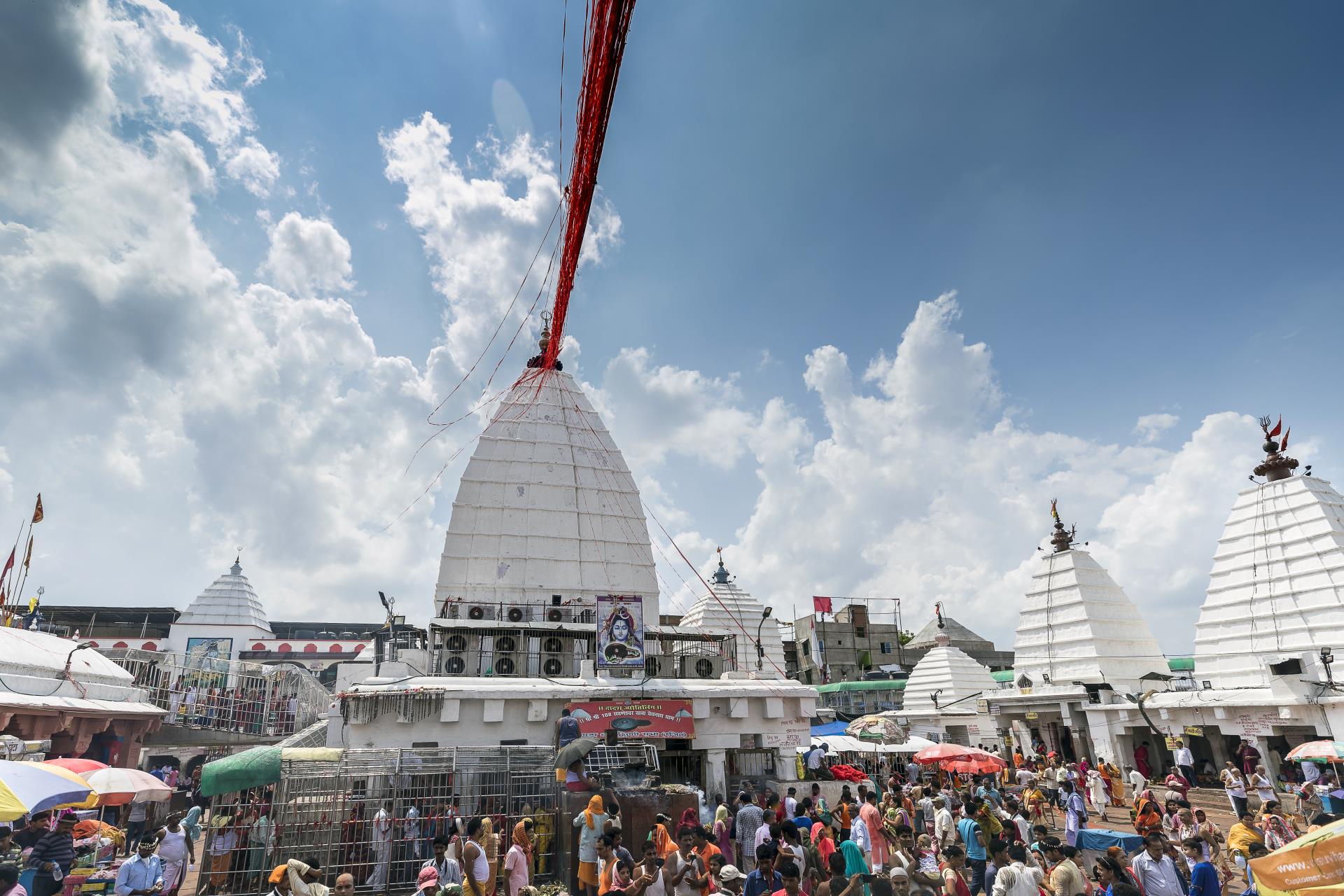
Vaidyanath Temple, located in Deoghar, Jharkhand, is a major religious site for Hindus. It holds a rare double distinction as both one of the 12 Jyotirlingas and one of the 51 Shakti Peethas. The temple is dedicated to Lord Shiva in his form as Vaidyanath, which translates to the "Lord of Physicians" or the "Divine Healer." Pilgrims from across India visit this site to seek relief from illnesses and to offer prayers for general wellbeing.
The temple is the focal point of the Shravana Mela, one of the longest religious fairs in the world. During this period, millions of devotees trek over 100 kilometers on foot to offer holy water to the deity. The town of Deoghar, which means "Abode of the Gods," is well-connected by rail and air, making it a central hub for pilgrimage in Eastern India.
Quick Facts
| Field | Details |
|---|---|
| Deity | Lord Shiva (Vaidyanath / Baidyanath) |
| Location | Deoghar, Jharkhand |
| State | Jharkhand |
| Temple Type | Jyotirlinga and Shakti Peetha |
| Nearest Metro/Station | Jasidih Junction (7 km) |
| Nearest Airport | Deoghar Airport (10 km) |
| Entry Fee | Free (Special Darshan passes available for a fee) |
| Timings | 4:00 AM to 3:30 PM; 6:00 PM to 9:00 PM |
| Best Months | October to March (Weather); July to August (Religious significance) |
| Avoid | Mondays in Shravana month (extreme crowds) |
History and Background
The history of Vaidyanath Temple is documented in several ancient Hindu texts, including the Shiva Purana and the Matsya Purana. While the exact date of the original construction is not known, the site has been a center of worship for over a millennium. The current structure reflects various stages of renovation and expansion carried out by different regional rulers over the centuries.
According to the Puranic legends, the demon king Ravana performed severe penance to please Lord Shiva in the Himalayas. He wanted to bring Shiva to his kingdom in Lanka to make it invincible. Shiva eventually gave Ravana one of the twelve Jyotirlingas but set a condition: if the linga was placed on the ground anywhere during the journey, it would stay fixed to that spot forever. As Ravana traveled south, he needed to relieve himself. He handed the linga to a young cowherd, who was actually Lord Ganesha in disguise. The cowherd, claiming the linga was too heavy, placed it on the ground at Deoghar. When Ravana returned, he could not move the linga despite using all his strength. In his frustration, he pressed the linga down with his thumb, causing it to sink slightly into the earth. This spot became the Vaidyanath Jyotirlinga.
Historically, the temple received patronage from the Gupta Empire and later the Pala and Chandela dynasties. In the 16th century, Raja Puran Mal of the Gidhaur dynasty built the main temple structure that stands today. Later, in the 18th century, Rani Baijabai of Gwalior contributed significantly to the temple's maintenance and built the prominent spire. The temple also serves as a Shakti Peetha. It is believed that the heart of Sati fell here when Lord Vishnu used his Sudarshana Chakra to dismember her body to stop Shiva’s dance of destruction (Tandava). This dual status as a Jyotirlinga and a Shakti Peetha makes Deoghar a unique site in Hindu geography.
The Deity and Significance
The main deity is Lord Shiva, worshipped here as Vaidyanath. The name is derived from the Sanskrit words 'Vaidya' (physician) and 'Nath' (lord). In this form, Shiva is viewed as the ultimate healer of physical, mental, and spiritual ailments. Many pilgrims visit the temple specifically to perform 'Sankalp' or 'Manauti' (vows) for the recovery of sick family members or for their own health.
The linga is made of a dark stone and is roughly 5 inches in diameter and 4 inches tall. It is slightly broken at the top, which local tradition attributes to Ravana's attempt to uproot it. Unlike many other Shiva temples where the linga is elevated, the Vaidyanath Jyotirlinga is set into the floor. This allows devotees to touch the linga directly during their prayers, a practice known as 'Sparsh Darshan.' The temple also emphasizes the union of Shiva and Shakti. The presence of the Parvati temple within the same complex, connected to the main temple by red silk ribbons, symbolizes the bond between the two deities.
What You'll See
The Vaidyanath temple complex is a large walled area containing 22 temples in total. The main temple of Vaidyanath faces east and is a plain stone structure. It stands 72 feet tall and is built in the Nagara style of architecture. The tower is pyramidal and consists of several tiers. At the top of the temple, there are three gold vessels (Kalash) arranged in a vertical line, which were donated by the Maharaja of Gidhaur. Above these vessels is a punchshula (a five-pronged trident), which is a rare feature compared to the usual trishula (three-pronged trident) found at most Shiva temples.
The interior of the main temple consists of a large hall (Mandapa) leading to the inner sanctum (Garbhagriha). The walls are thick and made of large stone blocks. Surrounding the main shrine are 21 other temples dedicated to various deities including Parvati, Ganesha, Brahma, Kalabhairava, Hanuman, Manasa, Saraswati, Surya, and Rama-Lakshmana.
A notable architectural feature is the red silk ribbons (dori) that tie the tops of the Vaidyanath temple and the Parvati temple together. This is done by devotees as a sign of respect for the union of Shiva and Shakti. There is also a long string attached to the main linga that extends toward the entrance. Pilgrims often hold or touch this string as they move through the queue, believing it carries the energy of the deity.
Darshan — How It Works
The darshan process at Vaidyanath Temple varies significantly depending on the day and the season. On a regular weekday, the entire process can take between 1 and 2 hours. On Mondays or during festivals, this can extend to 5 or 10 hours.
- Entry and Queue: There is a general queue that starts outside the main temple gates. During peak times, the administration sets up temporary barricades to manage the flow.
- Sparsh Darshan: This is the standard practice where you are allowed to enter the inner sanctum and touch the linga. You can offer water, milk, and flowers directly.
- Arghya System: During the Shravana month and other high-crowd days, 'Sparsh Darshan' is often suspended to prevent stampedes. Instead, an 'Arghya' (a copper channel or funnel) is placed outside the sanctum. Devotees pour their offerings into this channel, which then flows onto the linga inside.
- Special Darshan: The temple board offers 'Shighra Darshan' (Fast Track) tickets. These usually cost around ₹250 to ₹500 per person and provide a shorter, separate queue.
- Timings: The temple opens at 4:00 AM for 'Kacha Jal' (the first offering of the day). General public darshan usually starts after the morning rituals are completed, around 5:00 AM. The temple closes for a brief period in the afternoon (around 3:30 PM) and reopens in the evening for Shringar Puja.
- Assistance: There are no official wheelchair ramps inside the narrowest parts of the sanctum, but elderly pilgrims can often get assistance from temple volunteers to bypass the longest parts of the outdoor queue.
Festival and Crowd Calendar
| Month | Crowd Level | Main Event / Reason |
|---|---|---|
| January | Moderate | New Year pilgrims and Makar Sankranti |
| February | High | Maha Shivaratri (Major festival) |
| March | Moderate | Holi and spring pilgrims |
| April | Low | Rising temperatures |
| May | Low | Peak summer heat |
| June | Moderate | Pre-Shravan visitors |
| July | Extreme | Shravana Mela (Kanwar Yatra begins) |
| August | Extreme | Shravana Mela (Peak crowds) |
| September | Moderate | Bhadra Purnima |
| October | High | Durga Puja and Navratri (Shakti Peetha significance) |
| November | Moderate | Diwali and Chhath Puja |
| December | Moderate | Winter vacation crowds |
Most Crowded Events:
- Shravana Mela (July-August): This is the busiest time. Millions of Kanwariyas walk from Sultanganj. Wait times for darshan can exceed 12 hours.
- Maha Shivaratri (February/March): A massive procession (Shiv Barat) takes place. The town is packed, and temple entry is very slow.
- Bhadra Purnima: Another significant day for offering water, drawing large regional crowds.
Best Times for Short Queues:
- Tuesdays and Saturdays in the months of May, June, or November (excluding festival days).
- Mid-week during the winter months (late November to early January) usually offers a more relaxed experience.
Getting There
By Train
The main railway hub for Deoghar is Jasidih Junction (JSME), located about 7 km from the temple. Deoghar Junction (DGHR) is closer (3 km) but handles fewer long-distance trains.
| From | Train Name | Duration | Notes |
|---|---|---|---|
| Kolkata (Howrah) | 22347 Howrah-Patna Vande Bharat | 4h 15m | Fastest option; stops at Jasidih |
| Patna | 12024 Patna-Howrah Jan Shatabdi | 3h 20m | Daily service |
| Delhi | 12304 Poorva Express | 16h 45m | Regular long-distance choice |
| Mumbai | 12322 Mumbai-Howrah Mail | 32h 10m | Via Jabalpur and Prayagraj |
| Ranchi | 13320 Ranchi-Dumka Intercity | 6h 30m | Direct connectivity |
| Bangalore | 12253 Anga Express | 36h 20m | Weekly service |
Note: Bookings should be made via irctc.co.in well in advance, especially for the Shravana period.
By Road
Deoghar is well-connected by National Highway 114A.
- From Ranchi: 261 km (approx. 6-7 hours via NH20).
- From Patna: 255 km (approx. 6 hours via SH 22).
- From Bhagalpur: 120 km (approx. 3-4 hours).
Road conditions are generally good, but the stretch between Sultanganj and Deoghar is heavily congested during July and August due to the Kanwar Yatra.
By Air
- Deoghar Airport (DGH): Located 10 km from the temple. It has direct flights from Delhi, Kolkata, Ranchi, and Patna. This is the most convenient way to reach the temple.
- Ranchi Airport (IXR): 261 km away. Useful if direct flights to Deoghar are unavailable. You can hire a private taxi or take a bus from Ranchi to Deoghar.
Where to Stay
Deoghar offers a wide range of accommodations, though quality varies significantly.
- Budget: Numerous Dharamshalas and Guest Houses are located in the streets surrounding the temple. Prices range from ₹300 to ₹800 per night. Facilities are basic, often with shared bathrooms.
- Mid-Range: Hotels like Hotel Baidyanath, Hotel Relax, and Hotel Yashoda International offer air-conditioned rooms and better amenities. Prices range from ₹1,500 to ₹3,500 per night.
- Best Overall: For those seeking higher comfort, staying near the Deoghar Airport area or in newer hotels on the outskirts is recommended to avoid the noise and congestion of the temple lanes.
- Note: During Shravana Mela, prices can triple, and most places are booked months in advance. Many pilgrims stay in Jasidih if Deoghar is full.
What You Can't Miss Nearby
- Basukinath Temple (42 km): It is local tradition to visit Basukinath after Vaidyanath. It is believed that the pilgrimage is incomplete without offering water here. It is a smaller, quieter Shiva temple.
- Trikut Pahar (20 km): A hill with three peaks. It features India’s highest vertical ropeway. It is associated with the legend of Ravana and offers views of the surrounding forest.
- Tapovan Caves (10 km): A series of caves where a Shiva temple is located. It is said that Valmiki came here for penance. It is a popular spot for meditation and short treks.
- Naulakha Mandir (2 km): A 146-foot tall temple dedicated to Radha-Krishna. It is called Naulakha because it cost nine lakh rupees to build in the 1940s. Its architecture is similar to the Belur Math in Bengal.
- Satsang Ashram (3 km): The headquarters of the Radha Soami sect founded by Sri Sri Thakur Anukulchandra. It is a large, clean complex with a museum, hospital, and library.
- Nandan Pahar (4 km): A small hill with an entertainment park and a temple dedicated to Nandi. It is a good spot for families and offers a view of the Deoghar town.
Practical Information
| Item | Details |
|---|---|
| Special Darshan Cost | ₹250 - ₹500 (Varies by day) |
| Abhishek/Puja Cost | ₹100 - ₹2,100 depending on the complexity |
| Dress Code | Traditional preferred (Dhoti/Kurta for men, Saree/Suit for women). Avoid shorts. |
| Photography | Prohibited inside the inner sanctum. Allowed in the complex. |
| Lockers | Available near the main entrance for bags and shoes. |
| Food | Many vegetarian eateries (Bhojanalayas) nearby. Peda is the local specialty sweet. |
| Wheelchair Access | Limited. The complex has uneven stone flooring. |
What to Bring:
- Small change for offerings and shoe stalls.
- A plastic bottle or copper vessel if you plan to bring Ganga water from elsewhere.
- Comfortable slip-on footwear as you will need to remove shoes frequently.
- Modest clothing that covers shoulders and knees.
Frequently Asked Questions
Is there an entry fee for Vaidyanath Temple?
No, entry to the temple is free for everyone. However, if you wish to skip the long general queue, you can purchase a 'Shighra Darshan' (Fast Track) ticket at the designated counters within the complex.
What are the temple timings?
The temple usually opens at 4:00 AM and remains open until 3:30 PM. It closes for a few hours in the afternoon and reopens at 6:00 PM for the evening Shringar Puja, closing finally at 9:00 PM. During Shravana Mela, the temple may remain open for 24 hours.
Is there a specific dress code?
While there is no strictly enforced dress code like in some South Indian temples, traditional Indian attire is highly recommended. Men usually wear dhotis or kurtas, and women wear sarees or salwar kameez. Avoid wearing shorts, skirts, or sleeveless tops out of respect for the local customs.
Can non-Hindus visit the temple?
Yes, non-Hindus are generally allowed to enter the temple complex and view the architecture. However, access to the inner sanctum (Garbhagriha) where the Jyotirlinga is located is sometimes restricted to practicing Hindus during peak festival times.
How do I get from Jasidih Junction to the temple?
Jasidih Junction is about 7 km away. You can easily find auto-rickshaws (both shared and private), e-rickshaws, and taxis outside the station. A private auto-rickshaw should cost between ₹150 and ₹250.
What is the significance of the red ribbons on the temple?
The red silk ribbons connect the spire of the main Vaidyanath temple with the spire of the Parvati temple. This symbolizes the "Gathbandhan" or the holy union of Lord Shiva and Goddess Parvati. Devotees often pay to have new ribbons tied as a vow for a happy marriage.
Is photography allowed?
Photography is strictly prohibited inside the inner sanctum where the deity is located. You can take photos of the temple exterior and the surrounding complex, but be mindful of the crowds and the privacy of other worshippers.
What is the best time to visit to avoid crowds?
The best time to visit for a peaceful experience is during the winter months (October to March), specifically on mid-week days (Tuesday to Thursday). Avoid the month of Shravana (July-August) and the festival of Maha Shivaratri if you do not want to deal with massive crowds.
Is the temple one of the 12 Jyotirlingas?
Yes, Vaidyanath Temple is recognized as one of the 12 Jyotirlingas. It is also one of the 51 Shakti Peethas, making it a highly significant site for both Shaivites and Shaktas.
What is the Kanwar Yatra?
The Kanwar Yatra is a pilgrimage where devotees (Kanwariyas) collect water from the Ganges River at Sultanganj and carry it in decorated pots (Kanwars) on their shoulders to Deoghar. They walk the 108 km distance barefoot as an act of devotion.
Are there facilities for the elderly?
The temple complex is often crowded and the floor can be slippery. While there are no elevators or extensive ramp systems, the 'Shighra Darshan' queue is shorter and more manageable for elderly visitors. It is advisable to visit during the early afternoon on a weekday for the least amount of physical strain.
What should I buy in Deoghar?
The most famous item to buy in Deoghar is the 'Peda,' a sweet made from milk solids and sugar. The town is also known for its local handicrafts and religious items like brass vessels and rudraksha beads.
Quick Reference
- Main Deity: Lord Shiva as the Divine Healer (Vaidyanath).
- Unique Status: Only site that is both a Jyotirlinga and a Shakti Peetha.
- Key Event: Shravana Mela (July-August) involving a 108 km barefoot trek.
- Architecture: 72-foot Nagara style temple with a rare five-pronged trident (Punchshula).
- Primary Station: Jasidih Junction (7 km away).
- Primary Airport: Deoghar Airport (10 km away).
- Darshan Tip: Buy a 'Shighra Darshan' pass if visiting on a weekend or Monday.
- Nearby Must-Visit: Basukinath Temple, located 42 km away, to complete the pilgrimage.