
Tirupati Balaji Temple (Tirumala Venkateswara)
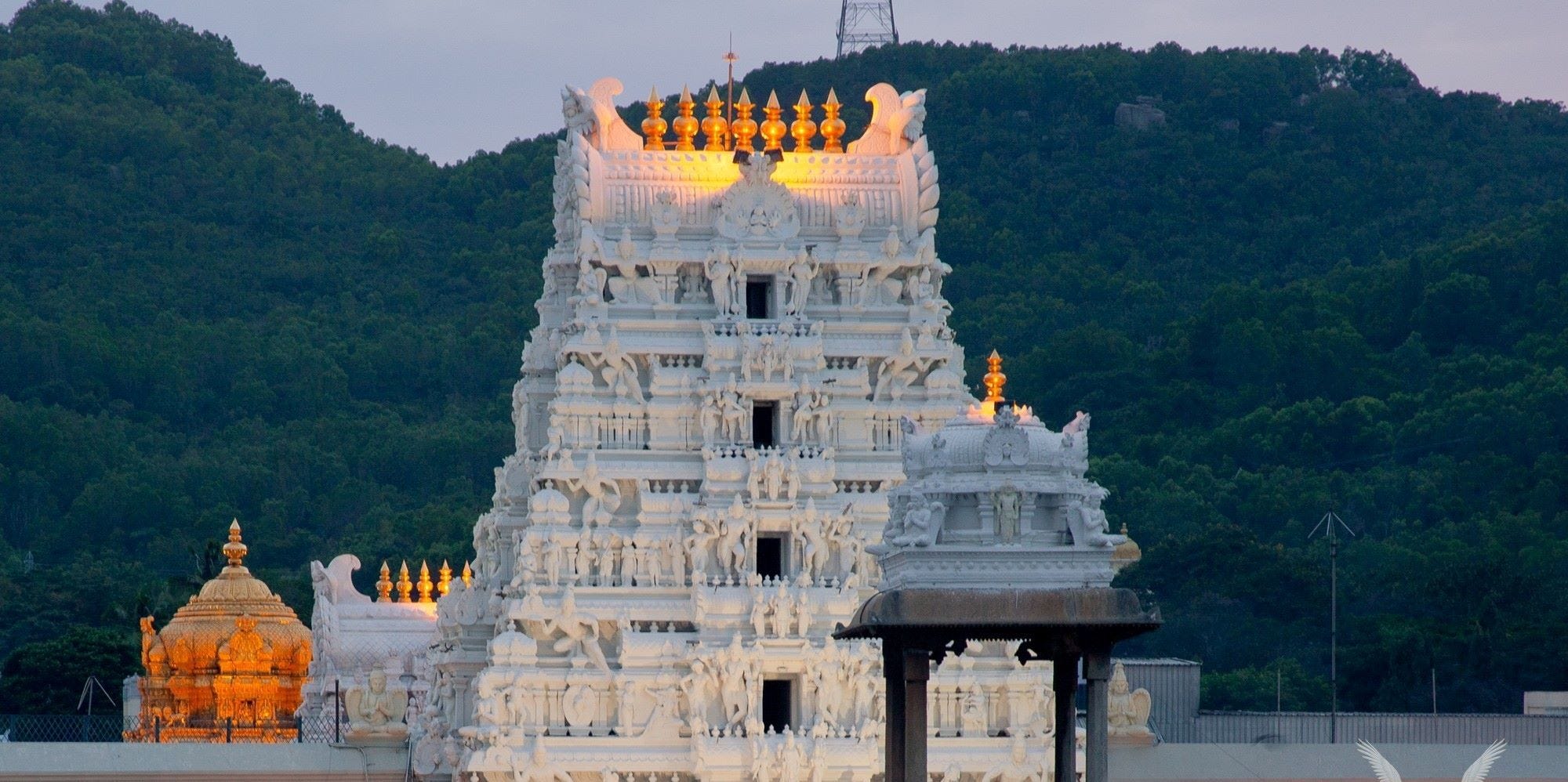
Tirupati Balaji Temple, also known as the Tirumala Venkateswara Temple, is a major Hindu pilgrimage site located on the Tirumala hills in Andhra Pradesh. The temple is dedicated to Lord Venkateswara, a form of Vishnu who is believed to have appeared here to save mankind from the trials of the Kali Yuga. It is one of the 108 Divya Desams, which are the most important earthly abodes of Vishnu mentioned in the works of the Alvars (Tamil saints).
Managed by the Tirumala Tirupati Devasthanams (TTD), this temple is the richest religious institution in the world by annual revenue and wealth. It receives between 50,000 and 100,000 visitors every single day, making it one of the most visited religious sites on the planet. For travelers, visiting involves navigating a highly organized system of queues and online bookings to manage the massive crowds that gather on the hills at an altitude of 853 meters.
Quick Facts
| Field | Details |
|---|---|
| Main Deity | Lord Venkateswara (Vishnu / Balaji / Srinivasa) |
| Location | Tirumala Hills, Tirupati, Andhra Pradesh |
| State | Andhra Pradesh |
| Temple Type | Divya Desam (Vaishnavite) |
| Nearest Metro/Station | Tirupati Railway Station (19 km) |
| Nearest Airport | Tirupati Airport (Renigunta - 33 km from Tirumala) |
| Entry Fee | Free (Sarva Darshan) to ₹300 (Special Entry) |
| Timings | 2:30 AM to 1:30 AM (Varies by Seva and crowd) |
| Best Months | September to March |
| Avoid | Summer (April-May) and major festival days if you dislike crowds |
| Altitude | 853 meters (2,799 feet) |
History and Background
The history of the Tirumala Venkateswara Temple spans over 1,200 years of recorded history, though its spiritual origins are described in ancient Puranas like the Varaha Purana and Bhavishyottara Purana. These texts refer to the Tirumala hills as Venkatadri, one of the seven peaks representing the hoods of the serpent Adisesha. The temple's physical structure was developed over several centuries by various South Indian dynasties.
The earliest recorded endowments to the temple date back to the 9th century from the Pallava dynasty. Queen Samavai of the Pallava kingdom donated jewels and land to the temple in 966 CE. Following the Pallavas, the Chola dynasty provided significant support. In the 12th century, the great Vaishnava philosopher Ramanujacharya visited Tirumala and played a critical role in organizing the temple's rituals and administrative systems, many of which are still followed today.
The temple reached its peak of prosperity during the Vijayanagara Empire in the 14th to 16th centuries. King Krishnadevaraya was a devoted follower and visited the temple seven times. He donated massive amounts of gold and jewels, including the gold used to gild the Ananda Nilayam (the main shrine's dome). After the fall of the Vijayanagara Empire, the temple came under the influence of the Marathas and later the Nawabs of Arcot.
In 1843, the British East India Company handed over the administration of the temple to the Hathiramji Mutt. This lasted until 1932, when the Madras Government passed the TTD Act, creating the Tirumala Tirupati Devasthanams (TTD) board. Today, TTD is a massive organization that manages not just the temple, but also hospitals, universities, and social welfare programs funded by the billions of rupees donated by devotees annually.
The Deity and Significance
The central deity of the temple is Lord Venkateswara, an incarnation of Lord Vishnu. The idol is approximately eight feet tall and is considered "Swayambhu" or self-manifested. The deity is depicted with four arms: two upper arms hold the Shanka (conch) and the Chakra (discus), while the lower right hand is in the Varada mudra (granting boons) and the lower left hand is in the Katyavalambita posture (resting on the hip).
Pilgrims visit Tirumala seeking relief from worldly troubles and the fulfillment of vows. A core part of the mythology involves the "debt" of Lord Venkateswara. According to legend, the Lord took a massive loan from Kubera, the god of wealth, to pay for his wedding to Goddess Padmavathi. Devotees believe that by donating money and wealth to the temple, they are helping the Lord repay this debt. This belief has made the temple the wealthiest in the world.
The temple is also significant for the practice of "Mokku" or hair tonsuring. Millions of devotees shave their heads as an act of humility and surrender, offering their hair to the deity. This practice is so widespread that the temple employs over 600 barbers and collects nearly a ton of hair every day, which is later auctioned for international wig manufacturing.
What You'll See
The temple is a prime example of Dravidian architecture. The main entrance is through the Mahadwaram, a massive multi-tiered gopuram (tower). As you move inside, you pass through several courtyards known as Prakarams. The innermost sanctum, the Garbhagriha, is housed under the Ananda Nilayam, a three-tiered tower completely covered in gold plates.
Inside the temple complex, you will see the Bangaru Vakili (Golden Entrance), which is guarded by two tall statues of Jaya and Vijaya, the celestial gatekeepers of Vishnu. The pillars throughout the temple are carved with intricate figures of musicians, dancers, and various forms of Vishnu. The Dhvajasthambha (flagstaff) is another prominent feature, covered in gold and located in the outer courtyard.
The idol itself is heavily adorned with precious stones, including the world's largest emerald. The deity wears a large diamond crown and a thick layer of camphor (Pacha Karpooram) on the forehead, which is changed daily. You will also see the "Potu," the temple kitchen where the famous Tirupati Laddus are made. This kitchen is massive and uses traditional methods to produce tens of thousands of laddus daily to meet the demand of the pilgrims.
Darshan — How It Works
Navigating the darshan system at Tirumala requires planning. Because of the sheer volume of people, the temple uses a complex queue management system centered around the Vaikuntam Queue Complex. This is a series of large halls where pilgrims wait until their turn for darshan.
1. Sarva Darshan (Free):
This is the free entry for all pilgrims. You do not need to book in advance, but you must collect a "Slotted Sarva Darshan" (SSD) token from counters in Tirupati town. These tokens give you a specific time to report to Tirumala. Without a token, the wait time in the queue can range from 12 to 24 hours. With a token, it usually takes 6 to 10 hours.
2. Special Entry Darshan (₹300):
This is the most popular paid option. You must book these tickets online at least 1 to 3 months in advance via the official TTD website (ttdsevaonline.com). This darshan typically takes 2 to 4 hours from the time you enter the queue. It includes two free laddus per ticket.
3. Divya Darshan (Pedestrians):
This is for pilgrims who walk up the hills via the Alipiri or Srivari Mettu footpaths. TTD used to provide priority tokens for walkers, but this service is often suspended or limited based on crowd levels. If available, these tokens are issued at specific points on the walking paths.
4. Senior Citizens and Physically Challenged:
There is a separate queue for senior citizens (above 65) and differently-abled persons. This darshan usually happens twice a day at specific time slots. You must carry valid age proof or medical certificates. The entry is near the South Mada Street, and the wait time is significantly shorter, often under 2 hours.
5. Arjitha Sevas:
These are special rituals (like Suprabhatam, Tomala Seva, or Kalyanotsavam) that you can participate in. Tickets for these are very limited and are usually sold through an online electronic dip (lottery) system on the TTD website.
Festival and Crowd Calendar
| Month | Crowd Level | Main Event / Reason |
|---|---|---|
| January | Very High | Vaikunta Ekadasi (The most important day; 24-48 hour wait times) |
| February | High | Rathasapthami (One-day Brahmotsavam; massive crowds) |
| March | Moderate | Ugadi (Telugu New Year) |
| April | High | Summer vacations start; Rama Navami |
| May | Very High | Peak summer holidays; longest queues of the year |
| June | High | School holidays continue |
| July | Moderate | Monsoon begins; fewer local travelers |
| August | High | Shravana month; many local festivals |
| September | Very High | Srivari Brahmotsavam (9-day mega festival; dates vary) |
| October | Very High | Navratri and Dussehra; Brahmotsavam often falls here |
| November | Moderate | Post-festival dip; good time for shorter queues |
| December | High | Winter holidays and year-end pilgrims |
Most Crowded Events:
- Vaikunta Ekadasi: Usually in late December or January. The "Vaikunta Dwaram" (gate to heaven) is opened. Expect wait times of over 30 hours for free darshan.
- Srivari Brahmotsavam: A 9-day festival in September or October. The Garuda Seva night during this festival attracts over 500,000 people in a single day.
- Rathasapthami: Known as the "mini-Brahmotsavam," where the deity is taken out on seven different vahanas (vehicles) in one day.
Best Times for Short Queues:
The best time to visit for shorter queues is usually mid-week (Tuesday to Thursday) in the months of November, February, or early June. Avoid weekends, public holidays, and the entire month of May.
Getting There
By Train
Tirupati Railway Station (TPTY) is the main hub. It is well-connected to all major Indian cities. Some trains also stop at Renigunta Junction (RU), which is about 10 km from Tirupati.
| From | Train Name | Duration | Notes |
|---|---|---|---|
| Chennai | 16057 Sapthagiri Express | 3h 15m | Daily frequent service |
| Bangalore | 22617 Tirupati SF Express | 5h 20m | Fast intercity option |
| Hyderabad | 12734 Narayanadri Exp | 12h 10m | Very popular overnight train |
| Delhi | 12626 Kerala Express | 34h 20m | Long distance; book early |
| Mumbai | 12163 Dadar Tirupati Exp | 18h 30m | Daily service from Dadar |
| Vijayawada | 12708 Tirupati Humsafar | 6h 30m | Fast connection from AP capital |
Note: Always book tickets in advance via irctc.co.in.
By Road
Tirupati is located at the junction of several major highways.
- From Chennai: 135 km via NH716. The road is excellent and takes about 3-4 hours.
- From Bangalore: 250 km via NH75. It takes about 5-6 hours.
- From Hyderabad: 570 km via NH44. It takes about 10-12 hours.
Warning: The road from Tirupati (base) to Tirumala (hill) is a ghat road with many hairpin bends. There are two separate roads: one for going up and one for coming down. Both are well-maintained, but heavy fog can occur during monsoon and winter.
By Air
The nearest airport is Tirupati Airport (TIR) at Renigunta. It is 14 km from Tirupati city and 33 km from the Tirumala temple. Frequent flights are available from Hyderabad, Chennai, Bangalore, and Delhi. From the airport, you can take a pre-paid taxi directly to Tirumala or to Tirupati city.
By Helicopter
Helicopter services are not currently a standard public transport option for Tirumala due to security and religious protocols. Private charters occasionally operate to Tirupati airport, but pilgrims must still use the road to reach the hilltop temple.
Where to Stay
In Tirumala (Hills):
Staying on the hills is the most convenient but requires advance booking. TTD provides thousands of rooms ranging from free locker sheds to AC cottages (₹500 to ₹3000). These must be booked 60-90 days in advance on the TTD website. There are no private hotels on the Tirumala hills.
In Tirupati (Base Town):
If you cannot get a room in Tirumala, Tirupati town has hundreds of private hotels.
- Budget: Many lodges near the Railway Station (₹800 - ₹1,500).
- Mid-range: Hotels like Fortune Select Grand Ridge or Marasa Sarovar Premiere (₹3,500 - ₹6,000).
- Best Overall: Staying in Tirupati is often better for last-minute travelers as it offers more food and transport options.
What You Can't Miss Nearby
- Sri Padmavathi Ammavari Temple (Tiruchanur): 5 km from Tirupati. It is traditional to visit this temple dedicated to Lord Venkateswara's consort before or after visiting Tirumala.
- Srikalahasti Temple: 37 km from Tirupati. A famous Shiva temple known for Rahu-Ketu Sarpa Dosha Puja. It represents the element of Air (Vayu Lingam).
- Kanipakam Vinayaka Temple: 75 km from Tirupati. A temple dedicated to Lord Ganesha where the idol is said to be growing in size.
- Talakona Waterfalls: 60 km from Tirupati. The highest waterfall in Andhra Pradesh, located in a lush forest area. Great for a nature break.
- Silathoranam: Located in Tirumala itself. A natural stone arch that is geologically rare and has mythological significance linked to the Lord's arrival.
- Chandragiri Fort: 15 km from Tirupati. A 11th-century fort that served as the last capital of the Vijayanagara Kings. It has a good sound and light show.
Practical Information
Costs Table:
| Item | Approximate Cost |
|---|---|
| Special Entry Darshan | ₹300 per person |
| Laddu Prasadam | ₹50 per extra laddu (2 free with ₹300 ticket) |
| Room in Tirumala | ₹500 - ₹2,500 |
| Taxi (Tirupati to Tirumala) | ₹800 - ₹1,200 |
| APSRTC Bus (Tirupati to Tirumala) | ₹65 per person |
| Hair Tonsuring | Free (at TTD Kalyana Katta) |
Dress Code:
Strictly enforced.
- Men: Dhoti with shirt or Pyjama with Kurta. Lungis are not allowed inside the temple.
- Women: Saree or Chudidar with Dupatta. Jeans, skirts, or sleeveless tops are not permitted.
Rules and Facilities:
- Photography: Strictly prohibited inside the temple and the queue complex. You must deposit mobile phones and cameras at free counters before entering the queue.
- Lockers: Available at the start of the queue complex.
- Food: TTD provides free unlimited meals (Annaprasadam) to all pilgrims at the Matrusri Tarigonda Vengamamba Annaprasadam Complex.
- Wheelchairs: Available for the elderly and disabled at the entrance of the queue complex.
- Altitude Sickness: While 853m is not extremely high, the winding roads can cause motion sickness. Carry basic medication.
Frequently Asked Questions
What is the entry fee for Tirupati Balaji?
There is no mandatory entry fee as Sarva Darshan is free for everyone. However, for a faster experience, you can buy a Special Entry Darshan ticket for ₹300.
How can I book darshan tickets online?
Tickets must be booked through the official website: tirupatibalaji.ap.gov.in. You need to create an account, provide Aadhaar or ID details, and book well in advance (usually 2-3 months).
What is the best time to visit Tirupati to avoid crowds?
The best time is during weekdays (Tuesday to Thursday) in the months of November, February, and March. Avoid all major festivals, weekends, and school holiday seasons.
Is there a dress code for Tirupati Balaji?
Yes, traditional Indian wear is mandatory. Men must wear dhotis or kurtas, and women must wear sarees or suits with a dupatta. Western clothes like jeans or shorts are not allowed.
Can non-Hindus visit the Tirumala temple?
Yes, non-Hindus can visit, but they are required to sign a faith declaration form stating that they have respect for the deity and the Hindu religion.
How long does the free darshan take?
Free darshan (Sarva Darshan) can take anywhere from 6 to 24 hours depending on the day. On peak festival days, it can even exceed 48 hours.
How do I get the Tirupati Laddu?
Every pilgrim gets a certain number of laddus based on their ticket type. Extra laddus can be purchased at the laddu counters located outside the main temple exit using tokens.
Is photography allowed inside the temple?
No, photography is strictly banned. You cannot take cameras or mobile phones into the inner temple complex. There are secure counters to deposit your electronics.
How many steps are there to climb Tirumala?
There are two paths: Alipiri Mettu has 3,550 steps (about 9 km walk), and Srivari Mettu has 2,388 steps (about 2.1 km walk). Srivari Mettu is steeper but shorter.
What is the significance of donating hair at Tirupati?
Donating hair symbolizes the shedding of ego. It is a traditional offering (Mokku) where devotees surrender their beauty and pride to the Lord in exchange for his blessings.
Are there any health precautions for the altitude?
At 853 meters, most people do not face severe altitude sickness. However, the ghat road has many curves which can cause nausea. It is advisable to stay hydrated and eat light before the uphill drive.
Quick Reference
- Official Website: tirupatibalaji.ap.gov.in (Only use this for bookings).
- Main Deity: Lord Venkateswara (Vishnu).
- Key Offering: Hair tonsuring and Laddu prasadam.
- Dress Code: Traditional Indian wear only.
- Location: 19 km uphill from Tirupati town.
- Booking Window: 1 to 3 months in advance for paid darshan.
- ID Proof: Original Aadhaar card or Govt ID is mandatory for entry.
- Management: Tirumala Tirupati Devasthanams (TTD).