
Sabarimala Temple
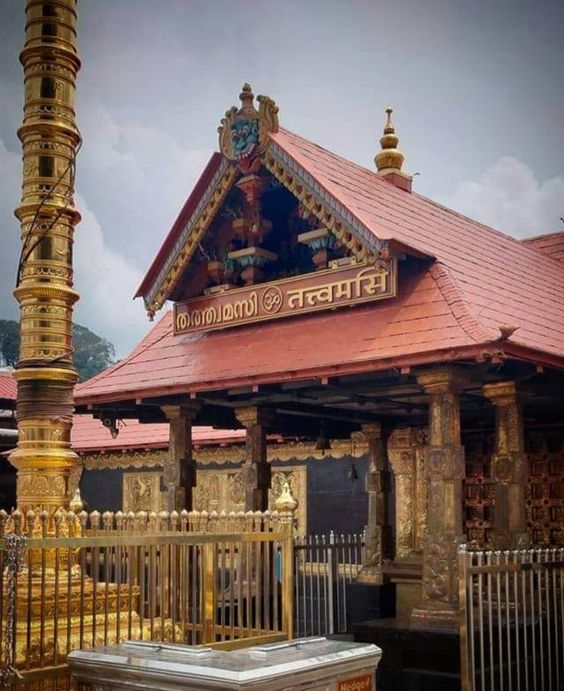
Sabarimala Temple is a major Hindu pilgrimage center located within the Periyar Tiger Reserve in the Pathanamthitta district of Kerala. It is dedicated to Lord Ayyappa, who is worshipped here in his celibate (Brahmachari) form. The temple is situated on a hilltop at an altitude of 1,260 meters (4,134 feet) and is surrounded by eighteen hills and dense forests. It is one of the largest annual pilgrimage sites in the world, attracting an estimated 50 to 60 million devotees during its peak season.
The temple is unique because it is not open throughout the year. It opens only during the days of Mandalapooja, Makaravilakku, Vishu, and the first five days of each Malayalam month. Devotees, primarily men, traditionally observe a strict 41-day austerity period known as Vratham before visiting. While a 2018 Supreme Court judgment allowed entry to women of all ages, the practice remains a subject of significant local debate and protest. Visitors must plan their trip according to the specific opening dates of the temple calendar.
Quick Facts
| Field | Details |
|---|---|
| Deity | Lord Ayyappa (Dharma Shasta / Hariharaputra) |
| Location | Periyar Tiger Reserve, Pathanamthitta, Kerala |
| State | Kerala |
| Temple Type | Major Ayyappa Pilgrimage |
| Nearest Metro/Station | Kottayam (100 km) or Chengannur (72 km) |
| Nearest Airport | Cochin International Airport (COK) - 140 km |
| Entry Fee | Free (Charges apply for specific offerings and services) |
| Timings | 3:00 AM to 1:00 PM; 3:00 PM to 11:00 PM (During season) |
| Best Months | November to January (Peak); September to October (Lower crowds) |
| Avoid | Peak Makaravilakku days (Jan 14-15) if you cannot handle extreme crowds |
| Altitude | 1,260 m (4,134 feet) |
| Open Season | Mandalam, Makaravilakku, Vishu, and first 5 days of Malayalam months |
History and Background
The history of Sabarimala is tied to the legend of Lord Ayyappa and the Pandalam royal family. According to local tradition, the deity Ayyappa was the son of Lord Shiva and Lord Vishnu (in his female form, Mohini). The child was found on the banks of the Pamba River by King Rajashekhara of the Pandalam dynasty. The king, who had no children, raised the boy as his own. Ayyappa eventually fulfilled his divine purpose by defeating the demoness Mahishi. After completing his earthly mission, he chose the Sabarimala hills as his place of meditation.
Historical records suggest that the temple has existed for centuries, though the current structure has undergone several renovations. The Pandalam dynasty, which traces its roots back to the Pandya kingdom of Madurai, has been the traditional custodian of the temple. The temple was significantly damaged by a fire in 1950 and was subsequently rebuilt. The idol currently worshipped in the sanctum was installed during this reconstruction.
The temple's place in Hindu tradition is distinct because it emphasizes the equality of all devotees, who are all referred to as "Ayyappa" or "Swami" during the pilgrimage. The site is also known for its secular associations, specifically the shrine of Vavar, a Muslim saint and close associate of Ayyappa, located at the base camp in Erumely and near the main temple. This connection highlights a long history of communal harmony in the region. The 2018 Supreme Court ruling regarding the entry of women of menstruating age introduced a new chapter in the temple's history, leading to widespread legal and social discussions that continue to influence the pilgrimage experience today.
The Deity and Significance
The main deity of Sabarimala is Lord Ayyappa, also known as Dharma Shasta or Hariharaputra. He is depicted in a unique seated yoga posture (Yogic Asana) with a band (Yogapatta) tied around his knees. This posture signifies his state of deep meditation and celibacy. Devotees believe that Ayyappa remains in this state to protect his followers and will remain so until the last demon of the Kali Yuga is defeated.
The pilgrimage is seen as a symbol of the human soul's journey toward the divine. The 18 hills surrounding the temple represent different psychological and physical barriers that a seeker must overcome. Pilgrims come seeking spiritual purification, the fulfillment of vows, and relief from worldly troubles. The significance of the pilgrimage lies in the "Vratham" (austerity), which is intended to discipline the mind and body. By following strict rules of diet, conduct, and prayer, the devotee attempts to shed their ego and realize the oneness with the deity, expressed in the phrase "Tat Tvam Asi" (That Thou Art), which is inscribed on the temple.
What You'll See
The architecture of Sabarimala follows the traditional Kerala style, characterized by simplicity and functionality. The main sanctum, or Sreekovil, is a small rectangular structure with a copper-plated roof. Unlike the massive stone temples of Tamil Nadu, Sabarimala focuses on the natural surroundings. The most prominent feature is the Pathinettampadi, or the 18 holy steps, which are now covered in gold. These steps lead directly to the main courtyard of the sanctum.
Inside the complex, you will see the shrine of Malikappurathamma, dedicated to a goddess who wished to marry Ayyappa but remains waiting as he stays celibate. There are also smaller shrines for Ganesha and Nagaraja. The "Manimandapam" is another significant structure where the deity is believed to have meditated.
The idol of Ayyappa is made of Panchaloha (a five-metal alloy) and stands about one and a half feet tall. The atmosphere is dominated by the sound of "Saranam Ayyappa" chants and the smell of burning camphor and ghee. Because the temple is located within a tiger reserve, the surrounding landscape consists of dense evergreen forests and steep ridges. The Pamba River, where devotees bathe before starting the climb, is a central part of the visual experience.
Darshan — How It Works
The process of getting darshan at Sabarimala is physically demanding and requires planning. During the peak Mandalam-Makaravilakku season, the temple operates on a 24-hour cycle with short breaks.
- The Virtual Queue: Most pilgrims now use the Kerala Police Virtual Queue system. You must book a slot online in advance. This provides a specific time for you to reach the Pamba base camp.
- Pamba Base Camp: This is where the road ends. Devotees take a dip in the Pamba River to purify themselves. There are cloakrooms here to store footwear and luggage.
- The Trek: From Pamba, you must trek 4 kilometers uphill to reach the Sannidhanam (the temple complex). The path is steep, particularly at stretches like Neelimala and Appachimedu. There are two routes: the traditional forest path and the tractor road.
- The 18 Steps: Only those carrying the "Irumudi Kettu" (a two-compartment bag containing offerings like ghee-filled coconuts) are allowed to climb the 18 gold-plated steps. Others must use a separate side entrance. You must be barefoot and cannot wear leather items on these steps.
- The Queue: Once at the Sannidhanam, you enter the "flyover" or queue complex. During peak season, wait times can range from 6 to 12 hours. On normal monthly opening days, the wait is usually 1 to 3 hours.
- The Sanctum: You get only a few seconds in front of the deity due to the massive volume of people. Police and volunteers move the line quickly.
- Offerings: The most important offering is "Neyyabhishekam" (pouring ghee on the idol). This usually happens in the morning hours. You can also purchase Aravana Payasam (a thick rice pudding) and Appam as prasadam.
For elderly or disabled pilgrims, there are "Dolly" services available at Pamba, where workers carry individuals up the hill in a chair for a fixed fee (approximately ₹2,000 - ₹3,000).
Festival and Crowd Calendar
| Month | Crowd Level | Main Event / Reason |
|---|---|---|
| January | Extreme | Makaravilakku (Jan 14/15); Makara Jyoti appearance |
| February | Low | Monthly Puja (First 5 days of Kumbham month) |
| March | Low | Monthly Puja (Meenam month); Temple Festival (Utsavam) |
| April | High | Vishu (Malayalam New Year) |
| May | Low | Monthly Puja (Edavam month); Prathishta Dinam |
| June | Low | Monthly Puja (Mithunam month) |
| July | Low | Monthly Puja (Karkidakam month) |
| August | Moderate | Monthly Puja (Chingam month); Onam festival days |
| September | Low | Monthly Puja (Kanni month) |
| October | Low | Monthly Puja (Thulam month) |
| November | Very High | Mandalam Season begins (Nov 15/16) |
| December | Very High | Mandalapooja (Dec 26/27) |
Peak Events:
- Makaravilakku (January 14-15): This is the most crowded time. A flame appears on the distant Ponnambalamedu hill, and a star (Makara Jyoti) is seen in the sky. Wait times can exceed 15 hours.
- Mandalapooja (Late December): Marks the end of the 41-day Mandalam period. Crowds are consistently high throughout December.
- Vishu (April): The Malayalam New Year attracts large numbers of local devotees for the "Vishu Kani" darshan.
Best Times for Short Queues:
The first five days of the Malayalam months in February, June, and July typically have the shortest queues. During these times, you can often complete the trek and darshan within 4-5 hours total.
Getting There
By Train
The nearest railway stations are Chengannur (72 km) and Kottayam (100 km). During the pilgrimage season, special "Sabari" trains run from various parts of India.
| From | Train Name | Duration | Notes |
|---|---|---|---|
| Delhi | 12626 Kerala Express | 42-45 hours | Daily service to Kottayam |
| Mumbai | 16381 Kanyakumari Express | 30-34 hours | Daily service to Chengannur |
| Chennai | 12623 Sabari Express | 13-15 hours | Daily service to Kottayam |
| Bangalore | 12677 Island Express | 12-14 hours | Daily service to Chengannur |
| Hyderabad | 17230 Sabari Express | 24-26 hours | Daily service to Kottayam |
| Kolkata | 12660 Gurudev Express | 40-42 hours | Weekly service to Chengannur |
Note: Book tickets well in advance at irctc.co.in. From the stations, KSRTC buses run frequently to Pamba.
By Road
Pamba is the main road head. It is well-connected by Kerala State Road Transport Corporation (KSRTC) buses.
- From Kochi: 150 km via Main Central (MC) Road.
- From Thiruvananthapuram: 170 km via Pathanamthitta.
- From Madurai: 250 km via Kumily and Thekkady.
Roads are generally well-maintained but become very congested during the November-January season. The mountain roads involve many hairpin bends; drivers should be experienced with ghat sections.
By Air
The nearest airport is Cochin International Airport (COK), located 140 km away. From the airport, you can hire a prepaid taxi to Pamba (approx. ₹4,500 - ₹6,000) or take a bus to Kottayam and then change for Pamba.
By Helicopter
Helicopter services occasionally operate during the peak season from Kochi or Nilakkal to a helipad near Sannidhanam (usually at Nilakkal or Saramkuthi). Prices vary significantly by season but typically range from ₹25,000 to ₹50,000 per person for a return trip. Availability is subject to strict weather conditions and government regulations.
Where to Stay
At Sannidhanam (Temple Top):
Accommodation here is managed by the Travancore Devaswom Board (TDB). It consists mostly of large halls (viris) and basic rooms.
- Budget: TDB Guest Houses or pilgrim sheds. Prices range from ₹200 for a mat in a hall to ₹1,000 for a basic room.
- Mid-range: Sahyadri Guest House. Prices around ₹1,500 - ₹2,500.
- Note: Booking must be done through the Sabarimala official website.
At Pamba (Base Camp):
There are several TDB-run rooms and private lodges. Most people stay here only for a few hours to rest before or after the trek.
Nearby Cities (Recommended for Comfort):
Staying in Kottayam or Pathanamthitta is better for those seeking mid-range or luxury hotels.
- Kottayam: Hotels like the Taj Gateway or various business hotels (₹3,000 - ₹7,000).
- Pathanamthitta: Local hotels like Hotel Hills Park (₹2,000 - ₹4,000).
What You Can't Miss Nearby
- Erumely (40 km from Pamba): A key stop on the pilgrimage. It houses the Vavar Mosque and the Kochu Ambalam (Ayyappa temple). Pilgrims perform the "Petta Thullal" (ritual dance) here.
- Pandalam Palace (80 km from Pamba): The ancestral home of the royal family that raised Ayyappa. The "Thiruvabharanam" (sacred ornaments) are kept here and taken in a procession to Sabarimala in January.
- Nilakkal Mahadeva Temple (18 km from Pamba): An ancient Shiva temple that serves as the main parking hub for the pilgrimage. It is one of the important "sthalas" mentioned in the legends.
- Aranmula Parthasarathy Temple (65 km from Pamba): A famous Krishna temple on the banks of the Pamba River, known for its unique metal mirrors (Aranmula Kannadi) and the annual snake boat race.
- Konni Elephant Training Center (60 km from Pamba): A government-run facility where you can see elephants being trained and bathed. It is a good stop for families.
- Periyar Wildlife Sanctuary (Thekkady - 100 km): Since Sabarimala is inside the reserve, a trip to the main sanctuary area in Thekkady offers boat safaris to see wild elephants and tigers.
Practical Information
| Item | Requirement / Cost |
|---|---|
| Dress Code | Men: Dhoti/Mundu (Black, Blue, or Saffron). Women: Saree or Salwar Kameez. |
| Footwear | Not allowed on the 18 steps or inside the Sannidhanam. |
| Photography | Strictly prohibited inside the temple sanctum and near the 18 steps. |
| Lockers | Available at Pamba and Sannidhanam (₹20 - ₹50). |
| Food | Free meals (Annadhanam) provided by TDB; private canteens available. |
| Toilets | Public complexes available at Pamba and along the trek route. |
| Wheelchair Access | Not available for the trek; use "Dolly" service instead. |
| Irumudi Kettu | Mandatory to climb the 18 steps. |
What to Bring:
- A small flashlight (for night trekking).
- Basic first-aid and any regular medications.
- Warm clothing (it gets cold at night, around 15°C).
- Raincoat or poncho (unseasonal rain is common in the forest).
- Valid ID proof (required for Virtual Queue verification).
Health Note: The trek is steep. If you have heart conditions or respiratory issues, consult a doctor before attempting the climb. Altitude sickness is rare at 1,260m, but physical exhaustion is common.
Frequently Asked Questions
Is there an entry fee for Sabarimala?
No, there is no entry fee for the general darshan. However, you must register for the free Virtual Queue slot online. Charges apply for specific pujas, prasadam, and accommodation.
What are the temple timings?
During the main season, the temple opens at 3:00 AM and closes at 1:00 PM. It reopens at 3:00 PM and closes at 11:00 PM. These timings may be extended during heavy rush periods.
What is the dress code for men and women?
Men must wear a dhoti (mundu), usually in black, navy blue, or saffron colors. They should remain bare-chested or wear a simple shawl. Women must wear traditional Indian attire like sarees or salwar kameez.
Can non-Hindus visit Sabarimala?
Yes, Sabarimala is known for its secular nature. People of all faiths are allowed to visit, provided they follow the traditions and the 41-day vratham if they wish to climb the 18 steps.
Is photography allowed?
Photography is allowed in the general areas of Pamba and the trekking path. However, it is strictly forbidden to take photos or videos of the 18 steps, the main sanctum, or the deity.
How long is the trek from Pamba?
The trek is approximately 4 kilometers one way. For an average person, it takes about 1.5 to 2.5 hours to climb up and about 1 to 1.5 hours to come down.
What is the 41-day Vratham?
It is a period of austerity where the devotee wears black clothes, remains celibate, eats only vegetarian food, abstains from alcohol and tobacco, and walks barefoot. This is required to carry the Irumudi and climb the 18 steps.
Can I visit without the 41-day fast?
Yes, you can visit the temple without the fast. However, you will not be allowed to carry the Irumudi Kettu or climb the 18 holy steps. You will have to use the side entrance to reach the sanctum.
Is the temple open throughout the year?
No. The temple is only open during the Mandalam and Makaravilakku seasons (mid-November to mid-January), for the Vishu festival in April, and for the first five days of every Malayalam month.
What is the best way to reach from the airport?
The best way is to hire a taxi from Cochin International Airport directly to Pamba. The journey takes about 4 to 5 hours depending on traffic.
Are there medical facilities available?
Yes, there are emergency medical centers at Pamba, Appachimedu, and Sannidhanam. Oxygen parlors are also available along the steep trekking path for those experiencing breathing difficulties.
What is the "Makara Jyoti"?
It is a star that appears in the sky on the evening of Makaravilakku (usually January 14). Simultaneously, a flame is lit at Ponnambalamedu. Devotees consider this the most auspicious moment of the year.
Quick Reference
- Location: Periyar Tiger Reserve, Kerala.
- Main Deity: Lord Ayyappa in a celibate yoga posture.
- Open Season: Not year-round; check Malayalam calendar for monthly 5-day openings.
- The Trek: 4 km steep uphill walk from Pamba base camp.
- The 18 Steps: Gold-plated; can only be climbed if carrying the Irumudi Kettu.
- Austerity: Traditional 41-day "Vratham" involves celibacy and vegetarianism.
- Crowds: Can reach 1 million per day during January; use Virtual Queue to manage wait times.
- Transport: Nearest railheads are Chengannur and Kottayam; nearest airport is Kochi.