
Kashi Vishwanath Temple
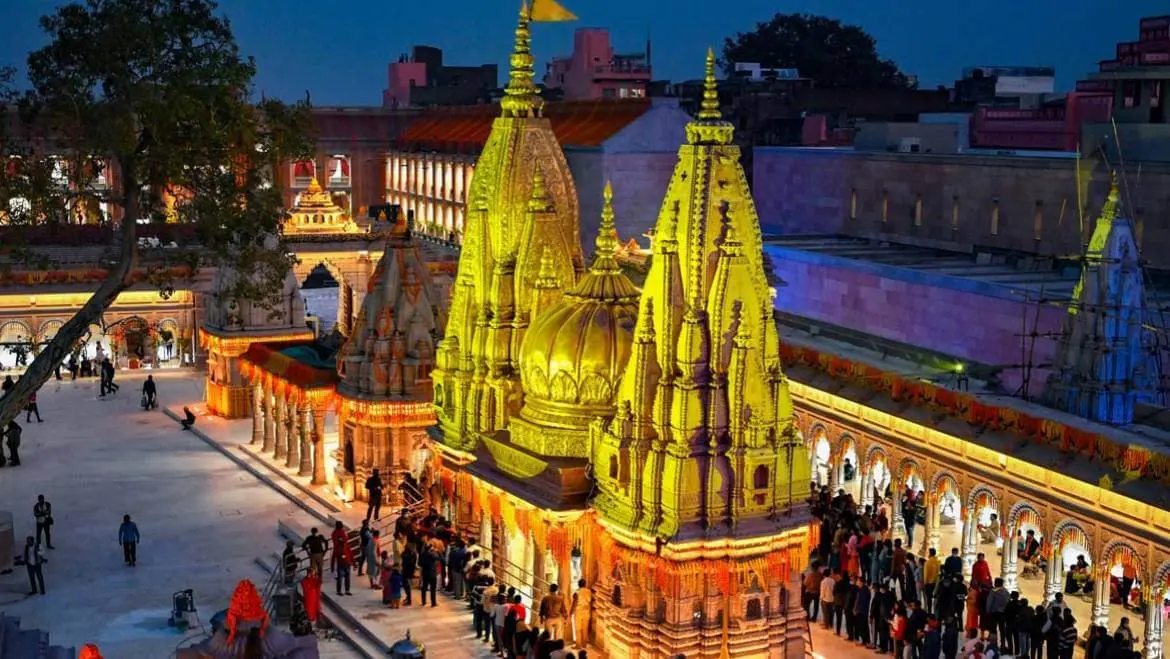
Kashi Vishwanath Temple is a major Hindu temple dedicated to Lord Shiva, located in the ancient city of Varanasi, Uttar Pradesh. It stands on the western bank of the Ganga river and is recognized as the second of the twelve Jyotirlingas, which are the most sacred abodes of Shiva. The temple is the central religious destination in Kashi, a city regarded as the spiritual capital of India and the oldest continuously inhabited city in the world.
For pilgrims, the temple serves as the primary site for seeking spiritual liberation. The recent completion of the Kashi Vishwanath Corridor has transformed the visiting experience, allowing devotees to walk directly from the river ghats to the temple complex. Visitors should be prepared for tight security, large crowds, and a strictly regulated entry process that prohibits electronic items inside the inner sanctum.
Quick Facts
| Field | Details |
|---|---|
| Deity | Lord Shiva (Vishwanath — Lord of the Universe) |
| Location | Varanasi (Kashi), Uttar Pradesh |
| State | Uttar Pradesh |
| Temple Type | Jyotirlinga (2nd of 12) |
| Nearest Metro/Station | Varanasi Junction (5 km) or Banaras (3 km) |
| Nearest Airport | Lal Bahadur Shastri International Airport (26 km) |
| Entry Fee | Free (Paid tickets for priority/special aarti) |
| Timings | 3:00 AM to 11:00 PM |
| Best Months | October to March |
| Avoid | Maha Shivaratri and Mondays in Shravan month (extreme crowds) |
History and Background
The history of Kashi Vishwanath Temple is a record of repeated destruction and reconstruction over several centuries. The temple is mentioned in ancient Puranic texts, including the Kashi Khanda of the Skanda Purana. Historically, the original temple was destroyed by the army of Qutb-ud-din Aibak in 1194 CE. It was rebuilt by a Gujarati merchant during the reign of Iltutmish (1211–1266 CE) but was demolished again during the rule of either Hussain Shah Sharqi or Sikandar Lodi.
In 1585, Raja Todar Mal, the finance minister of Emperor Akbar, rebuilt the temple at its original location. However, in 1669, Mughal Emperor Aurangzeb ordered the destruction of the temple and constructed the Gyanvapi Mosque on its foundations. Remnants of the original temple structure are still visible in the foundation and rear walls of the mosque, which remains a subject of legal and religious discussion today.
The current structure was built in 1780 by Maharani Ahilya Bai Holkar of Indore. She funded the construction after reportedly having a dream where Lord Shiva appeared. In 1835, Maharaja Ranjit Singh, the Sikh ruler of Punjab, donated 800 kilograms of pure gold to plate the temple's shikhara (spire) and dome. This gave the temple its popular name, the "Golden Temple of Varanasi."
In 2019, the Kashi Vishwanath Corridor project was launched to decongest the area. Completed in 2021, this project expanded the temple area from roughly 3,000 square feet to about 5 lakh square feet. It connected the temple directly to the Lalita and Manikarnika Ghats, removing the need for pilgrims to navigate the extremely narrow, congested lanes of the old city to reach the temple from the river.
The Deity and Significance
The presiding deity is Lord Shiva, worshipped here as Vishwanath, meaning "Lord of the Universe." The temple houses a Jyotirlinga, which represents the infinite nature of Shiva. According to Hindu mythology, Shiva manifested as a pillar of light (Jyotirlinga) to settle a dispute between Brahma and Vishnu regarding supremacy.
Varanasi is believed to be the place where Shiva resides. Hindu tradition holds that the city is perched on the tip of Shiva's trident. A core belief in Hinduism is that dying in Kashi leads to Moksha (liberation from the cycle of rebirth). It is said that Lord Shiva himself whispers the "Taraka Mantra" into the ear of those who die here, ensuring their salvation.
The temple's location is also significant because the Ganga river flows northward (Uttaryavahini) at this point. This northward flow is considered highly auspicious. Pilgrims believe that a dip in the Ganga followed by a visit to the Vishwanath temple cleanses all sins. The deity is seen as the supreme protector of the city, with the Kaal Bhairav temple serving as the "Kotwal" or police chief who guards the spiritual boundaries of Kashi.
What You'll See
The temple follows the Nagara style of Hindu temple architecture. The main structure consists of a series of smaller shrines surrounding the main sanctum. The most prominent feature is the 15.5-meter high spire, which is covered in gold plating. There are three main domes, two of which are gold-plated, while the third remains uncovered.
Inside the main sanctum, the Jyotirlinga is set in a silver altar (Argha) on the floor. The Linga is made of black stone and is approximately 60 centimeters tall and 90 centimeters in circumference. Unlike many other temples where the deity is on a raised platform, the Vishwanath Linga is placed in a depression, allowing devotees to touch it during specific hours (Sparsh Darshan).
The new Corridor complex features several smaller reconstructed shrines for deities like Kalbhairav, Dhandapani, Vishnu, Vinayaka, Sanishwara, Virupaksha, and Virupaksh Gauri. The complex is built using Chunar sandstone, maintaining a uniform aesthetic. The "Gyanvapi Well" (Well of Knowledge) is located between the temple and the mosque; tradition says the original Jyotirlinga was hidden in this well during Aurangzeb’s invasion to protect it.
Darshan — How It Works
The darshan process at Kashi Vishwanath has changed significantly since the opening of the Corridor. There are now four main entry gates:
- Gate 1 (Dhundi Raj Ganesh): Accessible from the Godowlia side.
- Gate 2 (Saraswati Phatak): Near the Vishwanath Gali.
- Gate 3 (Neelkanth Gate): Near the Manikarnika Ghat.
- Gate 4 (Ganga Gate): Accessible directly from the river via the Corridor stairs.
General Darshan: This is free of charge. On a regular weekday, the queue time is usually 1 to 2 hours. On Mondays or during festivals, this can extend to 4–8 hours. You walk through the barricaded lanes within the corridor until you reach the sanctum.
Sugam Darshan (Priority Access): For those who want to avoid long queues, "Sugam Darshan" tickets can be booked online or at the help desk for approximately ₹300. This provides a faster route and usually takes 30 to 45 minutes.
Aarti Bookings: There are five main aartis daily. The Mangala Aarti (3:00 AM to 4:00 AM) is the most popular and requires booking well in advance (often weeks or months). Other aartis include Bhog Aarti (11:15 AM), Sandhya Aarti (7:00 PM), Shringar Aarti (9:00 PM), and Shayan Aarti (10:30 PM). Prices for aarti tickets range from ₹180 to ₹600 depending on the ritual.
Security Protocols: No electronic items, including mobile phones, cameras, or smartwatches, are allowed inside. Belts with metal buckles, cigarettes, and lighters are also prohibited. There are locker facilities available at the entry gates where you can store your belongings for a small fee.
Festival and Crowd Calendar
| Month | Crowd Level | Main Event / Reason |
|---|---|---|
| January | High | Makar Sankranti and winter pilgrims |
| February | Peak | Maha Shivaratri (The biggest festival of the year) |
| March | High | Holi and Rang Bhari Ekadashi |
| April | Moderate | Chaitra Navratri |
| May | Low | Peak summer heat reduces daytime crowds |
| June | Low | High temperatures; Ganga Dussehra brings local crowds |
| July | Peak | Shravan Month (Mondays are extremely crowded) |
| August | Peak | Shravan Month continues; Raksha Bandhan |
| September | Moderate | Pitru Paksha (Devotees performing ancestral rites) |
| October | High | Sharad Navratri and pleasant weather begins |
| November | Peak | Diwali, Annakut, and Dev Deepawali |
| December | High | Year-end pilgrims and pleasant weather |
Most Crowded Events:
- Maha Shivaratri (Feb/March): Expect wait times of 12–18 hours. The city is packed, and movement is restricted.
- Shravan Mondays (July/August): Thousands of "Kanwariyas" visit. Wait times are usually 6–10 hours.
- Dev Deepawali (November): Occurs 15 days after Diwali. While the temple is crowded, the river ghats are even more congested.
Best Times for Short Queues:
- Mid-week (Tuesday to Thursday) during the months of May, June, or September.
- Late afternoon (2:00 PM to 4:00 PM) on non-festival days usually has the shortest lines.
Getting There
By Train
Varanasi is a major railway hub. Most trains arrive at Varanasi Junction (BSB) or Banaras Station (BSBS). Some long-distance trains stop at Pt. Deen Dayal Upadhyaya Junction (DDU), which is about 15 km away.
| From | Train Name | Duration | Notes |
|---|---|---|---|
| New Delhi | 12424 DBRT Rajdhani | 10-12 hrs | Fastest premium option |
| New Delhi | 22436 Vande Bharat Exp | 8 hrs | Day train; very comfortable |
| Mumbai | 12167 LTT BSBS Exp | 24-26 hrs | Daily service from Mumbai |
| Kolkata | 12381 Poorva Express | 10-12 hrs | Reliable overnight option |
| Bangalore | 12295 Sanghamitra Exp | 42-44 hrs | Long distance; book in advance |
| Chennai | 12669 Ganga Kaveri Exp | 38-40 hrs | Twice weekly service |
Note: Bookings should be made via irctc.co.in.
By Road
Varanasi is well-connected by National Highways.
- From Prayagraj (120 km): Approximately 2.5 to 3 hours via NH19. The road is a smooth multi-lane highway.
- From Lucknow (300 km): Approximately 5 to 6 hours via the Purvanchal Expressway or NH31.
- From Bodh Gaya (250 km): Approximately 5 hours via NH19.
Warning: Traffic inside Varanasi city is extremely congested. It is recommended to park your vehicle at your hotel or a designated parking lot and use e-rickshaws to reach the temple area.
By Air
The Lal Bahadur Shastri International Airport (VNS) is located in Babatpur, about 26 km from the temple. It has direct flights from Delhi, Mumbai, Kolkata, Bangalore, and Hyderabad. From the airport, you can take a pre-paid taxi (approx. ₹800–₹1,200) or an app-based cab (Uber/Ola) to reach the city center. The drive takes about 1 hour depending on traffic.
Where to Stay
Budget (₹800 – ₹1,500):
There are numerous "Dharamshalas" and budget guesthouses in the lanes near Dashashwamedh Ghat and Assi Ghat. These are basic but put you within walking distance of the temple.
Mid-Range (₹3,000 – ₹6,000):
The Cantonment area (near Varanasi Junction) has several reliable hotels like JHV or Ramada. Staying here is quieter, but you will need a 20-minute rickshaw ride to reach the temple.
Best Overall Option (₹10,000+):
For the best experience, stay at a heritage property on the ghats, such as Brijrama Palace or Taj Ganges (Cantonment). Brijrama Palace offers a direct view of the river and is very close to the temple, though it requires a boat or a walk through narrow lanes to reach.
What You Can't Miss Nearby
1. Dashashwamedh Ghat (500 meters)
This is the main ghat where the famous Ganga Aarti takes place every evening at sunset. It is a 10-minute walk from the temple. Watching the Aarti from a boat on the river is a highly recommended experience.
2. Manikarnika Ghat (300 meters)
Known as the "Mahashmashana" or the great cremation ground. It is located right next to the temple corridor. While it may be intense for some, it is central to the city's identity regarding life and death.
3. Sarnath (10 km)
The site where Lord Buddha gave his first sermon. It features the Dhamek Stupa, Ashoka Pillar, and a museum. It is a quiet contrast to the chaos of Varanasi and takes about 30-45 minutes to reach by auto-rickshaw.
4. Kaal Bhairav Temple (1.5 km)
Tradition dictates that after visiting Vishwanath, one must visit Kaal Bhairav, the "guardian" of the city. It is located in the Visheshwarganj area.
5. Sankat Mochan Hanuman Temple (3 km)
Established by Tulsidas, the author of Ramcharitmanas. It is a very popular temple located near the Banaras Hindu University (BHU) campus.
6. Banaras Hindu University (BHU) & New Vishwanath Temple (5 km)
The BHU campus is green and spacious. It houses the "Birla Temple," a massive white marble replica of the Kashi Vishwanath temple which is open to all regardless of caste or religion.
Practical Information
Costs Table:
| Item | Approximate Cost |
|---|---|
| General Entry | Free |
| Sugam Darshan (Priority) | ₹300 per person |
| Mangala Aarti Ticket | ₹350 - ₹600 |
| Locker Fee | ₹20 - ₹50 |
| VIP/Special Puja | ₹500 - ₹5,000+ |
- Dress Code: There is no strict formal dress code for general darshan, but modest clothing is required. Men should wear dhotis or trousers (avoid shorts). Women should wear sarees or salwar kameez. For certain special pujas inside the sanctum, men may be required to wear a dhoti and remain bare-chested.
- Photography: Strictly prohibited inside the temple complex. Security will confiscate cameras or phones if found.
- Lockers: Available at all main entry gates. They are safe and managed by temple authorities.
- Wheelchair Access: The new corridor is wheelchair friendly with ramps and elevators. You can request assistance at the help desk near the Ganga Gate or Gate 4.
- What to Bring: Only your wallet and a small bag for offerings (flowers/bilva leaves). Leave everything else at your hotel or in a locker.
Frequently Asked Questions
Is there an entry fee for Kashi Vishwanath Temple?
General entry is completely free for everyone. You only pay if you want priority access (Sugam Darshan) or if you wish to participate in specific aartis or rituals.
What are the temple timings?
The temple opens at 3:00 AM for Mangala Aarti. General darshan usually starts around 4:00 AM and continues until 11:00 PM, with short breaks during the day for various aartis and cleaning.
Can non-Hindus visit the temple?
Yes, non-Hindus are allowed to visit the temple complex and the corridor. However, entry into the innermost sanctum (Garbhagriha) where the Jyotirlinga is located may sometimes be restricted or subject to specific rules during peak hours.
What is the best time of day to visit?
The best time is usually between 2:00 PM and 4:00 PM on weekdays, as the morning rush has subsided and the evening aarti crowd has not yet arrived.
Is photography allowed?
No, photography is strictly prohibited inside the temple premises. You must deposit your phone and camera in the lockers provided at the entrance.
How do I book Aarti tickets?
Tickets can be booked through the official temple website (shrikashivishwanath.org). It is recommended to book Mangala Aarti tickets at least a month in advance.
Is this one of the 12 Jyotirlingas?
Yes, Kashi Vishwanath is the second of the twelve Jyotirlingas. It is considered the most important among them by many devotees due to its location in the holy city of Kashi.
What is the dress code for Mangala Aarti?
For Mangala Aarti, there is no strict dress code for general viewing, but if you are performing a special sparsh puja, men are often required to wear a dhoti.
How much time does it take for darshan?
On a normal day, expect to spend 1.5 to 2 hours in total. During festivals like Maha Shivaratri, this can take 10 hours or more.
Are there facilities for the elderly?
Yes, the new corridor has ramps and elevators. There are also battery-operated carts available to transport elderly or disabled pilgrims from certain gates to the temple entrance.
Can I touch the Jyotirlinga?
Yes, during "Sparsh Darshan" hours, devotees are allowed to touch the Linga. However, during peak times or specific aartis, only "Jharokha Darshan" (viewing from a distance) is permitted to keep the crowd moving.
Quick Reference
- Core Significance: One of the 12 Jyotirlingas; located in the world's oldest living city.
- Main Ruler: Current structure built by Ahilya Bai Holkar in 1780.
- The Gold: 800kg of gold on the spire was donated by Maharaja Ranjit Singh.
- The Corridor: The 2021 expansion allows direct access from the Ganga river to the temple.
- Prohibited Items: No phones, cameras, or electronic gadgets allowed inside.
- Key Ritual: Mangala Aarti at 3:00 AM is the most sought-after spiritual experience.
- Moksha: Dying in Kashi is believed to grant immediate liberation from rebirth.
- Best Access: Use the Ganga Gate if arriving by boat for the most scenic and least congested entry.