
Bhimashankar Temple: Complete Travel Guide
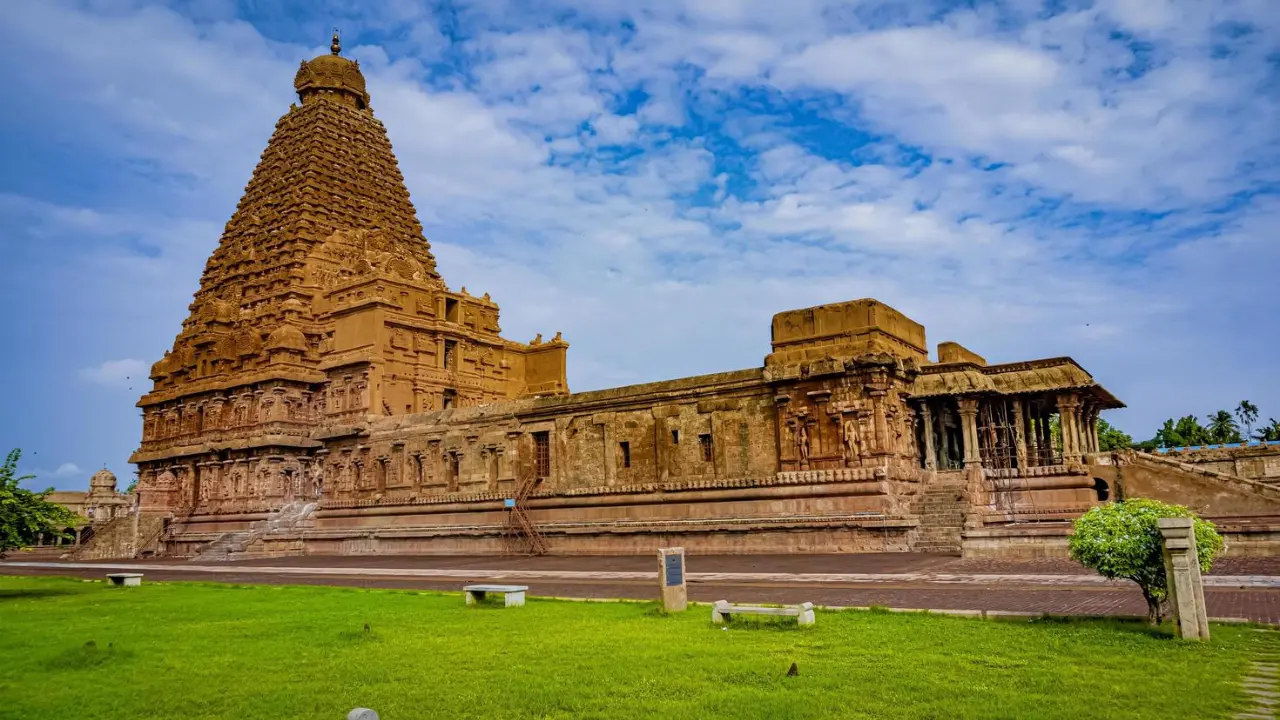
Bhimashankar is one of the 12 Jyotirlingas — the most sacred Shiva shrines in India. It sits in the Sahyadri hills of Pune district, Maharashtra, at an elevation of about 3,250 feet (990 metres), inside the Bhimashankar Wildlife Sanctuary. The setting is forest and hills rather than a city, which makes the journey part of the experience. The Bhima River, one of Maharashtra's major rivers, originates near the temple.
Most visits take 3–4 hours. If you're doing the forest trek from Khandas village, add 3–4 hours of trekking time each way.
Quick Facts
| Detail | Info |
|---|---|
| Deity | Bhimashankar Jyotirlinga (one of 12 Jyotirlingas) |
| Location | Kushgaon, Khed Taluka, Pune District, Maharashtra |
| State | Maharashtra |
| Elevation | ~3,250 feet (990 m) |
| Distance from Pune | 127 km (3–4 hours by road) |
| Distance from Mumbai | 170 km (4–5 hours by road) |
| Nearest railway station | Pune Junction (PUNE) — 127 km |
| Temple timings | 5:00 AM – 12:00 PM and 4:00 PM – 9:00 PM |
| Midday break | 12:00 PM – 4:00 PM (temple closed during this period) |
| Entry fee | Free |
| Dress code | Cover shoulders and knees (strictly enforced) |
| Best months | October–March |
| Avoid | June–September (monsoon; road hazards) |
| Biggest crowd day | Maha Shivaratri (Feb/March) |
What Is a Jyotirlinga
Jyotirlinga means "pillar of light" — jyoti is light, linga is form or mark. In Shiva tradition, the 12 Jyotirlingas mark specific locations where Shiva is said to have manifested as an infinite pillar of light. Each location is recorded in the Shiva Purana. There are exactly 12, and each is considered a direct manifestation rather than a symbolic representation.
Visiting all 12 is one of the most significant pilgrimages in Hinduism. The complete list: Somnath (Gujarat), Mallikarjuna (Andhra Pradesh), Mahakaleshwar (Madhya Pradesh), Omkareshwar (Madhya Pradesh), Kedarnath (Uttarakhand), Bhimashankar (Maharashtra), Vishwanath (Uttar Pradesh), Trimbakeshwar (Maharashtra), Vaidyanath (Jharkhand), Nageshwar (Gujarat), Rameshwaram (Tamil Nadu), Grishneshwar (Maharashtra). Bhimashankar is the 8th in the traditional sequence.
The Legend — Why Bhimashankar
The story behind this Jyotirlinga involves a demon named Bhima — not the Mahabharata Bhima, but a different figure. According to the Shiva Purana, Bhima was the son of Kumbhakarna (the giant brother of Ravana). He performed severe austerities to gain power, and once powerful enough, began terrorising sages, gods, and kingdoms. He defeated and imprisoned the god Brahma.
Lord Shiva fought Bhima at this location in the Sahyadri hills. After the battle, the sweat that poured from Shiva's body formed the Bhima River, which originates at the base of the hill near the temple and flows eastward across Maharashtra, eventually joining the Krishna River. The linga that solidified here is named after the demon — Bhimashankar, Shiva as the destroyer of Bhima.
Older traditions record that sages worshipped Shiva at this site long before the current temple was built. The location is mentioned in the Shiva Purana, and the site has been a pilgrimage point for centuries before the Maratha-era temple structure.
Architecture
The main temple follows the Nagara style of North Indian temple architecture. The curved shikhara (tower) above the sanctum is the most prominent architectural feature.
The construction shows Hemadpanthi influence — a style associated with the Yadava dynasty of medieval Maharashtra, which uses locally quarried stone without mortar. Pieces are fitted together using interlocking methods. Many temples in Maharashtra built under Yadava patronage share this technique, and it has proven durable over centuries.
The main mandapa (pillared hall) was significantly expanded during the Peshwa period in the 18th century. The Peshwa rulers, who were devout Shaivites, contributed to building and maintaining several significant Maharashtra temples. The hall you walk through before reaching the sanctum reflects this period's construction.
The sanctum itself is simple — the Jyotirlinga is the focus, not the decoration. Unlike heavily ornamented South Indian temples, Bhimashankar's interior is relatively austere. The linga is the point of the visit.
What to look at while waiting in the queue: The carved pillars in the mandapa have detailing worth examining. The external wall carvings depict Shiva in various forms and scenes from the Shiva Purana — look for the Nataraja (Shiva as cosmic dancer) panels and the smaller figures on the shikhara's surface.
Bhimashankar Wildlife Sanctuary
The temple sits inside a protected forest area that is part of the Western Ghats — a UNESCO World Heritage biodiversity hotspot. The sanctuary is not just the forest you drive through — it is an ecologically significant area that pilgrims often overlook entirely.
The Indian Giant Squirrel (Shekru):
This is Maharashtra's state animal and one of the most distinctive mammals in the region. It is large (body length up to 45 cm plus a long tail), brightly coloured in maroon, cream, and brown, and found only in the forests of the Western Ghats. It is easier to spot than most Indian wildlife — look upward in the high canopy trees at dawn, particularly near the forest edge. Early morning trekkers on the Khandas route regularly see them.
Other wildlife: Leopards, sloth bears, barking deer, and Indian gaur (bison) are present in the sanctuary but rarely sighted by typical visitors. Over 160 bird species have been recorded — the area is significant for birdwatchers.
The Khandas Trek:
The most popular trekking route to Bhimashankar starts from Khandas village, roughly 7 km through the forest to the temple. The trail climbs steadily — it is an uphill forest walk, not a casual stroll. Allow 3–4 hours to ascend, 2–3 hours to descend. The path passes through dense forest and provides views back over the Sahyadri range as you gain elevation.
This route attracts trekking groups from Pune, particularly on weekends October–February. If you are coming by road, you can still walk a shorter section of the forest trail near the temple itself.
Drone photography is prohibited inside the wildlife sanctuary.
Darshan — What to Expect
Temple Timings
- Morning session: 5:00 AM – 12:00 PM
- Midday break: 12:00 PM – 4:00 PM (temple is closed; plan around this)
- Evening session: 4:00 PM – 9:00 PM
The temple is open every day of the week. There is no weekly holiday.
Queue Reality
On regular weekdays: 30–60 minutes to reach the sanctum. On weekends and during festivals, waits extend to 2–5 hours. The actual time in front of the Jyotirlinga is 20–60 seconds.
Morning sessions (5:00–8:00 AM) have shorter queues than afternoons. The reopening at 4:00 PM also draws a fresh crowd.
The Darshan Process
- Remove footwear at the entrance (paid locker available for ₹20–30)
- Leave bags, phones, cameras, and leather items at the locker or with a companion (not allowed in the sanctum)
- Join the queue — it moves through the mandapa toward the sanctum
- 20–60 seconds of darshan in front of the Jyotirlinga
- Receive prasadam and blessings from the priest
- Exit through a separate path
Special Pujas
Abhishekam (ritual bathing of the linga with milk, water, honey, curd, and bilva leaves) can be arranged at the temple counter. Arrive early — slots are limited and fill up fast on Mondays and during Shravan month. Prices start around ₹100–500 depending on the puja type.
Elderly visitors and those with mobility difficulties can sometimes request priority access — check with temple staff at the entrance, though this is not guaranteed.
Offerings
- Flowers, bilva leaves
- Milk or water for abhishekam (arranged via the counter)
- Cash donation
- Prasadam (modaks, ladoos, sweets) available for purchase near the temple
When It's Most Crowded — Month by Month
| Month | Crowd Level | Reason |
|---|---|---|
| January | Low | Off-season; pleasant weather; few pilgrims |
| February | Moderate → Busy | Maha Shivaratri approaches; second half of February gets significantly busier |
| March | Very Busy | Maha Shivaratri (exact date varies) — biggest day of the year; 2–5 hour queues; all-night rituals the night before; avoid if you dislike crowds |
| April | Moderate | Post-Shivaratri; Gudi Padwa (Maharashtrian New Year) brings local visitors |
| May | Moderate | Pre-monsoon; pleasant temperatures; manageable queues |
| June | Low | Monsoon begins; roads narrow and slippery; not recommended for driving |
| July | Busy (but difficult) | Shravan month — each Monday (Shravan Somvar) dedicated to Shiva; crowded but rain and slippery roads make travel harder |
| August | Busy (but difficult) | Shravan continues; Nag Panchami; heavy monsoon; same road caution as July |
| September | Moderate | Monsoon retreating; Ganesh Chaturthi draws crowds to Pune, some visit nearby temples |
| October | Low–Moderate | Post-monsoon; excellent weather; one of the best months to visit |
| November | Low | Cool weather; very few crowds; best month alongside October |
| December | Low–Moderate | Year-end travel picks up slightly; still manageable |
Single busiest time: Maha Shivaratri (night and following morning). Pilgrims arrive the night before for all-night worship.
Best time for shortest queues: Tuesday–Thursday, October or November, well outside Shravan month.
Getting There
By Train to Pune, Then Road
Nearest railway stations:
- Pune Junction (PUNE) — 127 km from the temple; largest and best-connected station
- Kalyan Junction (KYN) — ~110 km from temple on the Mumbai side; useful if arriving from Mumbai via fast train
Train routes from major cities to Pune:
| From | Train | Duration | Notes |
|---|---|---|---|
| Mumbai CST | 12123 Deccan Queen | 3.5 hrs | Daily; premium intercity; books out fast |
| Mumbai CST | 11007 Deccan Express | 4 hrs | Daily; multiple departures |
| Delhi Hazrat Nizamuddin | 12263 Pune Duronto | ~18 hrs | 3×/week; no stops, fast |
| Delhi Hazrat Nizamuddin | 12213 Delhi–Pune AC Express | ~22 hrs | Daily |
| Bangalore | 11301 Udyan Express | ~24 hrs | Daily |
| Chennai | 11041 Chennai–Mumbai Express (alight Pune) | ~20 hrs | Daily |
| Hyderabad | 17031 Hyderabad–Mumbai Express (alight Pune) | ~12 hrs | Daily |
| Kolkata | 12860 Gitanjali Express (alight Pune) | ~36 hrs | Daily |
| Ahmedabad | 11009 Saurashtra Mail (change at Mumbai) | ~16 hrs via Mumbai | Change at CST or Dadar |
Book at irctc.co.in. Pune is a major junction with many options. For travel around Maha Shivaratri (Feb/March), book 4–6 weeks ahead — Pune trains fill up.
From Pune to Bhimashankar
- MSRTC bus (best option for solo travellers): Direct bus from Pune Shivajinagar Bus Stand to Bhimashankar. Departs morning. ₹100–200, approximately 3.5 hours. No reservation required.
- Private cab: ₹1,200–1,800 for a return trip. More flexible on timing.
- Self-drive: Take NH60 toward Nashik, turn at Rajgurunagar, then follow the road through Ghodegaon to the temple. Roads are fine October–May. June–September: narrow, landslide-prone stretches — drive with caution or don't.
From Mumbai to Bhimashankar
- By bus: MSRTC direct buses from Dadar East Bus Stand. ₹200–300, approximately 4.5 hours.
- By train + road: Train to Pune (see table above), then bus or cab.
- By road: Mumbai → NH160 → Karjat → Khopoli → Ambegaon → Ghodegaon → Bhimashankar (170 km, 4–5 hours). This route enters the hills earlier and the final stretch is steep and narrow.
The Khandas Trek Route
If you specifically want to trek, take a bus or cab to Khandas village rather than all the way to the temple. The 7 km forest trail starts there. This route climbs through the wildlife sanctuary to reach the temple from below. Start no later than 6:00 AM to finish before midday heat.
Photography Rules
| Area | Photography |
|---|---|
| Outside the temple compound, forest trails | ✅ Allowed |
| Temple courtyard | ✅ Generally allowed — check signage |
| Inside the sanctum or inner halls | ❌ Not allowed |
| Drone photography anywhere in sanctuary | ❌ Prohibited (wildlife sanctuary rules) |
Phones must be left outside the sanctum. Most pilgrims leave their phone with a companion or at the locker before entering.
Is Bhimashankar Worth Visiting?
Yes, if:
- You are doing a Jyotirlinga pilgrimage — this is one of the 12, and the Sahyadri setting makes it different from the others
- You enjoy trekking — the Khandas forest route is a genuine trail, not a paved path
- You want a temple in a natural setting rather than a city
- You are visiting Pune and want a full-day excursion to something outside the city
Plan accordingly if:
- You are visiting June–September — the road and trek conditions get difficult; roads narrow and landslides are possible on the stretch above Ghodegaon
- You have limited mobility — the terrain is hilly with steps; wheelchair access is very limited
- You are expecting elaborate architecture — Bhimashankar's appeal is the Jyotirlinga and the setting, not ornate carvings or grand gopurams like South Indian temples
- You want ATMs nearby — there are none in Bhimashankar village; nearest is in Ghodegaon (~30 km away)
Where to Stay
At the temple (Bhimashankar village):
- Temple trust guest house — very basic, clean, ₹200–500/night; fills up fast before Maha Shivaratri week; no advance booking system, first-come basis
- A few small lodges in the village, ₹400–800/night
In nearby towns:
- Ghodegaon (30 km away): a few lodges, ₹500–1,000/night
- Manchar (40 km away): small hotels, ₹800–1,500/night
Best option for comfort:
Stay in Pune and do a day trip. Pune is 3–3.5 hours by road and has hotels at every price point. This is what most visitors from outside Maharashtra do.
For those doing the trek:
Trekkers who want to start at dawn from Khandas can stay at basic accommodation in Khandas village itself — ask locally, as this changes seasonally.
Practical Information
Costs
| What | Cost |
|---|---|
| Temple entry | Free |
| Shoe locker | ₹20–30 |
| Abhishekam / special puja | ₹100–500 (varies by puja type) |
| Parking | ₹10–30 |
| MSRTC bus from Pune | ₹100–200 |
| Private cab from Pune (return) | ₹1,200–1,800 |
What's Available On-Site
- Shoe/bag lockers near the entrance (small fee)
- Drinking water at the temple
- Toilets (cleanliness varies; better near the entrance)
- Basic food stalls — snacks, tea, prasadam
- First aid: basic only; for anything serious the nearest hospital is in Pune
- Wheelchair access: very limited; hilly terrain with steps
Rules
- Dress code: cover shoulders and knees; no shorts or sleeveless tops (strictly enforced at the entrance)
- No phones, cameras, or leather items in the sanctum
- No photography inside
- Follow queue order — staff manage the lines and enforce discipline during peak periods
- Keep the temple compound clean; do not litter
What to Bring
- Comfortable walking shoes (uphill walking; if trekking, proper footwear is essential)
- Modest clothing (shorts will get you turned back at the gate)
- Cash — minimum ₹500; no ATMs in the village; stock up in Ghodegaon or before leaving Pune
- Water bottle (refill at the temple)
- Your own medicines and basic toiletries
- Sweater or light jacket October–February
- Offline maps downloaded — mobile signal is patchy in the hills
Budget Estimate — Day Trip from Pune
| Expense | Cost (per person) |
|---|---|
| Bus to/from Bhimashankar | ₹200–400 (return) |
| Puja/offerings | ₹100–200 |
| Food (snacks, lunch) | ₹200–300 |
| Locker | ₹30 |
| Total | ₹530–930 |
For a 2-day trip including Pune–Bhimashankar travel and one night stay: ₹1,500–3,000 per person depending on accommodation.
Common Mistakes
- Arriving on a festival date without checking — Maha Shivaratri means 3+ hour queues; Shravan Mondays add 2+ hours
- Wearing shorts or sleeveless — you will be sent back to change
- Visiting June–August by road for the first time — the ascent from Ghodegaon gets narrow and slippery in monsoon
- Not carrying cash — no ATMs in Bhimashankar
- Arriving at 11:30 AM expecting to enter — the temple closes at 12:00 PM for four hours
- Forgetting water — the walk from parking to the temple is uphill in the heat
Nearby Attractions
- Bhimashankar Wildlife Sanctuary trails — you are already inside the sanctuary; ask the forest department counter about the Ganesh Ghat trail for a wildlife-focused walk separate from the pilgrimage
- Kambeshwar Temple (2 km away): A smaller Shiva temple near Bhimashankar; peaceful and rarely crowded
- Malshej Ghat (~40 km): One of the most scenic passes in the Sahyadri range; monsoon brings waterfalls; quieter than popular hill stations
- Shivneri Fort (Junnar, 70 km): Birthplace of Chhatrapati Shivaji Maharaj; a worthwhile historical site; requires a moderate hike to the fort
- Girijatmaj Temple, Lenyadri (Junnar, ~70 km): One of the eight Ashtavinayak Ganesha temples in Maharashtra, carved into a hillside Buddhist cave complex — unusual combination of Hindu and Buddhist heritage
- Ozar Ashtavinayak Temple (50 km): Another of the eight Ganesha shrines if you're planning an Ashtavinayak circuit
- Lonavala / Khandala (longer drive, ~90 km): Hill stations with waterfalls and forts — a separate full day if you're extending your Maharashtra trip
If combining Bhimashankar with the Ashtavinayak circuit, Junnar (Girijatmaj and nearby Shivneri Fort) is 70 km away and makes a logical same-day addition.
Frequently Asked Questions
Is Bhimashankar one of the 12 Jyotirlingas?
Yes. It is the 8th in the traditional sequence listed in the Shiva Purana. The other 11 are Somnath, Mallikarjuna, Mahakaleshwar, Omkareshwar, Kedarnath, Vishwanath, Trimbakeshwar, Vaidyanath, Nageshwar, Rameshwaram, and Grishneshwar.
Can I trek to Bhimashankar?
Yes. The most popular route is from Khandas village — approximately 7 km of forest trail, 3–4 hours uphill, 2–3 hours down. Wear proper footwear. Start early, before 6:30 AM, to avoid afternoon heat. The trail passes through the wildlife sanctuary.
Is Bhimashankar accessible in monsoon?
The temple remains open, but the road from Ghodegaon to the temple gets narrow and landslide-prone June–September. If you are driving, go cautiously or postpone. The Khandas trek is also slippery in monsoon conditions.
What is the midday break?
The temple closes from 12:00 PM to 4:00 PM every day. If you arrive after 11:30 AM, you may not have time for darshan before the break. Plan either morning (arrive before 10 AM) or evening (arrive for 4 PM reopening).
Can I do abhishekam at Bhimashankar?
Yes. Book at the counter inside the temple premises. Slots fill up on Mondays (Somvar) and during Shravan month. Arrive early. Prices range from ₹100 to ₹500 depending on the ritual.
Is photography allowed?
Not inside the sanctum. In the outer courtyard, generally yes — check signage at the entrance. On the forest trek and surrounding area, photography is allowed. Drones are prohibited inside the wildlife sanctuary.
What is the best month to visit?
October and November are the best months — pleasant weather, minimal crowds, clear roads after monsoon.
How do I get there from Mumbai?
Most convenient: MSRTC direct bus from Dadar East Bus Stand (₹200–300, ~4.5 hours). By road: NH160 via Khopoli and Ambegaon (170 km, 4–5 hours). By train to Pune and then bus or cab is also an option.
Are there ATMs at Bhimashankar?
No. The nearest ATM is in Ghodegaon, approximately 30 km away. Carry enough cash before leaving Pune or Mumbai.
What is the Indian Giant Squirrel?
The Indian Giant Squirrel (Shekru) is Maharashtra's state animal, found only in the Western Ghats. It is large, colourfully marked in maroon and cream, and lives in high canopy trees. The forest around Bhimashankar is one of the best places to see it — look upward in the treetops at dawn, especially on the Khandas trek route.
What is the difference between Bhimashankar and Trimbakeshwar?
Both are Jyotirlingas in Maharashtra. Trimbakeshwar (near Nashik) is the source of the Godavari River and has a unique tri-faced linga (representing Brahma, Vishnu, Shiva). Bhimashankar is in the Sahyadri hills near Pune and is associated with the Bhima River. Both can be done in a single Maharashtra Jyotirlinga trip, though they are roughly 180 km apart.