
Badrinath Temple: Darshan and Travel Guide
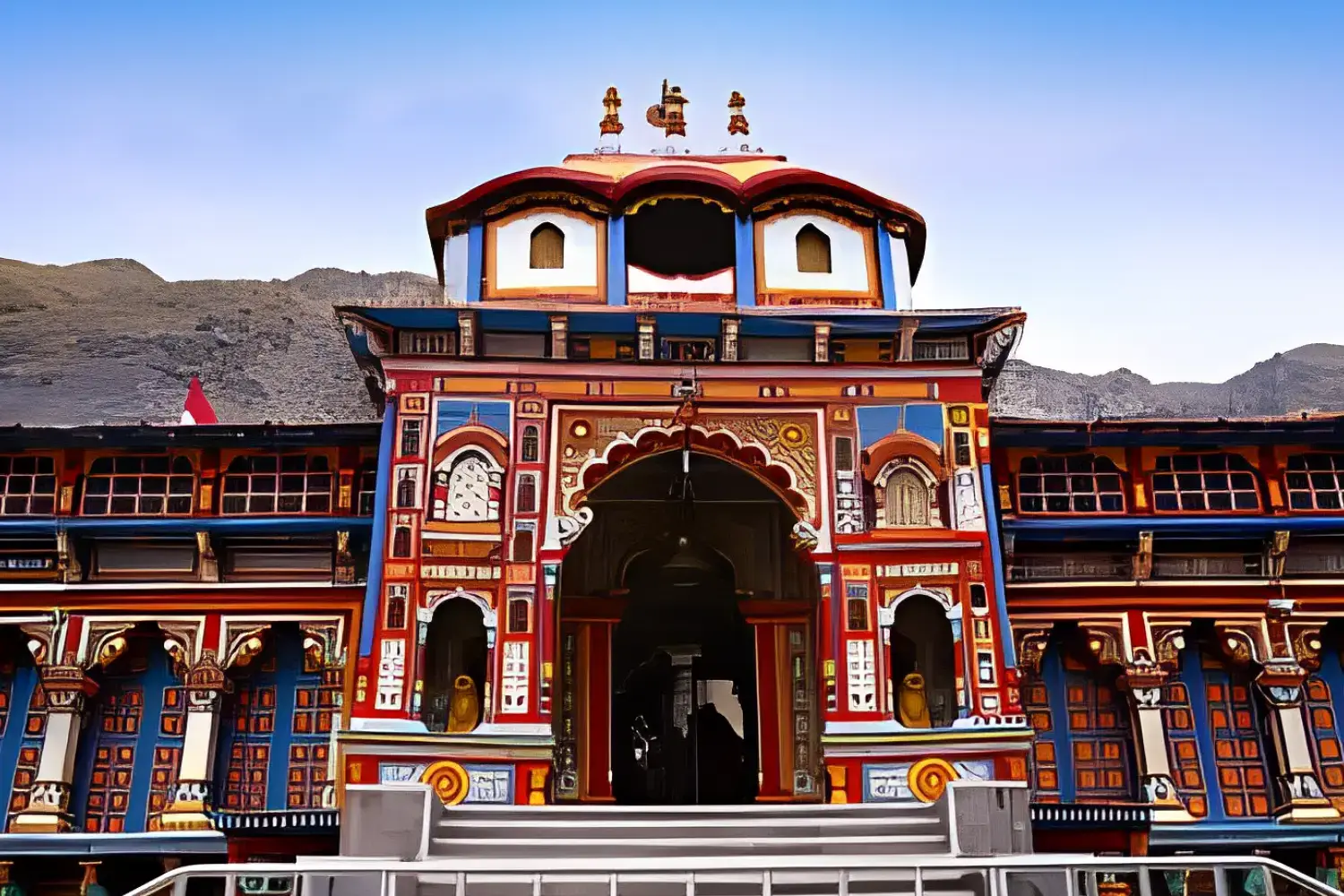
Badrinath is one of the four Char Dham pilgrimage sites and one of the 108 Divya Desams (the most sacred Vishnu temples in Hinduism). It is located in Chamoli district, Uttarakhand, at 3,300 metres (10,827 feet) above sea level on the banks of the Alaknanda River, flanked by the Nar and Narayan mountain ranges. The temple receives close to a million visitors every open season and is one of the most visited Himalayan shrines in India.
The temple is not open year-round. It closes every November when priests perform the final aarti and leave the town, and reopens in April or May the following year. The entire town of Badrinath essentially shuts down for winter. Anyone planning a visit must account for this.
Quick Facts
| Detail | Info |
|---|---|
| Location | Badrinath, Chamoli district, Uttarakhand |
| Nearest town | Joshimath (44 km) |
| Nearest airport | Jolly Grant Airport, Dehradun (315 km) |
| Nearest railway station | Haridwar (315 km) / Rishikesh (297 km) |
| Deity | Lord Vishnu (Badrinarayan) |
| Temple type | One of four Char Dham; one of 108 Divya Desams |
| Altitude | 3,300 m (10,827 feet) |
| Open | April/May to October/November (exact dates per Hindu calendar) |
| Closed | November to April (snow; no access) |
| Darshan timings | 4:30 AM – 1:00 PM and 4:00 PM – 9:00 PM |
| Entry fee | Free |
| Special puja fee | ₹200–1,500 depending on puja type |
| Best months | May (early, weekdays), September, early October |
| Avoid | July–August (monsoon; landslide risk on roads) |
History and Adi Shankaracharya
The temple's origins predate written records. It is mentioned in the Vishnu Purana and Bhagavata Purana as a site of intense tapas (austerities) by the sages Nara and Narayana, considered manifestations of Vishnu. The Mahabharata also references Badrinath — the Pandavas passed through this area on their final journey, and Yudhishthira is described as the last to ascend toward heaven from this region.
The most significant figure in the temple's documented history is Adi Shankaracharya (8th–9th century CE). According to tradition, Shankaracharya found the black stone idol of Badrinarayan submerged in the Narad Kund, a hot spring near the temple. He installed the idol in a cave and established organised daily worship there. He is also credited with founding the Joshimath Math (the monastery at Joshimath, 44 km away) as one of four cardinal monastic centres he established across India.
A detail that surprises most visitors: the head priest (Rawal) at Badrinath comes exclusively from the Nambudiri Brahmin community of Kerala — a tradition started by Shankaracharya, who was himself from Kerala. This is why a Himalayan temple in Uttarakhand has its main rituals conducted by South Indian priests.
Later restorations:
- 16th century: King Balbhadra Shah of Garhwal renovated and expanded the temple
- 18th century: Maratha ruler Malhar Rao Holkar rebuilt the structure after earthquake damage
- 19th century: Further repairs after a landslide damaged sections
The present building reflects these multiple restorations rather than a single original structure.
Char Dham context: The four Char Dham sites are Badrinath, Kedarnath, Gangotri, and Yamunotri — all in Uttarakhand. Completing the circuit of all four in one season is considered one of the most significant Hindu pilgrimages. Many pilgrims do the Char Dham Yatra in May–June, starting from Yamunotri and finishing at Badrinath.
The Temple and the Idol
Architecture:
Built in the Nagara style of North Indian temple architecture. The shikhara (tower) is the main structural feature — conical, painted in white, blue, and gold. The facade is more colourful than most Himalayan temples, which tends to stand out against the grey mountain backdrop. Construction uses stone and wood to handle heavy snow loads and seismic stress — both common in this region.
Three main spaces inside: the Garbhagriha (inner sanctum where the idol sits), the Darshan Mandapa (viewing hall where pilgrims stand), and the Sabha Mandapa (outer assembly hall).
The idol:
The black stone (shaligram) idol of Lord Badrinarayan depicts Vishnu seated in padmasana (lotus posture), in a meditative pose. The idol is considered svayambhu — self-manifested, not carved by human hands, according to tradition. It is approximately 1 metre tall and is adorned with ornaments and clothing that change seasonally. During winter, the idol is symbolically moved to the Narasimha Temple in Joshimath for the six months the main temple is closed.
Tapt Kund:
Natural hot springs at approximately 45°C, located immediately below the temple (5-minute walk). Most pilgrims bathe here before darshan. The water is sulphuric. There are separate bathing ghats for men and women. The kund is considered sacred and bathing before darshan is the traditional practice.
The Mythology — Badri and Lakshmi
The name Badrinath comes from badri — a type of wild berry (Indian jujube) that grew in abundance in the forest here. One tradition holds that the goddess Lakshmi took the form of a badri tree to shelter Vishnu from the harsh cold while he meditated — hence Badri-nath, "lord of the badri forest."
The Vishnu Purana and Srimad Bhagavatam describe Badrinath as the location where the sages Nara and Narayana performed severe austerities. Nara and Narayana are considered twin manifestations of Vishnu — Nara representing the human soul, Narayana representing the divine. The mythology connects this location to the origin of various Vedic hymns and the tradition of tapas in the Himalayas.
Narad Kund (the hot spring where the idol was reportedly found by Shankaracharya) is still visible near the temple. The Alaknanda River flowing past is a tributary of the Ganga and itself considered sacred in the Char Dham tradition.
Darshan — What to Expect
Timings
- Morning session: 4:30 AM – 1:00 PM
- Afternoon break: 1:00 PM – 4:00 PM
- Evening session: 4:00 PM – 9:00 PM
- Seasonal closure: Closes every October/November; reopens April/May (exact dates per Hindu calendar)
Queue Times
Typical wait: 1–3 hours during standard open season. On opening day (Akshaya Tritiya) and closing week: 3–5+ hours. Weekdays in September: sometimes 30–45 minutes.
The Process
- Enter through the main security checkpoints at the designated gates
- Leave phones, cameras, and leather items at the locker outside (mandatory; free or small fee)
- Join the general darshan queue or the separate puja/abhishekam queue
- Walk through the Sabha Mandapa and Darshan Mandapa toward the sanctum
- 10–30 seconds in view of the idol during peak times; a few minutes during off-peak
- Exit through a separate route; prasadam distributed outside
Priority queue: Available for senior citizens, pregnant women, and people with disabilities. Ask the queue management staff — not always available but worth requesting.
Pujas and Rituals
- Abhishekam: Ritual bathing of the idol with panchamrit (milk, curd, ghee, honey, sugar). Requires booking at the counter. Cost: ₹200–500.
- Archana: Flower offering with chanting of Vishnu's names. ₹100–200.
- Samanya Puja: General worship ritual. Prices vary.
- Prasadam: Sweet rice (charan amrit) and other blessed food distributed after rituals.
Booking for special pujas is done at the counter inside the complex. Slots are limited — arrange on arrival. During May–June peak, counter queues themselves take time.
Open Season and Temple Calendar
The temple follows the Hindu Panchang (lunar calendar) for opening and closing dates, which shift by days each year.
Opening: Akshaya Tritiya (April or May) — the priests travel from Joshimath in a ceremonial procession; the first darshan after winter is a significant event. Opening day draws very large crowds.
Closing: Around Kartik Purnima (October or November) — the final aarti is performed; an Akhand Jyoti (continuous flame) is lit inside before the doors are sealed. Priests return to Joshimath for the winter. The idol is ceremonially moved to the Narasimha Temple at Joshimath.
During winter: Joshimath's Narasimha Temple continues worship. Some pilgrims visit Joshimath specifically to pay respects during the winter months.
The specific dates are announced by the Badrinath-Kedarnath Temple Committee each year. Check their official announcements before planning travel.
When It's Most Crowded — Month by Month
| Month | Temple Status | Crowd Level | Notes |
|---|---|---|---|
| January | Closed | — | Deep snow; Badrinath is inaccessible |
| February | Closed | — | Snow; no access |
| March | Closed | — | Snow melting; roads begin to clear but temple still shut |
| April | Opens late April | Very Busy | Opening day (Akshaya Tritiya) draws massive crowds; roads just reopened; some sections may still have snow |
| May | Open | Very Busy | Peak Char Dham season; largest monthly footfall; 2–4 hour queues standard |
| June | Open | Busy | Busy pre-monsoon; rains begin mid-June; some road disruptions start |
| July | Open | Low–Moderate | Monsoon; roads prone to landslides; pilgrimage numbers drop sharply; not recommended |
| August | Open | Low–Moderate | Monsoon peak; heavy rain; road closures periodic; Janmashtami but low footfall overall |
| September | Open | Moderate | Post-monsoon; best weather window; manageable queues; excellent month to visit |
| October | Open (closes late Oct/Nov) | Busy | Navratri; final weeks before closure see a rush of last-chance pilgrims |
| November | Closes | Very busy on closing day | Closing ceremony is an event; temple shuts for winter |
| December | Closed | — | No access |
Single busiest time: Opening day (Akshaya Tritiya). Closing week is second.
Best days for shortest queues: Weekdays (Tuesday–Thursday) in September or first two weeks of October.
Getting There
There is no railway line to Badrinath. The nearest major stations are in the plains — Haridwar (315 km away) and Rishikesh (297 km). From either, travel continues by road through the Uttarakhand hills.
By Train to Haridwar or Rishikesh, Then Road
Haridwar Junction (HW) — most trains, most connections
- Shared taxi from Haridwar bus stand to Badrinath (via Rishikesh–Devprayag–Rudraprayag–Karnaprayag–Joshimath): ₹500–800 per seat; 10–12 hours
- Private cab from Haridwar: ₹5,000–7,000 one-way
Rishikesh (RKSH) — 7 km from Haridwar; slightly closer; good if you're spending time in Rishikesh before starting
- Taxis and shared cabs depart from Yatri Niwas area at Rishikesh bus stand
Dehradun (DDN) — for those flying in
- Jolly Grant Airport (Dehradun) is the nearest airport to Haridwar/Rishikesh; a practical entry point for those coming by air
Train routes from major cities to Haridwar:
| From | Train | Duration | Notes |
|---|---|---|---|
| Delhi (New Delhi) | 12017 Dehradun Shatabdi | 4.5 hrs | Daily; fast and comfortable |
| Delhi | 12055 Haridwar Jan Shatabdi | 5 hrs | More affordable; daily |
| Delhi | 14309 Ujjaini Express (to Haridwar) | 6 hrs | Overnight option |
| Mumbai | 19019 Mumbai–Dehradun Express | ~26 hrs | Via Haridwar; 3x/week |
| Kolkata | 13009 Doon Express | ~26 hrs | Via Haridwar; daily |
| Varanasi | 14265 Varanasi–Dehradun Express | ~14 hrs | Via Haridwar |
| Lucknow | 14317 Lucknow–Dehradun Express | ~8 hrs | Via Haridwar |
| Ahmedabad | 19165 Saurashtra Express | ~18 hrs | Haridwar terminus |
| Patna | 19413 Kolkata–Ahmedabad Express (alight Haridwar) | ~18 hrs | Check schedule |
| Chennai / Bangalore | No direct train | Via Delhi | Take Rajdhani to Delhi, then Shatabdi to Haridwar |
Book at irctc.co.in. Trains to Haridwar and Dehradun fill up 4–6 weeks ahead during May–June Char Dham season. Tatkal quota (opens 1 day before travel) available at higher fare.
By Road from Delhi
- Delhi → Haridwar (210 km, ~4 hours) → Rishikesh → Devprayag → Rudraprayag → Karnaprayag → Joshimath → Badrinath
- Total distance Delhi to Badrinath: ~520 km; driving time: 14–16 hours
- Roads through Uttarakhand are narrow, winding, and steep. First-time drivers on mountain roads should hire a local driver from Haridwar or Rishikesh.
By Helicopter
Helicopter services from Dehradun (Sahastradhara helipad) to Badrinath operate during the open season. One-way fare: approximately ₹3,000–5,000 per person. Chartered helicopters cost significantly more. Seats sell out fast during May–June — book weeks ahead through Uttarakhand government portals or IRCTC's helicopter packages.
From Delhi Airport (IGI)
Fly to Jolly Grant Airport, Dehradun (the nearest; ~1 hour flight). From Dehradun airport, take a taxi to Haridwar (55 km, ~1 hour) and continue by road. Alternatively, some travel packages include helicopter transfers from Dehradun.
Altitude and Health
At 3,300 metres, altitude sickness is a practical concern — not an edge case. Visitors arriving directly from sea-level cities frequently experience symptoms.
Acute Mountain Sickness (AMS) symptoms: Headache, nausea, dizziness, shortness of breath, general fatigue. Symptoms usually appear 6–24 hours after arriving at altitude.
How to reduce risk:
- Spend 1–2 nights at Joshimath (1,890 m) before going up to Badrinath (3,300 m) — this acclimatisation step makes a significant difference
- Don't exert heavily on arrival day; avoid rushing between queues; rest in the afternoon
- Drink water consistently; avoid alcohol at altitude
- Diamox (acetazolamide) can help prevent AMS — consult a doctor before travel
- If symptoms are severe (persistent vomiting, confusion, loss of balance), descend to Joshimath immediately; do not sleep through severe symptoms at altitude
Who should consult a doctor before going:
- Anyone with heart conditions, high blood pressure, or respiratory issues
- Children under 10 — altitude affects them faster
- First-time visitors to high altitude with no prior experience
The nearest medical facility with reasonable capability is in Joshimath. Badrinath has only basic first aid on-site.
Where to Stay
In Badrinath town:
- Budget guesthouses: ₹400–800/night; basic facilities; hot water sometimes
- Mid-range hotels: ₹1,200–3,000/night; limited but a few options with reliable hot water and meals
- GMVN (Garhwal Mandal Vikas Nigam) guest house: government-run, reliable quality; book via gmvnl.in
- The town is small and fills up fast during May–June; book 3–4 weeks ahead for this period
In Joshimath (44 km, 1,890 m) — better option for comfort and acclimatisation:
- Budget: ₹400–800/night; several options
- Mid-range: ₹1,000–2,500/night; noticeably more comfortable than Badrinath
- Good base for acclimatisation; also useful if visiting Auli (nearby ski resort/meadow) or Hemkund Sahib
Booking ahead:
- Opening week (Akshaya Tritiya): book 2–3 months in advance — accommodation fills completely
- May–June: book 3–4 weeks ahead
- September–October: easier to find rooms; 1–2 weeks advance is usually sufficient
Nearby Attractions
Tapt Kund — Hot springs (45°C) 5 minutes from the temple. Sacred bathing spot; most pilgrims bathe here before darshan. Separate ghats for men and women.
Narad Kund — A smaller, quieter spring where the idol was reportedly recovered by Shankaracharya. A few minutes' walk from the temple; less crowded than Tapt Kund.
Brahma Kapal — A riverside stone platform 15 minutes' walk from the temple where families perform shraddha (ancestral rituals). This is one of the most significant locations in North India for pitru tarpan (offerings to deceased ancestors). Many families who have lost a family member specifically come here for this ritual.
Mana Village — Last permanent Indian village before the Tibetan plateau, 5 km from Badrinath. A short drive or auto-rickshaw ride. Key points of interest:
- Bhim Pul: A natural flat rock spanning the Saraswati River; the river disappears underground shortly after (believed to represent the Saraswati's mythological disappearance)
- Vyas Gufa: A cave where sage Veda Vyasa is traditionally said to have composed the Mahabharata
- Small shops selling Tibetan-influenced goods and warm clothing
- Scenic and worth the short detour; gets crowded in peak season
Vasudhara Falls — A 145-metre waterfall 9 km trek from Mana village (approximately 3 hours round trip). One of the tallest waterfalls in the region. Worth doing if you have the time and fitness.
Hemkund Sahib — 19 km from Joshimath, at 4,329 metres; one of the world's highest gurudwaras and a major Sikh pilgrimage site. Open June–October only. Adds a full day with a 6 km trek from Ghangaria. A meaningful addition if you're combining Char Dham with Sikh pilgrimage.
Auli — Near Joshimath; a ski resort in winter and a high-altitude meadow in summer. The cable car from Joshimath to Auli runs during open season. Good views of Nanda Devi and other peaks.
Practical Information
Costs
| What | Cost |
|---|---|
| Temple entry | Free |
| General darshan | Free |
| Special fast-track darshan | ₹100–500 per person |
| Abhishekam / special puja | ₹200–1,500 depending on type |
| Locker for phone/camera | Free or small fee |
| Tapt Kund bathing | Free |
| Prasadam | Free (distributed after puja) |
| Accommodation (Badrinath, budget) | ₹400–800/night |
| Accommodation (Joshimath, mid-range) | ₹1,000–2,500/night |
| Shared taxi Haridwar to Badrinath | ₹500–800 per seat |
Estimated Trip Budget — 4 Days from Delhi
| Expense | Cost for 2 people |
|---|---|
| Train to Haridwar (AC 3-tier, return) | ₹3,000–5,000 |
| Road transport (Haridwar–Badrinath–Haridwar, shared) | ₹2,000–3,200 |
| Accommodation (3 nights, ₹1,000/night) | ₹3,000 |
| Food (₹400/person/day × 4 days) | ₹3,200 |
| Pujas and offerings | ₹500–1,500 |
| Total for 2 people | ₹11,700–15,900 |
What to Pack
- Clothing: Warm layers (temperature drops sharply at night even in summer), waterproof jacket, modest traditional clothing for darshan, hat, sunscreen, sunglasses (UV is intense at altitude)
- Footwear: Comfortable walking shoes; waterproof if visiting monsoon-adjacent months
- Essentials: Water bottle (refill at temple), personal medicines, ID card (required at checkpoints), power bank (electricity can be unreliable), offline map of the route
- Cash: ATMs exist in Badrinath town but are frequently out of service during peak season; carry enough cash from Haridwar or Rishikesh
Mobile Connectivity
Jio and BSNL have the best coverage in this region. Other networks may not work reliably beyond Joshimath. Download offline maps of the full Haridwar–Badrinath route before departing.
Rules
- Traditional Indian clothing required — no shorts, sleeveless tops, or revealing clothes; enforced at entry
- No phones, cameras, or leather items inside the temple — leave at the locker
- No touching the idol; no selfies inside the sanctum
- Follow queue instructions from temple staff — cutting lines is not allowed
- No littering; keep the area clean
Frequently Asked Questions
When does Badrinath temple open and close?
The opening date is Akshaya Tritiya (April or May; date varies by Hindu calendar). Closing is around Kartik Purnima (October–November). Exact dates are announced by the Badrinath-Kedarnath Temple Committee. The temple is completely closed from November to April.
Can I visit Badrinath in August?
The temple is open but monsoon conditions make July–August difficult. Roads from Haridwar toward Badrinath are prone to landslides. Sections close periodically. If you go, check road status daily on the Uttarakhand government website and build buffer days into your plan.
How long from Delhi?
By road: 14–16 hours (520 km). By train to Haridwar (4.5–5 hours) plus road (10–12 hours) is the standard approach. By helicopter from Dehradun: 1.5–2 hours in the air, but getting to Dehradun adds time.
Is there altitude sickness risk?
Yes. Badrinath is at 3,300 metres. Visitors arriving directly from low altitudes frequently experience headaches and fatigue. Spending 1–2 nights at Joshimath (1,890 m) before going to Badrinath significantly reduces the risk.
What is the dress code?
Traditional Indian clothing: kurtas, dhoti, salwar-kameez, sarees. No shorts, sleeveless tops, or western casual wear. You will be turned away at the gate in non-compliant clothing.
Can I do Char Dham Yatra and include Badrinath?
Yes. The standard Char Dham Yatra sequence is Yamunotri → Gangotri → Kedarnath → Badrinath. Most pilgrims complete it in 10–14 days during May or September–October. Travel agencies and Uttarakhand Tourism offer organised packages.
Is there a helicopter to Badrinath?
Yes, from Dehradun (Sahastradhara helipad). One-way fare is approximately ₹3,000–5,000 per person. Seats book out well ahead during May–June. Check Uttarakhand Tourism or IRCTC's helicopter yatra packages.
Can I visit Mana Village from Badrinath?
Yes. Mana is 5 km from Badrinath — a short auto-rickshaw or shared cab ride. It has the Bhim Pul rock bridge, the Vyas Gufa cave, and views toward the Tibetan plateau. Worth a 1–2 hour visit while in the area.
Are phones allowed inside?
No. Phones, cameras, and leather items must be left at the locker outside the main gate before entering the temple.
Is Badrinath worth visiting for non-religious travellers?
The temple itself is specifically a pilgrimage destination — the experience centres on darshan and ritual. Non-religious visitors come primarily for the Himalayan setting: the Alaknanda River valley, the mountain backdrop, and access to Mana Village and trekking routes. If the queue and ritual context hold no interest, the surrounding landscape is the main draw.
What is Brahma Kapal and why do people go there?
Brahma Kapal is a riverside stone platform where families perform pitru tarpan — rituals for deceased ancestors, asking for their peace in the afterlife. In Hindu tradition, performing this at Badrinath specifically is considered particularly effective. Families who have recently lost a member often make the Badrinath trip specifically for this ritual.
Quick Reference
- Closed: November to April (no exceptions; entire town shuts down)
- Nearest train station: Haridwar (315 km) or Rishikesh (297 km)
- No phones inside temple: Mandatory locker before entering
- Altitude: 3,300 m — acclimatise at Joshimath first
- Head priests from Kerala: Nambudiri Brahmin tradition since Adi Shankaracharya
- Opening day: Akshaya Tritiya — single busiest day of the year
- September: Best month for manageable queues and clear weather
- Char Dham: Badrinath is the final stop in the traditional sequence