
Sacred to Lord Vishnu, observed on the 11th day of both lunar fortnights for spiritual purification and moksha.
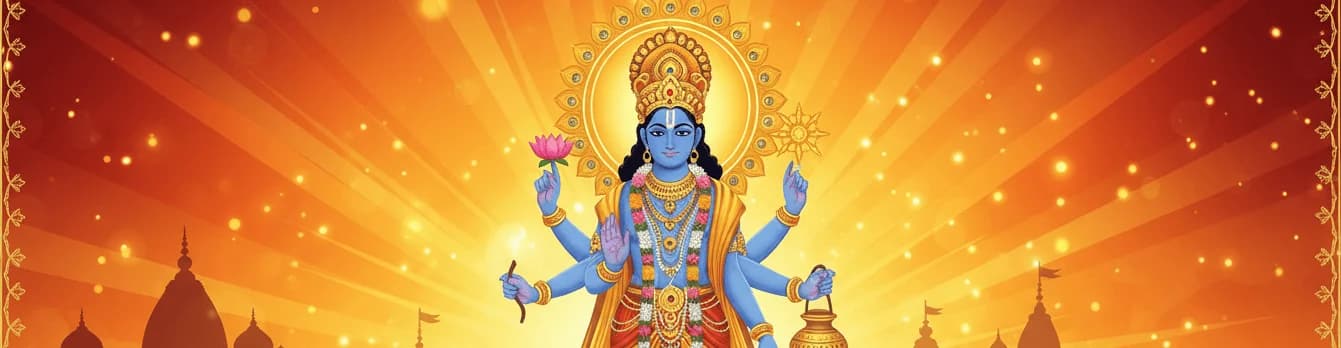
Devutthana Ekadashi
Shukla Paksha • Kartika
Vrat Timings
Parana · Break the fast
Afternoon1:18 PM – 3:29 PM
शनि, २१ नवंबर:
शुक्र, २० नवंबर:
- Fast begins6:43 AM
- Ekadashi begins7:16 AM
शनि, २१ नवंबर:
- Ekadashi ends6:31 AM
- Hari Vasara6:31 AM – 12:08 PM
First quarter of Dwadashi: do not break the fast
- Pratahkaal ends8:55 AM
- Parana1:18 PM – 3:29 PM
- Madhyahna ends1:18 PM
Devutthana Ekadashi
A Key Fast for Divine Awakening
Devutthana Ekadashi is one of the twenty-four Ekadashi fasts observed each year. It's important because it marks the end of Chaturmas, a four-month period when things tend to slow down and people focus more on spiritual matters. This Ekadashi signifies Lord Vishnu waking up from His rest, which is believed to get auspicious activities in the universe going again. You might also hear it called Prabodhini Ekadashi, Utthana Ekadashi, or Kartiki Ekadashi. It falls on the eleventh day of the bright half (Shukla Paksha) of the Hindu month of Kartika.
The Story of the Lord's Sleep
Puranic texts mention that Lord Vishnu went into a deep sleep. This period of rest caused many auspicious events to be put on hold. Devotees, sages, and even gods prayed for Him to wake up. On this Ekadashi, it's believed Lord Vishnu stirs from His sleep and resumes His role in maintaining the cosmos. The story also involves a demoness named Vrinda, whose curse or agreement is said to have led to the Lord's slumber. Her devotion is highlighted, and her transformation into the Tulsi plant is linked to the Lord's awakening. Tulsi leaves are considered important offerings on this day.
Good for Starting New Things
Devutthana Ekadashi marks the end of Chaturmas, a time often associated with the monsoon and a general slowdown. The Lord's awakening signals the return of auspiciousness. This makes the day particularly good for:
- Starting New Ventures: It's considered a very favorable day to begin new projects, businesses, or marriages.
- Overcoming Obstacles: Observing this fast is believed to help remove impediments and get guidance for spiritual or material pursuits.
- Concluding Vows: Many devotees finish vows they took during Chaturmas on this day.
- Receiving Blessings: The awakened Lord is thought to bestow significant blessings for prosperity, health, and spiritual progress.
What's unique about this Ekadashi is its timing, signaling the renewal of divine energy and auspiciousness.
How to Observe and Rituals
Observing Devutthana Ekadashi involves specific practices related to the Lord's awakening. General Ekadashi fasting rules, like not eating grains and beans, still apply. Some unique rituals include:
- Symbolic Awakening: Devotees offer prayers and sing devotional songs, often placing an image of Lord Vishnu in a cradle and gently rocking it.
- Tulsi Vivah: The holy Tulsi plant is symbolically married to Lord Vishnu, often represented by a Shaligram. This ceremony involves rituals similar to a wedding and is performed with devotion.
- Offerings: Fruits, milk products, sweets, and especially Tulsi leaves and garlands are offered to the Lord.
- Worship: Prayers are directed towards Lord Vishnu and Goddess Lakshmi for His awakening and continued protection. Chanting mantras like "Om Namo Bhagavate Vasudevaya" is common.
- Illumination: Homes and temples are often decorated and lit with lamps.
- Scripture Reading: Devotees may read or listen to texts like the Srimad Bhagavatam or Vishnu Purana.
Fasting typically lasts from sunrise on Ekadashi until sunrise the next day (Dwadashi). Some people observe a strict fast without food or water, while others might consume water, fruits, or milk.
Breaking the Fast (Parana)
The Parana, or breaking of the fast, is performed after sunrise on Dwadashi, before the Dwadashi tithi ends. The first food offered to the deity after the fast is often a sweet dish. Eating a Tulsi leaf is a common practice to start the Parana. Feeding Brahmins or the needy after breaking the fast is considered meritorious.
Spiritual Benefits
Observing Devutthana Ekadashi with devotion is believed to bring significant spiritual benefits:
- Merit: It's said to bestow merit equivalent to performing many powerful Vedic rituals.
- Sin Cleansing: The fast is believed to purify devotees from accumulated sins.
- Spiritual Attainment: It can lead to liberation from the cycle of birth and death by gaining the Lord's grace.
- Well-being: Devotees may also experience material prosperity and good health.
- Strengthened Devotion: The practice enhances one's connection and faith in Lord Vishnu.
Frequently Asked Questions
Q: What makes Devutthana Ekadashi special compared to other Ekadashis?
A: Its significance lies in marking the end of Chaturmas and the awakening of Lord Vishnu, signifying the return of auspiciousness and divine activity.
Q: What is the importance of the Tulsi Vivah ceremony?
A: It symbolizes the sacred union of the Tulsi plant with Lord Vishnu, believed to invoke blessings for prosperity and spiritual growth.
Q: Is it permissible to drink water during a strict fast on Devutthana Ekadashi?
A: While a strict fast may involve abstaining from water, many individuals consume water based on their capacity and spiritual guidance. The focus is on sincere devotion.
Deeper Meaning
Devutthana Ekadashi serves as a metaphor for spiritual renewal. The Lord's awakening can be seen as mirroring the dormant spiritual potential within individuals. Chaturmas represents introspection, and this Ekadashi signifies the reawakening of inner divinity. Actively participating in the rituals symbolizes a commitment to one's spiritual journey. The event emphasizes that even after periods of inactivity, sincere effort can lead to a powerful spiritual reawakening and a renewed connection with the divine.
Devutthana Ekadashi is a day of spiritual renewal and hope. It revitalizes the cosmic order and opens the path for divine grace. By observing this fast with devotion and adherence to rituals, devotees can bring auspiciousness into their lives, overcome challenges, and deepen their connection with Lord Vishnu. It highlights the cyclical nature of existence, the value of spiritual discipline, and the ultimate triumph of divine consciousness. The awakening of the Lord can inspire an awakening of divinity within each person.
The exact date of Devutthana Ekadashi can vary based on regional calendar systems. Consulting a Panchang (Hindu almanac) is recommended for precise dates. Auspicious events, including weddings, often resume after this day.