
Sacred to Lord Vishnu, observed on the 11th day of both lunar fortnights for spiritual purification and moksha.
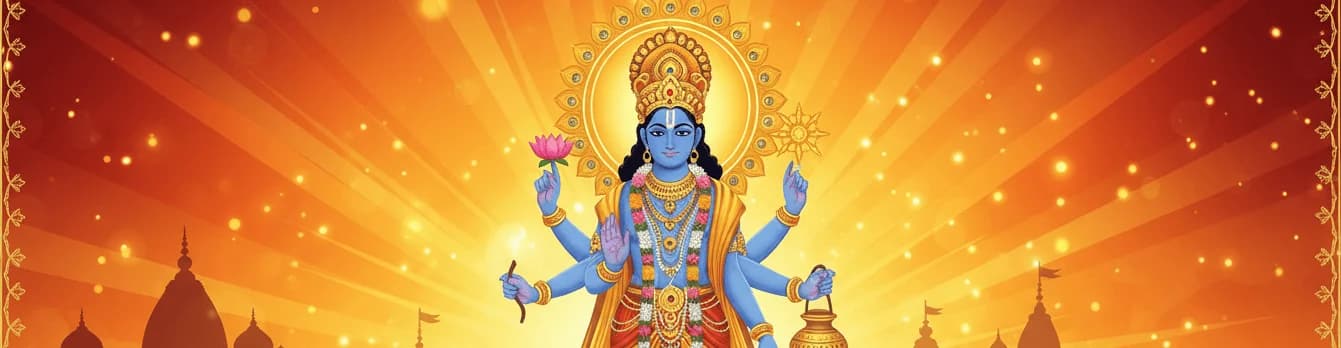
Devshayani Ekadashi
Shukla Paksha • Ashadha
Vrat Timings
Parana · Break the fast
Morning · Pratahkaal5:54 AM – 8:34 AM
रवि, २६ जुलाई:
शुक्र, २४ जुलाई:
- Ekadashi begins9:13 AM
शनि, २५ जुलाई:
- Fast begins5:54 AM
- Ekadashi ends11:34 AM
- Hari Vasara11:34 AM – 6:10 PM
First quarter of Dwadashi: do not break the fast
रवि, २६ जुलाई:
- Parana5:54 AM – 8:34 AM
Devshayani Ekadashi
Starting Chaturmas and Lord Vishnu's Rest
Devshayani Ekadashi is a key date in the Hindu calendar, and it's when the four-month period called Chaturmas is beginning. This is the time when Lord Vishnu is thought to go into a deep sleep, which is called Devshayani, or "reclining of the divine." The name of this Ekadashi actually means "Ekadashi of the reclining God." During this period, it's believed Lord Vishnu rests on the cosmic serpent, Shesha Naga. This time is also known as Hari Shayani Ekadashi.
Generally, Chaturmas is seen as a time for focusing on spiritual matters, practicing self-discipline, and taking on specific vows. It's usually not considered the best time for starting big new life events like weddings or major construction projects.
The Story of King Mandhata
The Padma Purana tells the story of King Mandhata to show the benefits of observing Devshayani Ekadashi. King Mandhata, who was a good ruler, faced a really bad drought that lasted for three years and ruined his kingdom. Crops failed, rivers dried up, and his people suffered a lot.
Looking for a solution, King Mandhata asked some sages. Narada Muni advised him that observing Devshayani Ekadashi with devotion could please Lord Vishnu and bring back prosperity. The King then told his whole household to observe the fast with sincerity, meaning they should avoid food and drink and pray to Lord Vishnu. After they devoutly followed this, Lord Vishnu was pleased, and the very next day, heavy rain blessed the kingdom, ending the drought and bringing back prosperity. This story highlights how observing this Ekadashi with faith might lead to positive outcomes.
Why It's Important: The Start of Chaturmas and Spiritual Focus
Devshayani Ekadashi is particularly important because it kicks off the Chaturmas period, which goes on for four months and finishes with Prabodhini Ekadashi. During Chaturmas, Lord Vishnu's rest is seen as a time for devotees to ramp up their spiritual practices.
This Ekadashi is linked to:
- Starting Spiritual Practices: It's considered a good time to begin vows, undertake austerities, and deepen your spiritual connection.
- Seeking Divine Support: The story of King Mandhata suggests it can help overcome difficulties and ensure well-being and prosperity through divine help.
- Embracing Cosmic Cycles: Observing this fast acknowledges the natural cycles of activity and rest in the universe and seeks blessings for ongoing protection.
- Boosting Spiritual Growth: While the divine is resting, it's a period for devotees to focus more intensely on their spirituality, with many taking on intensive spiritual practices.
The importance of Devshayani Ekadashi really comes down to it being a turning point, signaling a time when devotion and introspection are emphasized for both spiritual and material benefits.
How to Observe and Rituals
Observing Devshayani Ekadashi usually involves fasting, generally from grains and legumes, and sometimes from all food and water. Specific rituals focus on honoring Lord Vishnu and getting ready for Chaturmas.
- Worship of Lord Vishnu: Devotees mainly worship Lord Vishnu, often imagining him in his reclining posture. Images or idols showing this form are especially revered.
- Symbolic Rituals: In some traditions, a symbolic ritual of placing an idol of Lord Vishnu in a reclining posture (Shayan Mudra) is performed.
- Offerings: White flowers, sandalwood paste, and incense are considered appropriate offerings.
- Chanting: Reciting the Vishnu Sahasranama (the thousand names of Lord Vishnu) is recommended.
- Vows for Chaturmas: Many devotees make a vow (Sankalpa) on this day to follow specific spiritual disciplines throughout Chaturmas.
- Associated Deities: Lord Shiva and Goddess Lakshmi are also often worshipped along with Lord Vishnu.
- Mantras: The mantra "Om Namo Bhagavate Vasudevaya" is considered auspicious.
The observance is all about calm devotion and preparing for a period of more intense spiritual discipline.
Breaking the Fast (Parana)
The fast is usually broken on the following day, Dwadashi, after sunrise.
- Timing: The fast is broken after sunrise on Dwadashi, ideally before the Dwadashi tithi ends.
- Offerings: It's customary to offer food and gifts to Brahmins before breaking the fast.
- First Meal: The first meal after the fast should be simple and pure (sattvic), often including fruits, milk, or a light vegetarian meal.
- Food Restrictions: Grains and legumes are generally avoided on the day of breaking the fast, unless your tradition or spiritual guide says otherwise.
- Mindful Consumption: The first meal is seen as a continuation of the spiritual observance and should be eaten with mindfulness and gratitude.
Spiritual Benefits
Observing Devshayani Ekadashi with sincerity offers several spiritual benefits:
- Purification and Merit: Like other Ekadashis, this fast helps purify the mind and body, reduce past negative karma, and build up spiritual merit. The story of King Mandhata implies its power to ease significant suffering.
- Lord Vishnu's Favor: Honoring Lord Vishnu's divine slumber and the start of Chaturmas can earn his favor, leading to blessings of peace and well-being.
- Spiritual Advancement: The Chaturmas period, which starts with this Ekadashi, is good for spiritual growth. Observing the fast helps devotees enter this period with a purified mind, making them more open to spiritual practices.
- Liberation: Scriptures suggest that sincerely observing Ekadashis, including this one, can help in progressing towards liberation (Moksha) from the cycle of birth and death.
- Fulfillment of Desires: Devotees with pure intentions might find their sincere desires fulfilled, as shown by the restoration of King Mandhata's kingdom.
Frequently Asked Questions
Q: Why is Devshayani Ekadashi considered the start of Chaturmas?
A: Devshayani Ekadashi marks the day Lord Vishnu is believed to begin his four-month slumber, which signifies the start of the Chaturmas period, dedicated to spiritual practices and introspection.
Q: Are there specific dietary restrictions for Devshayani Ekadashi that are different from other Ekadashis?
A: The usual Ekadashi dietary restrictions (avoiding grains, legumes, etc.) apply. During Chaturmas, some devotees adopt stricter dietary observances, often guided by their personal spiritual traditions or Gurus.
Q: What is the significance of performing the Shayan Mudra ritual on this day?
A: The Shayan Mudra ritual, which symbolizes Lord Vishnu's reclining posture, is an act of devotion that honors his divine rest and acknowledges the cosmic cycle. It helps deepen the understanding of the day's significance.
Embracing the Cosmic Rhythm
Devshayani Ekadashi offers a philosophical view on the natural rhythm of activity and rest. It teaches the importance of introspection and rest for rejuvenation, mirroring the universe's cycles. This observance encourages understanding that spiritual progress involves inner stillness and contemplation, not just outward action. The Chaturmas period invites a slower pace, an inward focus, and a deeper connection with the divine. For people practicing today, this means finding moments of peace and recognizing that inner rejuvenation is a source of strength.
Devshayani Ekadashi is a significant gateway, marking the beginning of Chaturmas and Lord Vishnu's divine slumber. Observing it is an act of devotion that purifies the soul and aligns individuals with cosmic rhythms, fostering spiritual growth and well-being. Understanding its significance and observing its rituals with sincerity allows devotees to benefit from its blessings throughout the Chaturmas period and beyond.
Note: The exact start date of Chaturmas can vary by one day depending on regional calendar systems (Amanta or Purnimanta). Both are considered valid within Vedic traditions, and the spiritual significance of the Ekadashi remains consistent.