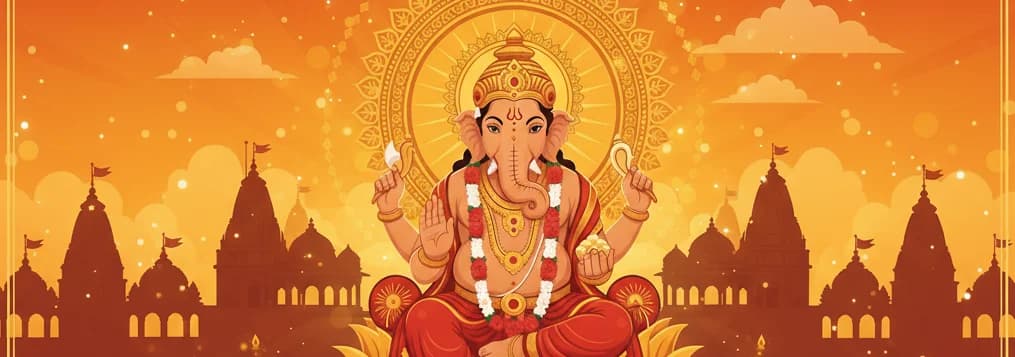
Dedicated to Lord Ganesha, observed on the 4th day of Krishna Paksha to remove obstacles and bring prosperity.
Vrat Timings
Moonrise · Moon darshan
9:11 PM
मंगळ, ६ जाने
Sight the moon and offer prayers before breaking the fast
मंगळ, ६ जाने
- Fast begins7:09 AM
- Chaturthi begins8:02 AM
- Moonrise9:11 PM
बुध, ७ जाने
- Chaturthi ends6:53 AM
Lambodara Sankashti
Sankashti Chaturthi is a day set aside for worshipping Lord Ganesha, known for removing obstacles. Lambodara Sankashti is a particular observance that happens during the waning moon phase (Krishna Paksha) of the Magha month, based on the amanta calendar. This day focuses on Lord Ganesha in His form as Lambodara.
The name "Lambodara" literally means "one with a large belly." This isn't just about physical size; it's symbolic. It represents Ganesha's capacity to hold and manage everything in existence, His deep compassion, and His power to get past difficulties. On this day, Ganesha is seen as a sustainer who takes in worldly troubles, offering peace and good fortune.
Understanding the "Large Belly" Form
Ancient texts talk about why Ganesha's "Lambodara" form is important. It's mentioned that Lord Vishnu explained that the main energy that runs the universe is actually inside Lord Ganesha's divine belly. As Lambodara, Ganesha contains all universes and energies. His large belly signifies His endless ability to hold, support, and protect everything. Whatever is given to Him, whether it's prayers or devotion, is absorbed and changed, bringing good luck and clearing away problems.
Worshipping Ganesha as Lambodara on this specific day connects people to this all-encompassing energy that sustains and removes obstacles. It acknowledges Ganesha as the source of life and the ultimate protector.
Specific Benefits of Lambodara Sankashti
Lambodara Sankashti is believed to bring distinct advantages:
- Plenty and Wealth: The "Lambodara" form is linked to overflowing resources. Observing this fast is thought to bring both material and spiritual riches.
- Inner Calm: Ganesha's large belly symbolizes His ability to absorb negativity and worries. Worshipping Him in this form can lead to inner peace and relief from mental stress.
- Stability: As a cosmic sustainer, Lambodara ensures that needs are met. People might find they experience more stability in their jobs, finances, and relationships.
- Tackling Big Problems: While Ganesha removes all obstacles, the Lambodara form is particularly called upon for major or complicated challenges.
The unique strength of this observance is its focus on Ganesha's role as the cosmic sustainer and absorber of difficulties.
How to Observe and Rituals
While general Sankashti Chaturthi practices are followed, Lambodara Sankashti has some specific points:
- Focus on the "Lambodara" Form: During worship, try to visualize or meditate on Lord Ganesha's expansive belly. Offerings that symbolize abundance are preferred.
- Worship with Goddess Annapurna: It's considered very auspicious to worship Ganesha along with Goddess Annapurna, who is the deity of food and nourishment. This combined worship can enhance blessings of abundance.
- Special Offerings:
- Modak and Ladoos: Traditional sweets, especially those made with ingredients that represent prosperity or grains.
- Fruits: Ripe and plentiful fruits like pomegranates or mangoes.
- Rice and Grains: Offering cooked rice or uncooked grains symbolizes the cosmic granary.
- Milk and Dairy Products: These are seen as nourishing.
- Mantras and Prayers:
- Om Gam Ganapataye Namaha: This is the universal mantra for Ganesha.
- Om Lambodaraya Namaha: A specific mantra for the Lambodara form.
- Annapurna Stotram or Ashtakam: Chanting verses dedicated to Goddess Annapurna.
- Ganesha Sahasranama: Reciting Ganesha's 1000 names, with a focus on those that describe His form or His role in sustenance.
- Fasting: Standard Sankashti fasting rules apply. Some people might allow themselves to eat food that has been offered to Lord Ganesha (prasad) after the puja, as a way to receive His blessings of nourishment.
Breaking the Fast (Parana)
The fast is typically broken after seeing the moon and performing the evening puja.
- Prasad First: It's considered very auspicious to break the fast by eating the prasad that was offered to Lord Ganesha.
- Nutritious Foods: For the main meal, choose wholesome, nutritious foods, keeping with the theme of sustenance. Traditional Indian meals are generally suitable.
Spiritual Benefits
Observing Lambodara Sankashti can bring several spiritual advantages:
- Gratitude and Contentment: Focusing on Ganesha's ability to provide can encourage feelings of gratitude and contentment.
- Dissolving Karma: Ganesha's capacity to "digest" everything symbolizes His power to dissolve negative karma and overcome obstacles.
- Finding Peace: Surrendering to the cosmic order represented by Lambodara might lead to detachment from worldly worries and a realization of one's true self.
Frequently Asked Questions
Q: Why is this particular Sankashti Chaturthi called Lambodara Sankashti?
A: It's named after Lord Ganesha's form as "Lambodara," which refers to His large belly. This symbolizes His capacity to hold all of creation and to overcome obstacles.
Q: Are there other deities to worship besides Lord Ganesha?
A: Yes, it's considered auspicious to worship Lord Ganesha along with Goddess Annapurna, the deity of food and nourishment, to enhance blessings of abundance.
Q: Are there different ways to observe the fasting rules?
A: While a strict fast is common, the emphasis on sustenance does allow for some flexibility. Breaking the fast with prasad or having a wholesome meal after the evening puja is considered acceptable by many. It's always a good idea to consult your spiritual teacher or follow your family tradition for specific guidance.
The Deeper Meaning
Lord Ganesha's "large belly" is a cosmic metaphor for the ultimate source from which all universes originate and to which they eventually return. It signifies that nothing is outside His influence, and everything is held within His kind embrace. In today's world, feeling overwhelmed is quite common. Lambodara Sankashti reminds us that there's a divine power that can hold, digest, and transform our burdens. It encourages trust in a higher order, letting go of worries, and finding peace in the knowledge that we are being sustained. This observance teaches us to embrace our own capacity to make space for others, to digest difficulties with grace, and to embody abundance.
Conclusion
Lambodara Sankashti, observed during the Krishna Paksha of Magha, is an important observance dedicated to Lord Ganesha's nurturing and all-encompassing form. It honors His ability to sustain, protect, and overcome. By focusing on the symbolism of His divine belly, devotees can seek blessings of abundance, inner peace, and the removal of obstacles. Embracing the spirit of Lambodara invites one to experience divine grace and the profound stability of being held within the cosmic embrace of the Remover of Obstacles.
Note: This observance usually falls within the Magha month according to the amanta calendar. For those who follow the purnimanta calendar, the month would also be Magha. It's always best to check a reliable Hindu calendar for the exact date.