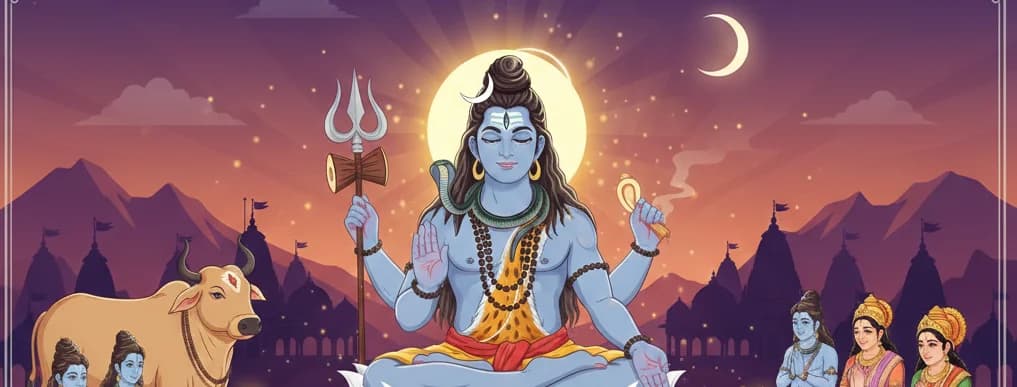
Dedicated to Lord Shiva, observed on the 13th day of both lunar fortnights during twilight hours for blessings.
Vrat Timings
Pradosha Kala · Puja time
7:16 PM – 9:21 PM
शनि, 27 जून
Pradosha Kala: the first fifth of the night, from sunset.
शुक्र, 26 जून
- Trayodashi begins10:22 PM
शनि, 27 जून
- Fast begins5:43 AM
- Pradosha Kala7:16 PM – 9:21 PM
रवि, 28 जून
- Trayodashi ends12:43 AM
Shani Pradosh Vrat
This observance combines the regular Pradosham fast, which is dedicated to Lord Shiva during the twilight hours just before sunset on the 13th lunar day (Trayodashi), with the specific day of Saturday. When Trayodashi falls on a Saturday, it's known as Shani Pradosh Vrat. This day is considered particularly significant for dealing with challenges that might be linked to Saturn's influence.
Historical Context
There's a story about a Brahmin named Somasharma who was facing difficulties due to astrological effects of Saturn. A sage advised him to observe the Pradosham fast on a Saturday. During his observance, he apparently saw Lord Shiva performing his cosmic dance. The prayers and fasting of Somasharma, along with Shiva's presence during Pradosham, are said to have helped ease his suffering and brought him peace. This story basically highlights the Vrat's purpose in seeking relief from Saturn-related issues.
What It's For
Shani Pradosh Vrat is believed to be especially helpful for:
- Reducing Saturn's negative effects (Shani Dosha): This includes difficulties faced during Saturn's Sade Sati or Dhaiya periods. The combined blessings are thought to lessen hardships and anxieties.
- Overcoming obstacles and past karma: The fast is intended to help clear out negative karmic patterns.
- Building inner strength: The observance is seen as a way to gain resilience for facing life's challenges.
- Seeking blessings for well-being: Lord Shiva is worshipped for general well-being and longevity.
This Vrat specifically focuses on addressing challenges linked to karmic influences, particularly those associated with Saturn, which makes it different from other Pradoshams.
How to Observe and Rituals
The main practice involves fasting and worshipping Lord Shiva during the Pradosham period, which is from sunrise until the twilight before sunset.
- Fasting: Devotees might observe a partial fast, eating only fruits, milk, and water, or a complete fast.
- Lord Shiva Worship: The Shiva Lingam is usually bathed with water, milk, yogurt, ghee, honey, and sugar. Bilva leaves, incense, lamps, and flowers are offered.
- Acknowledging Lord Shani: Since this is Shani Pradosh, specific actions are taken to honor Lord Shani:
- Offering Black Sesame Seeds (Til): These are traditionally linked with Saturn.
- Worshipping the Peepal Tree: Walking around a Peepal tree and offering water or lamps is a common practice.
- Reciting Shani Mantras: Chanting mantras dedicated to Shani can be part of the observance.
- Chanting Mantras: Important mantras include the Mahamrityunjaya Mantra for protection and healing, and the Shiva Panchakshari Mantra ("Om Namah Shivaya").
- Temple Visits: Visiting a Shiva temple during the Pradosham twilight is recommended.
- Charity (Daan): Donating black clothes, black sesame seeds, or food to the needy on this day is considered beneficial for appeasing Lord Shani.
Breaking the Fast (Parana)
The fast is usually broken after sunset and after the evening puja is completed. A simple, sattvic (pure) vegetarian meal is eaten, avoiding non-vegetarian food, onion, and garlic.
Benefits
Observing Shani Pradosh Vrat is associated with:
- Karmic Purification: Releasing negative karma that causes suffering.
- Protection: Reduced chances of unexpected problems and obstacles.
- Inner Peace: Increased mental clarity and emotional stability.
- Material Stability: Potential for better career and financial situations by removing blockages.
- Spiritual Growth: Progress towards spiritual understanding.
Frequently Asked Questions
Q: Is Shani Pradosh Vrat only for people experiencing Shani Dosha?
A: While it's beneficial for those with Shani Dosha, anyone seeking Lord Shiva's blessings for overcoming obstacles and purifying karma can observe this Vrat.
Q: Can I worship Lord Shani directly during Shani Pradosh Vrat?
A: The main focus is Lord Shiva. However, acknowledging Lord Shani through specific offerings or mantras during the Shiva puja is encouraged.
Q: What if I can't fast completely?
A: A partial fast, consuming only fruits, milk, and water, is an alternative. Devotion and intention are considered important.
The Main Idea
Shani Pradosh Vrat emphasizes aligning with cosmic energies. It teaches that challenges related to planetary influences can be addressed through devotion and spiritual discipline. Lord Shani represents karma and consequences, while Lord Shiva is seen as the one who dispels sorrow. This Vrat encourages acknowledging one's karma while invoking divine grace to navigate its complexities, fostering humility, patience, and resilience.
Shani Pradosh Vrat is a practice for harmonizing with cosmic energies, seeking blessings from Lord Shiva and Lord Shani. It offers an opportunity to acknowledge karmic journeys and embrace devotion. Observing this ritual with sincerity can bring relief from difficulties, purify the soul, and aid in spiritual progress.