
Mithuna Sankranti 2026
Ujjain માં સોમવાર, 15 જૂન, 2026 ના રોજ Mithuna Sankranti છે. સૂર્યનું નવી રાશિમાં પ્રવેશ, જે નવી શરૂઆત અને સૂર્ય દેવના સન્માન માટે ઉજવવામાં આવે છે.
વ્રત સમય
Ujjain માટેનો સમયસોમ, 15 જૂન
- Mithuna Sankranti પ્રારંભ8:24 AM
મંગળ, 16 જૂન
- Mithuna Sankranti સમાપ્ત4:31 AM
Understanding Solar Transitions: Sankranti
Sankranti is basically when the Sun moves from one zodiac sign to another, happening every month. In Hindu traditions, it's seen as a good time for certain rituals, giving to charity, and doing spiritual practices. The word "Sankranti" itself comes from Sanskrit and just means a transition or a passage.
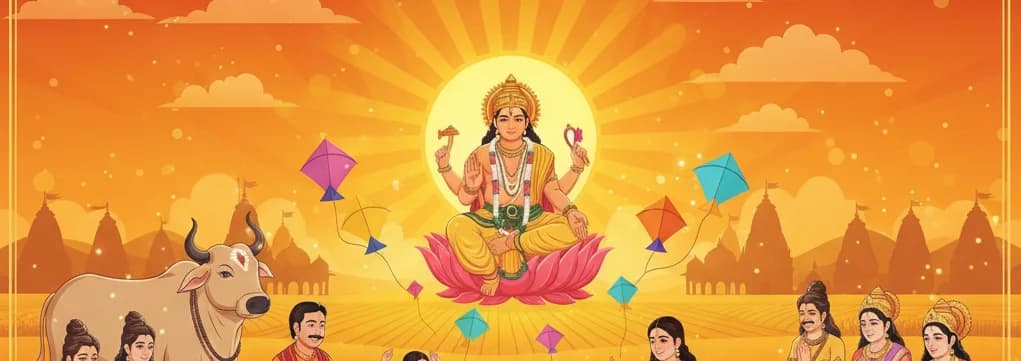
The Sun, or Surya Dev as it's known, is a really important figure in Vedic spirituality. The daily sunrise is seen as a symbol of light winning over darkness. The Gayatri Mantra is a well-known Vedic verse that calls upon the Sun's power. Surya Dev is often shown riding a chariot pulled by seven horses, which represent the seven colors of light and also the seven days of the week. The Sun is something everyone can access, and it's thought to symbolize the Atman, or the eternal self, which lights up all our experiences.
The Twelve Sankrantis
There are twelve Sankrantis in a year, corresponding to the Sun passing through each of the zodiac signs:
- Mesh Sankranti (Aries) - This often falls around spring festivals and is considered the start of the agricultural new year in some places.
- Vrishabha Sankranti (Taurus) - It marks the beginning of summer in certain regions and is tied to farming activities.
- Mithuna Sankranti (Gemini) - This signifies the Sun moving towards its furthest northern point in the sky.
- Karka Sankranti (Cancer) - This is the summer solstice, the Sun's northernmost point, and it also starts Dakshinayana, the Sun's southern journey.
- Simha Sankranti (Leo) - In some South Indian traditions, it's associated with rituals like changing sacred threads.
- Kanya Sankranti (Virgo) - Sometimes this Sankranti is linked to harvest festivals.
- Tula Sankranti (Libra) - This marks the arrival of autumn, and it's when the day and night are roughly equal in length.
- Vrishchika Sankranti (Scorpio) - It's associated with specific auspicious periods in some areas.
- Dhanu Sankranti (Sagittarius) - This is connected with spiritual observances and preparations for certain religious gatherings.
- Makar Sankranti (Capricorn) - This is the most widely celebrated Sankranti. It marks the Sun's northward journey (Uttarayan) and is celebrated with various regional festivals.
- Kumbha Sankranti (Aquarius) - In certain years, it's associated with significant spiritual gatherings.
- Meena Sankranti (Pisces) - This completes the solar cycle and comes just before spring begins again.
Each of these transitions has its own unique energies and is observed with different local customs.
Practical Importance
The observances for Sankranti are connected to astronomical events that affect our seasons and agriculture. By paying attention to these solar movements, people can better align themselves with natural cycles. Astrologically speaking, the Sun's position in a particular sign influences the energy of that month, and observing Sankranti allows for a more conscious engagement with these shifts. The idea of transition and transformation that's inherent in Sankranti is a lot like the continuous evolution that's needed in spiritual practice.
How to Observe and Practices
Observances usually start with a morning bath, which can be done at home with a clear intention. Many people add purifying items to their bath water. It's also common to offer water to the rising sun while reciting Surya mantras.
Worshipping Surya Dev is a central part of this. This often involves facing east and offering water, red flowers, red cloth, and food items made with wheat and jaggery. Surya Namaskar, or sun salutations, are performed along with specific mantras. Chanting the Aditya Hridayam, which is a hymn dedicated to the Sun, is considered beneficial for gaining strength and clarity.
The Role of Charity
Giving charity, or Dana, on Sankranti is believed to be very meritorious. Items associated with warmth and light, like sesame seeds, warm clothing, ghee, and jaggery, are commonly donated. Feeding the poor and animals is also a significant practice. Special attention is often given to cows, as they are considered sacred.
Dietary Guidelines
Some people observe a fast on Sankranti, and the strictness can vary. Common practices include having just one meal for the day, often made with auspicious ingredients like sesame seeds and jaggery. Sesame seeds (til) are particularly important, as they are thought to generate internal heat and spiritual merit. Traditional dishes like til ladoos and til rice are often prepared. Dietary choices are frequently made to align with Ayurvedic principles for seasonal health.
Regional Differences
Sankranti is celebrated with a lot of different regional traditions. For instance, Makar Sankranti is known as Pongal in Tamil Nadu, Magh Bihu in Assam, Lohri in Punjab, Uttarayan in Gujarat, and Khichdi in Uttar Pradesh. These celebrations all share themes of gratitude and renewal, but they have distinct customs like kite flying, bonfires, and specific food preparations.
Astrological Considerations
For those interested in Vedic astrology, Sankranti days offer chances to connect with the Sun's energy as it enters new zodiac signs. The Sun's position in a person's birth chart is seen as an indicator of their fundamental nature and life purpose. Consulting with astrologers can offer insights into how specific Sankrantis might relate to an individual's astrological chart. Makar Sankranti and Karka Sankranti, which mark the solstices, are considered particularly important because of the extreme positions of the Sun.
Benefits of Observing
Observing Sankranti can help with physical health through dietary changes and practices like waking up early and doing sun salutations. Psychologically, the monthly rhythm provides opportunities for conscious transition and for letting go of old habits. Spiritually, worshipping Surya Dev is believed to awaken inner consciousness, strengthen spiritual determination, and clear away mental darkness.
Modern Adaptations
Contemporary observance can be adjusted to fit modern lifestyles. Simple practices like offering water to the sun, eating a vegetarian diet for the day, giving to charity, and being grateful for solar energy are all meaningful. For people living in cities, a heartfelt prayer, a few minutes of sun salutations, and consciously acknowledging the solar transition can hold spiritual value. Technology can also be helpful for getting information and participating in collective observances. Families can use Sankranti as a chance to educate children, involving them in simple worship and preparing traditional foods.
The Ongoing Cycle
Sankranti really highlights how change is a continuous part of existence. By aligning with the Sun's journey through the zodiac, people can learn to navigate life's transitions with more acceptance. The Sun's movement through the signs serves as a lesson in being present in each phase of life and in radiating one's inner light. Worshipping Surya Dev can lead to recognizing one's own inherent consciousness, which is eternal and self-luminous.