
Eight Limbs of Yoga (Ashtanga): Complete Wellness Guide
Published on September 19, 2025 by Vedic Tithi Editor
Updated on May 05, 2026 by Vedic Tithi Editor
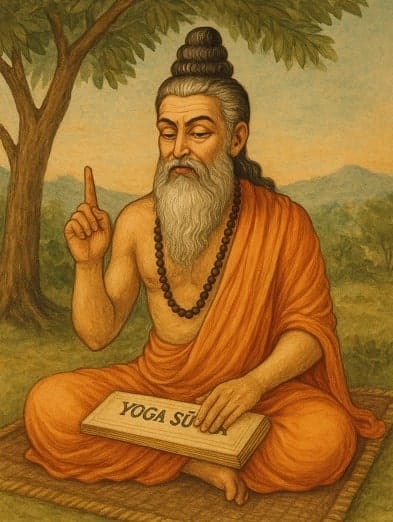
The eight limbs of yoga (Ashtanga) are a complete system for human development — not just physical exercise. The sage Patanjali (also know as "father of yoga") laid them out in the Yoga Sutras around 400 CE, covering ethical conduct, physical care, breath regulation, and mental training. Physical postures are just the third limb. Here's what all eight are and how to actually use them.
What are the eight limbs of yoga? The eight limbs of yoga are Patanjali's Ashtanga path: Yama (ethics), Niyama (self-discipline), Asana (postures), Pranayama (breath control), Pratyahara (sense withdrawal), Dharana (concentration), Dhyana (meditation), and Samadhi (absorption). Described in the Yoga Sutras (Book 2, Sutra 29), they work together as an integrated system — not a sequential checklist.
Contents
- What is Ashtanga? The Eight-Limbed Structure
- Yama: The Five Ethical Restraints
- Niyama: The Five Personal Observances
- Asana and Pranayama
- The Inner Four Limbs
- How to Practice the Eight Limbs in Daily Life
- What Are Common Misconceptions About the Eight-Limbed Path?
- How Do You Know If Your Practice Is Working?
- Frequently Asked Questions
- References
What is Ashtanga? The Eight-Limbed Structure
Ashtanga comes from Sanskrit: Ashta (eight) and Anga (limbs). Patanjali describes these eight practices as interconnected, not a ladder you climb one rung at a time. You develop them together — each one strengthens the others.
- Yama — ethical restraints (how you relate to others)
- Niyama — personal observances (how you relate to yourself)
- Asana — physical postures
- Pranayama — breath regulation
- Pratyahara — withdrawal of attention from external input
- Dharana — concentrated focus
- Dhyana — sustained meditation
- Samadhi — absorption
Most yoga classes teach only number three. The rest of this guide covers what's missing.
Yama: The Five Ethical Restraints
The Yamas are yoga's ethical foundation. They shape how you treat others and how you move through the world. Without them, the physical and mental practices don't have a stable base.
1. Ahimsa (Non-violence)
Ahimsa means causing no harm — in action, speech, or thought. It reaches beyond physical violence to include harsh words, critical self-talk, and choices that damage the environment around you.
The practice is noticing. You can't un-say a harsh word, but you can catch the impulse before it becomes one.
Try this: For one week, pause before responding when you feel irritated. That pause is Ahimsa in action.
2. Satya (Truthfulness)
Satya is alignment between what you think, what you say, and what you do. Not just avoiding lies — living in a way that reflects what you actually value.
It includes the harder kinds of honesty: admitting you were wrong, saying what you actually think instead of what's expected, acknowledging when your actions contradict your stated values.
Try this: Before agreeing to something you don't want to do, pause. Saying no honestly is Satya. Saying yes resentfully isn't.
3. Asteya (Non-stealing)
Asteya extends beyond objects. It includes being late (stealing others' time), taking credit for others' ideas, consuming more resources than you need, and draining people's energy without reciprocating.
Try this: Show up on time this week. It's a straightforward, concrete way to practice Asteya every day.
4. Brahmacharya (Energy Management)
Brahmacharya is often translated as celibacy, but the broader meaning is wise use of your vital energy. Don't deplete yourself through excess — overeating, hours of scrolling, relationships that take more than they give.
This isn't about restriction. It's about noticing what drains you and choosing differently.
Try this: List three activities that reliably leave you feeling flat afterward. That list is your Brahmacharya starting point.
5. Aparigraha (Non-possessiveness)
Aparigraha is holding things lightly — objects, outcomes, relationships. Not clinging to how things should turn out. Not accumulating things you don't use "just in case."
The emotional version is harder than the physical one. Releasing expectations about how a conversation should go, or how someone should respond, is Aparigraha at its most challenging.
Try this: Donate something you've been keeping "just in case" for over a year. See how it feels.
Niyama: The Five Personal Observances
If Yamas are outward ethics, Niyamas are inward discipline. They're about how you maintain yourself — physically and mentally.
1. Saucha (Cleanliness)
Saucha is cleanliness of body, space, and mind. These three support each other more than most people expect. A cluttered space tends to produce a cluttered mind. A clean, organized environment tends to make clear thinking easier.
The mental piece is usually harder to sustain. Meditation, reduced news consumption, and limiting conversations that go nowhere all serve Saucha.
2. Santosha (Contentment)
Santosha is finding genuine satisfaction in what you have right now — not in what you'll have once something changes. It doesn't mean giving up ambition. It means not making your peace conditional.
Try this: Write down three specific things that went well today. Specific, not general. "Had a good day" doesn't count. "The meeting ended earlier than expected and I had time to eat lunch properly" does.
3. Tapas (Disciplined Effort)
Tapas literally means heat — the friction of consistent effort. It's showing up to your practice when you don't feel like it. Doing what's good for you even when something easier is available.
Consistency beats intensity here. Ten minutes of meditation every morning for a month does more than a 90-minute session on a weekend.
4. Svadhyaya (Self-Study)
Svadhyaya is self-inquiry and the study of texts that challenge how you think. The point isn't accumulating information — it's asking uncomfortable questions: Why did I react that way? What am I avoiding? What do I actually believe?
Good starting texts: the Yoga Sutras themselves, the Bhagavad Gita, or anything that makes you think harder about your own behavior.
5. Ishvara Pranidhana (Surrender to the Divine)
Ishvara Pranidhana is dedicating your actions to something beyond your own gain — and releasing attachment to how things turn out. Whether you frame this religiously or not, the practical application is the same: do the work well, then let go of what you can't control.
For many people this is the hardest Niyama. Most of us are deeply attached to outcomes.
Asana and Pranayama
Asana (Physical Postures)
Asana is the limb most people know. Postures build strength, flexibility, and body awareness. In the context of the full eight-limbed path, they serve another function too: getting the body still and comfortable enough to sit in extended meditation.
Practice with attention rather than ambition. What are you actually feeling? What's your breath doing? That quality of awareness is the point — not the shape of the pose.
Pranayama (Breath Control)
Pranayama is regulation of prana (life force) through the breath. Different breathing patterns produce different effects: some calm the nervous system, some build energy, some sharpen focus. The breath is the one part of the autonomic nervous system you can consciously control — which makes it a direct lever on your mental state.
Start simple. Notice your inhale and exhale during ordinary activities. That awareness is Pranayama at its most basic, and it works from the very first day.
The Inner Four Limbs
Pratyahara (Withdrawal of Senses)
Pratyahara is the ability to pull your attention inward rather than being scattered by everything around you. It's what makes sustained meditation possible.
Modern life makes this genuinely difficult. Practice by deliberately reducing input: periods without screens, eating without your phone, walking without headphones. You're building the capacity to choose where your attention goes.
Dharana (Concentration)
Dharana is focused attention on a single object — breath, a candle flame, a mantra, or a concept. The mind wanders. You bring it back. The return is the training, not the holding.
You don't need formal sitting practice to develop this. Actually focused work — one task, browser tabs closed, no switching — builds the same capacity.
Dhyana (Meditation)
Dhyana is sustained concentration that becomes effortless. The distinction from Dharana: in Dharana you're working to focus; in Dhyana, focus holds itself. The gap between observations closes.
Most people never get there consistently — and that's fine. Returning your attention over and over is the practice. Don't wait for the effortless version before calling it meditation.
Samadhi (Absorption)
Samadhi is complete absorption — the felt sense of separation between observer and observed dissolves. Patanjali describes it as the culmination of the path.
Don't chase it as a goal. It arises from steady practice of the other seven limbs. And moments of it — sudden clarity, complete presence, a feeling of everything fitting together — happen to ordinary practitioners too.
How to Practice the Eight Limbs in Daily Life
You don't need to restructure your life. Pick one limb and apply it deliberately for two or three weeks. Then add another.
Morning:
- Set an intention around one Yama or Niyama for the day
- 10–20 minutes of Asana and breathwork
- 5–10 minutes sitting quietly (Dharana/Dhyana)
During the day:
- Apply your chosen ethical principle to real decisions as they come up
- Use a few conscious breaths before stressful moments
- Practice single-tasking when you can
Evening:
- Brief review: where did you apply the principles? Where did you miss?
- 5 minutes of gratitude (Santosha)
- Wind down without screens — this supports Pratyahara
The Yamas and Niyamas translate directly into professional life without any yoga vocabulary required. Satya in communication, Asteya with others' time, Brahmacharya with energy — these are effective regardless of whether someone calls them yoga. Use the VedicTithi Hindu calendar to align your practice periods with meaningful seasonal and lunar rhythms if that adds structure.
What Are Common Misconceptions About the Eight-Limbed Path?
"I must complete each limb before moving to the next." Patanjali describes them as simultaneous, not sequential. Start wherever you feel pulled and expand from there.
"This is too religious for me." The Yamas and Niyamas — honesty, non-harm, contentment, discipline — are not religious claims. They're practical principles that work regardless of your beliefs.
"I don't have time for all this." The Yamas and Niyamas don't require extra time. They're ways of doing what you're already doing — talking to people, spending energy, organizing your space — with more intention.
"I need to be perfect at this." You don't. The path is the practice of returning, not the achievement of a permanent state.
How Do You Know If Your Practice Is Working?
The signs are gradual and ordinary. Look for these:
In your reactions: A moment of space before you respond to something frustrating. That gap is real progress.
In your relationships: Less need to be right. More genuine interest in what the other person is experiencing. Less reactivity when things don't go as planned.
In your decisions: More alignment between what you say you value and what you actually choose.
In your energy and focus: A bit more sustainable energy through the day. Less racing thoughts at night. Cleaner concentration when you need it.
These accumulate over months. Don't expect them in days.
Frequently Asked Questions
What are the eight limbs of yoga in order?
The eight limbs in Patanjali's Yoga Sutras are: Yama (ethical restraints), Niyama (personal observances), Asana (postures), Pranayama (breath regulation), Pratyahara (sense withdrawal), Dharana (concentration), Dhyana (meditation), and Samadhi (absorption). They are meant to be practiced together, not in strict sequence.
Is Ashtanga yoga the same as the eight limbs of yoga?
Not exactly. "Ashtanga yoga" literally means eight-limbed yoga — Patanjali's complete system. In modern fitness contexts, "Ashtanga" often refers to the flowing posture sequence developed by K. Pattabhi Jois in the 20th century. Both trace their name to the same Sanskrit root, but the eight-limbed philosophy is the older and broader system.
Do I need to practice all eight limbs to benefit from yoga?
No. Most practitioners start with Asana and Pranayama. Adding even one Yama to daily life brings real benefits. You don't have to commit to all eight at once.
What does Samadhi feel like?
Patanjali describes Samadhi as a state where the boundary between the observer and the observed dissolves. Practitioners describe it as moments of complete presence, stillness, or clarity — not necessarily mystical in character, though deeper states are also described in the Yoga Sutras.
How long does it take to progress through the eight limbs?
There's no fixed timeline. Consistent daily practice over years is what the texts recommend. Many experienced practitioners focus on the Yamas and Niyamas throughout a lifetime because they apply to every situation and keep revealing new layers.
Can I practice the eight limbs without a teacher?
Yes, especially the outer limbs — Yama, Niyama, Asana, and Pranayama. For the inner limbs, particularly the deeper stages of Samadhi, traditional teaching holds that guidance from an experienced teacher helps significantly. For most people starting out, books, classes, and community practice are sufficient.
What text describes the eight limbs of yoga?
The primary source is the Yoga Sutras of Patanjali, specifically Book 2 (Sadhana Pada), Sutra 29. The text is estimated to have been compiled around 400 CE and remains the foundational reference for classical yoga philosophy.
References
- Yoga Sutras of Patanjali — Sacred Texts Archive — primary source for the eight-limbed path (Ashtanga), Book 2, Sutra 29
- DrikPanchang — Hindu Calendar and Panchang — source for panchang timings and lunar calendar data